



This essay draws on discussions with Ukrainian feminists, experts, and activists held during a gathering in Kamianets-Podilskyi, organised by the expert platform Gender in Detail in August 2026 with the support of the Flax Foundation.
At the heart of these discussions is how Russia’s full-scale war against Ukraine is reshaping the Ukrainian feminist movement, its agenda, and its understanding of security, gender equality, care work, and women’s participation in resistance. This essay seeks to bring together and amplify diverse voices and experiences, while exploring the challenges, achievements, and future directions of the Ukrainian feminist movement in the context of war. The authors do not claim to represent the views of the Ukrainian feminist movement as a whole. This essay contains our personal observations and reflections, as well as insights drawn from discussions with colleagues during the five-day gathering. We would like to express our gratitude to Gender in Detail and the Flax Foundation for creating a space for thoughtful conversations and exchanging experiences.
The Anti-Colonial Dimension of Ukrainian Feminism
Ukrainian society has been living under conditions of war for more than 12 years. The last four of those years have been marked by full-scale war, with the Russian Federation launching ballistic missile attacks against civilians, torturing Ukrainian prisoners of war and civilians in occupied territories, blowing up the Kakhovka Hydroelectric Power Plant, and holding all of Europe hostage by threatening the safety of the Zaporizhzhia Nuclear Power Plant. This war is neither an accident nor an exception to the “end of history” proclaimed by Francis Fukuyama 37 years ago1. This is a continuation of the colonial policies that the Russian state has systematically pursued towards Ukraine and other neighbouring states and peoples since the time of the Tsardom of Muscovy, through the Russian Empire and the Soviet Union, depriving them of their statehood, language, cultural agency, and the right to their own historical memory.
The experience of living through and resisting this brutal, unprovoked aggression has transformed the way Ukrainian feminism speaks about the state, the nation, security, and solidarity. The full-scale invasion has forced a reconsideration not only of the agenda but also of the very language of the debate: how to remain true to one’s values without losing touch with reality, and how to engage with Western partners without becoming mere subjects of others’ research and academic achievements.
The need to rethink feminism through an anti-colonial lens arises not as an abstract academic exercise, but as a practical necessity whenever a civil society organisation has to explain the specific nature of its work to a donor. A researcher realises that Western theory cannot simply be imposed on Ukrainian realities, or an activist at an international conference feels that her experience has been reduced to an illustration of someone else’s concepts. Our central argument is simple: if anti-colonial feminism is to matter, it must grow out of a careful engagement with lived experiences, both our own and those of others, rather than the uncritical repetition of foreign texts or the interpretation of a unique context through the lens of works considered canonical in Western academia.
It is no secret that the vast majority of influential feminist theories used in Ukrainian academia and civil society have their roots in the Western intellectual tradition. This is not inherently a bad thing. The problem arises when theory is applied uncritically, without acknowledging that Ukraine has been colonised rather than being a colonising power, unlike the countries from which most of these theories originate. This asymmetry of power and knowledge is of fundamental importance.
Western colleagues often have no qualms about telling Ukrainian feminists to go and read the works of Cynthia Enloe, an influential American feminist and international relations scholar — particularly Bananas, Beaches and Bases: Making Feminist Sense of International Politics (1990) and Maneuvers: The International Politics of Militarizing Women’s Lives (2000). In these works, Enloe critiques the militarisation of society, the growing role of the military in public life, and the ways in which war and preparations for it tend to reinforce patriarchal structures, relegating women to secondary, symbolic roles as “mothers” and “guardians” rather than recognising them as equal political actors. We acknowledge that the theoretical framework proposed by Enloe offers a rigorous and comprehensive account of the mechanisms of imperial expansion and militarised patriarchy. However, this framework is far more applicable to contemporary Russia, with its direct continuity with Soviet imperialism, than to Ukraine, which does not reproduce imperial logic but resists it. Russia’s war against Ukraine is not merely a local conflict, but a clash between two civilisational choices: the patriarchal, imperial, and authoritarian project of the Russkiy Mir (“Russian World”), rooted in hierarchy, misogyny, homophobia, and a rigid, state-defined binary gender order; and the Ukrainian democratic project, founded on freedom, human rights, equality, and a plurality of identities.
Gender-based opposition did not remain merely rhetorical; it was deliberately instrumentalised as part of a broader system of organised influence. Researcher Olena Suslova describes “organisational weapons” as a system of propagandistic, psychological, and informational influences designed to steer society in the direction desired by the aggressor. In her analysis, the gender dimension of this weaponry manifests itself, among other things, through the mobilisation of anti-gender movements, rhetoric about the “threat to the family”, genderphobia, disinformation, and the establishment of anti-democratic structures2.
In the Russian context, this strategy took on a particularly pronounced form. The “Russian Spring” project, actively funded since 2014 by Konstantin Malofeev, a Russian “Orthodox” oligarch known for his ultraconservative views, was not a by-product of hybrid warfare but one of its deliberate instruments. Its ideology combined a cult of “patriotic motherhood”, the militarised masculinity of Cossack and biker movements such as the neo-fascist Night Wolves, and rhetoric about “decaying Europe.” Conservative gender rhetoric and the sexualisation of political discourse served to legitimise the occupation of Crimea and the Donbas by framing it as a defence of “traditional values” against “Gayropa”, a derogatory term that had been widely circulated in Russian media since the early 2000s.
The same patriarchal logic operates on another level — no longer in the Kremlin’s rhetoric, but in the ways the war itself is framed from the outside. A telling example is how the longstanding patriarchal claim that “a woman who has been raped must have provoked her rapist” is translated into a geopolitical narrative in which Ukraine, subjected to colonial military aggression, is repeatedly advised not to “provoke” Russia and to accept peace “on any terms.” This contradicts the very essence of feminist principles, because defending oneself is one of the most feminist acts imaginable: the right to self-defence, to set one’s own boundaries, and to refuse to take the blame for someone else’s aggression lies at the heart of the feminist understanding of agency.
The striking parallels between victim-blaming and the rhetoric surrounding Ukraine’s self-defence prompted feminist philosopher Tamara Zlobina to write the essay “If Russia’s War Against Ukraine Were Rape”, in which she recounts examples of victim-blaming and Westplaining she has encountered among her international colleagues.
The double standards of some feminist communities in both the Global South and the Global North also deserve particular criticism. These communities often analyse Russia’s actions primarily through the lens of its confrontation with the U.S. or NATO, treating it as an “alternative to Western imperialism” rather than as an imperial power in its own right, with a long history of colonial violence against peoples within and beyond its borders. Meanwhile, Ukrainian feminists and activists are frequently accused of femonationalism or homonationalism, with little understanding of the colonial nature of this war or the historical, cultural, and civilisational factors that have shaped it.
Ukrainian Feminism and the Question of National Agency
The concept of nationalism deserves particular attention in its own right. In Western discourse, nationalism is largely associated with far-right movements and is often treated as an “N” word that should not be uttered in polite company.
This is no coincidence: the concept took shape in the shadow of 20th century Nazism and fascism, which is why, in Western discourse, “nationalism” is almost automatically understood as a threat associated with xenophobia rather than as a people’s right to agency. This framework makes sense in the context of Europe’s expansionist, imperial nationalisms, but is poorly suited to contexts where nationalism has served primarily as a means of survival and decolonisation. In her seminal work Postcolonial Theory (1998), postcolonial scholar Leela Gandhi emphasises the fundamental distinction between imperial and anti-colonial nationalism, the latter having emerged as a response by colonised peoples to the West’s “civilising mission.”3 Both invoke the idea of the “nation”, but occupy opposing positions within the hierarchy of power and therefore cannot be analysed through the same theoretical lens. This distinction matters here too: Ukrainian nationalism is structurally closer to the anti-colonial movements of the so-called Third World than to the expansionist projects with which it is often automatically equated. At the same time, it is important to maintain a critical distance from the concept of nationalism itself, neither romanticising it nor treating it as an end in itself, but also refusing to cede it entirely to far-right and conservative movements that seek to monopolise the right to speak on behalf of the nation-state.
It is worth noting that, unlike in many Western countries, Ukraine is engaged in an active public debate about the foundations and substance of its contemporary national project, with competing perspectives shaping the discussion. In our observation, the Ukrainian people, as a multiethnic community, and the state, as a representative of the people’s will, tend to favour the concept of a civic nation — a community of citizens united by shared values, rights, and responsibilities rather than by blood ties or ethnic kinship — although far-right movements seek to challenge this understanding.
Decolonial Agency: From Critique to Action
Ukrainian feminism is not detached from these processes. As early as the beginning of the 20th century, Milena Rudnytska argued that Ukrainian women should participate in nation-building, not merely in the reproduction of the nation4. In other words, women should not simply reproduce the nation biologically and culturally within the private sphere — the role assigned to them by far-right rhetoric — but actively shape it as a political entity in the public sphere, acting as agents of change and participating in political and social processes. Contemporary feminists also contribute to nation-building by advocating for legislative changes and insisting that human rights, gender equality, and inclusion should be among the foundations of the Ukrainian civic nation.
Ukrainian women are actively involved in resisting Russia’s military aggression, including by serving in the Armed Forces of Ukraine. At the “War in Ukraine from a Gender Perspective” conference (Lisbon, 2023), the argument was made that women’s participation in the military and in national defence strengthens the country’s defence capabilities. This has also led to a rethinking of security through the concept of layered resilience, which underpins comprehensive defence, an approach that encompasses civil protection and the population’s social resilience. In this context, it becomes clear why purely pacifist narratives can be dangerous for Europe itself: failing to acknowledge the threat of Russian military aggression, including hybrid forms of aggression, does not make that threat any less real. Societies must be prepared to respond to it in order to preserve their democratic values, including women’s rights, the rights of LGBT+ people, and gender equality.
Ukrainian decolonial feminist thought does not reject the Western tradition, but calls for its critical application with due attention to context. Ukraine occupies a dual position, as both an object of Russian imperial aggression and a political actor whose survival depends on international support. This tension cannot be resolved through a single theoretical approach, but it can be consciously examined and transformed.
This points to several areas for action:
- Foster dialogue within the movement and develop a new feminist history and theory grounded in our own experiences, rather than merely illustrating concepts developed elsewhere;
- Consciously build solidarity with other communities affected by Russian colonialism, inviting women from Indigenous peoples whose ancestral lands are under Russian occupation into the conversation — only through collective efforts can we dismantle the empire;
- Ensure close collaboration between academia and civil society, so that theory is tested against practice and practice is grounded in theory;
- Write and publish more actively, building our own body of work accessible to the international community;
- Reform relationships with international donor organisations through transparent requirements, mutual accountability, and a shift from a humanitarian aid model towards institutional support.
Ultimately, it is about refusing to be an object — of someone else’s aggression, donor paternalism, academic theorising, or other people’s ideas of who we should be. We must name our own reality, produce our own knowledge, define our own political goals, and set the terms of our partnerships. This is a shift from colonial dependency to agency — political, intellectual, and national — from the right to be heard to the right to set our own agenda.
Does War Always Lead to a Patriarchal Backlash, Both During and After the Conflict?
This is a question Ukrainian feminists often hear from their Western colleagues. More often still, behind this question lies a thinly veiled conviction that patriarchal backlash is an undeniable and inevitable consequence of armed conflict. This deeply entrenched belief within Western academic and activist circles has developed over decades, shaped by the experience of most major conflicts around the world: from the United States and the United Kingdom after the Second World War, when women were pushed en masse out of military and industrial roles and back into the home, to the wars in Bosnia and Algeria, where post-war reconstruction was accompanied by a rise in conservatism, religious fundamentalism, and the glorification of hypermasculinity. The lessons drawn from these experiences are applied to Ukraine as though they were universally valid, without taking into account that the Ukrainian context is shaped not by a religious or ultranationalist backlash, but by a desire to break with the values of the authoritarian, misogynistic, and homophobic politics of the Russkiy Mir (“Russian World”) and to integrate more deeply into the democratic world, where gender equality is a foundation of national security and social progress.
Central to the discussion of this issue is the analytical study “Local Feminist Perspectives as Levers of Transformation for Sustainable Development in Ukraine in the Context of Ongoing Defence” (2025), conducted by the civil society organisation Gender in Detail and the German Institute of Development and Sustainability (IDOS). The study makes a compelling case that Ukraine’s emancipatory trajectory has remained resilient during the war thanks to its unique context and institutional foundations.
Ukraine entered the full-scale invasion of 2022 as a country that had consistently pursued gender equality policies across various areas of its citizens’ lives since regaining independence in 1991. Even during the years of war from 2014 to 2022, the country made significant progress in both legislation and social change. The most significant breakthrough came with legislative reforms between 2016 and 2018 that established equal rights in the security sector, opening up combat positions and higher military ranks to women in the Armed Forces of Ukraine. At the same time, in 2017, Ukraine abolished a Soviet-era ban that barred women from more than 450 occupations in physically demanding industries and adopted comprehensive legislation to prevent and criminalise domestic violence. Moreover, Ukraine became the first country in the world to adopt a National Action Plan for the implementation of UN Security Council Resolution 1325 on Women, Peace and Security while active hostilities were ongoing, demonstrating its commitment to democratisation and emancipation even in the face of a constant military threat.
Following Russia’s full-scale invasion in 2022, Ukraine did not abandon its democratic reforms but, on the contrary, accelerated them. Key achievements include the long-awaited ratification of the Istanbul Convention in 2022; revising the National Action Plan for the implementation of UN Security Council Resolution 1325 on Women, Peace and Security; adopting the Strategy for Ensuring Equal Rights and Opportunities for Women and Men; and implementing the National Strategy for Closing the Gender Pay Gap by 2030.
Of course, adopting progressive laws and strategies does not guarantee their immediate implementation. Establishing effective mechanisms to put them into practice remains a significant challenge, and even these mechanisms do not always work as intended. Nevertheless, the very fact that such decisions have been taken during the full-scale war is undeniable evidence of the country’s unwavering political commitment to treating gender equality as an integral part of its national development.
The sociological data presented in the study reveal a clear trend: emancipatory processes in Ukrainian society have not only continued but have also gained momentum. Public support for women’s participation in politics and the security and defence sector has increased. Positive changes have also been seen in public attitudes towards the LGBT+ community, thanks to the visibility of LGBT+ military personnel and their contribution to the country’s defence. The feminists and gender experts interviewed for the study report no signs of a patriarchal backlash in Ukraine at present; instead, Ukrainian society is demonstrating an emancipatory response to the war. Ukrainian women are taking on roles as volunteers, community leaders, healthcare professionals, and military personnel on a large scale, challenging the stereotype of women as “passive victims” and moving beyond the monolithic category of “womenandchildren”, critically examined by Cynthia Enloe in Bananas, Beaches and Bases.
The absence of a clear-cut patriarchal backlash does not mean that war is inherently emancipatory. Rather, it intensifies the contradictions within the existing gender order: on the one hand, it expands women’s participation in the military, volunteering, professional life, and decision-making; on the other hand, it reinforces traditional gender roles and inequalities in unpaid care work. As the study “Care Work in the Context of Comprehensive Defence” shows, women continue to shoulder much of the unpaid responsibility for caring for children, older people, the wounded, and other family members who need support. Thus, women’s increased participation in public life does not automatically lead to a redistribution of care responsibilities. At the same time, the study emphasises that care infrastructure should be recognised as an essential component of Ukraine’s comprehensive defence system, societal resilience, and recovery.
All of the above only reinforces the argument that war does not necessarily strengthen the patriarchal gender contract or inevitably lead to a backlash against gender equality. Instead, it undergoes transformation, giving rise to processes that Ukrainian philosopher Tamara Zlobina describes as gender disintegration and gender eclecticism: the weakening of established conservative boundaries between the “feminine” and the “masculine”, alongside the coexistence of traditional and emerging gender roles and patterns of behaviour. Ukraine’s experience has already shown that war has reshaped perceptions of what constitutes women’s and men’s work, who can defend the country, and who has the right to make decisions, as well as which forms of femininity and masculinity are considered socially acceptable.
Women and the Right to Armed Resistance
Women’s participation in the war has attracted considerable international interest. Researcher Aurélie Bros edited the collection Women and War: Letters from Ukraine to the Free World, which brings together letters from 38 women across Ukraine, including military personnel, sharing their personal experiences of the beginning of Russia’s full-scale invasion5. Published in Germany in 2023 and in Ukraine in 2024, the book was originally intended for an international audience because, as the editor explains in her preface, “Europeans generally know very little about Ukraine, if anything at all.” The book aims to highlight women’s agency even in the face of a challenge as immense as full-scale war.
Feminists criticise the tendency among international audiences to view women primarily as victims of war who need protection and are more inclined towards non-military forms of resistance. On 17 March 2022, more than 150 feminists, including Nancy Fraser, a prominent scholar of left-wing feminism, published an English-language manifesto online entitled “Feminist Resistance Against War.”6 The pacifist authors, who describe themselves as feminists against war, condemned the full-scale invasion but opposed providing Ukraine with weapons to resist Russian aggression: “We reject the positions expressed in recent days that fuel an escalating spiral of war. We reject decisions to supply more weapons to the conflict and increase military budgets. We reject security narratives that reinforce authoritarian logic and militarisation.”
Interestingly, the manifesto mentions Russian feminists but makes no mention whatsoever of Ukrainian feminists. Around the time the manifesto was published, Ukrainian feminists Daria Tsymbalyuk and Iryna Zamurayeva wrote an article in English entitled “Why We as Feminists Must Advocate for Air Defence for Ukraine.”7 The authors stressed, “We are critical of militarisation, but we believe that pacifism will kill us and that Russia’s war crimes have left us no other choice.” It is disappointing that so many feminists, in preparing the “Feminist Resistance Against War Manifesto”, failed to engage with or take into account the publicly expressed views of Ukrainian feminists. At the time, many feminists were actively promoting the #ArmUkraineNow hashtag campaign on social media, explaining why they supported supplying Ukraine with weapons to resist Russia’s war of aggression.
In response to this pacifist manifesto, Ukrainian feminists drafted their own feminist manifesto, “The Right to Resist”, challenging the pacifist position and arguing that the authors of the “Feminist Resistance Against War Manifesto” were denying Ukrainian women the right to resist — a fundamental act of self-defence for the oppressed.
“By contrast, we understand feminist solidarity as a political practice that must listen to the voices of those directly affected by imperialist aggression. Feminist solidarity must defend women’s right to define their own needs, political goals, and strategies for achieving them.”8
They called on feminists around the world to support their struggle. The signatories of the feminist manifesto put forward a series of demands, including the right to self-determination; the protection of life and fundamental freedoms; a just peace based on the self-determination of the Ukrainian people; international justice for war crimes and crimes against humanity committed during imperialist wars waged by Russia and other countries; and prioritising social reproduction, including kindergartens, schools, healthcare facilities, and social support in Ukraine’s post-war reconstruction; among other demands.
The document concludes, “Today, Russian imperialism threatens the very existence of Ukrainian society and affects the entire world. Our collective struggle against it requires shared principles and global support. We call for feminist solidarity and action to protect human lives, rights, social justice, freedom, and security.”
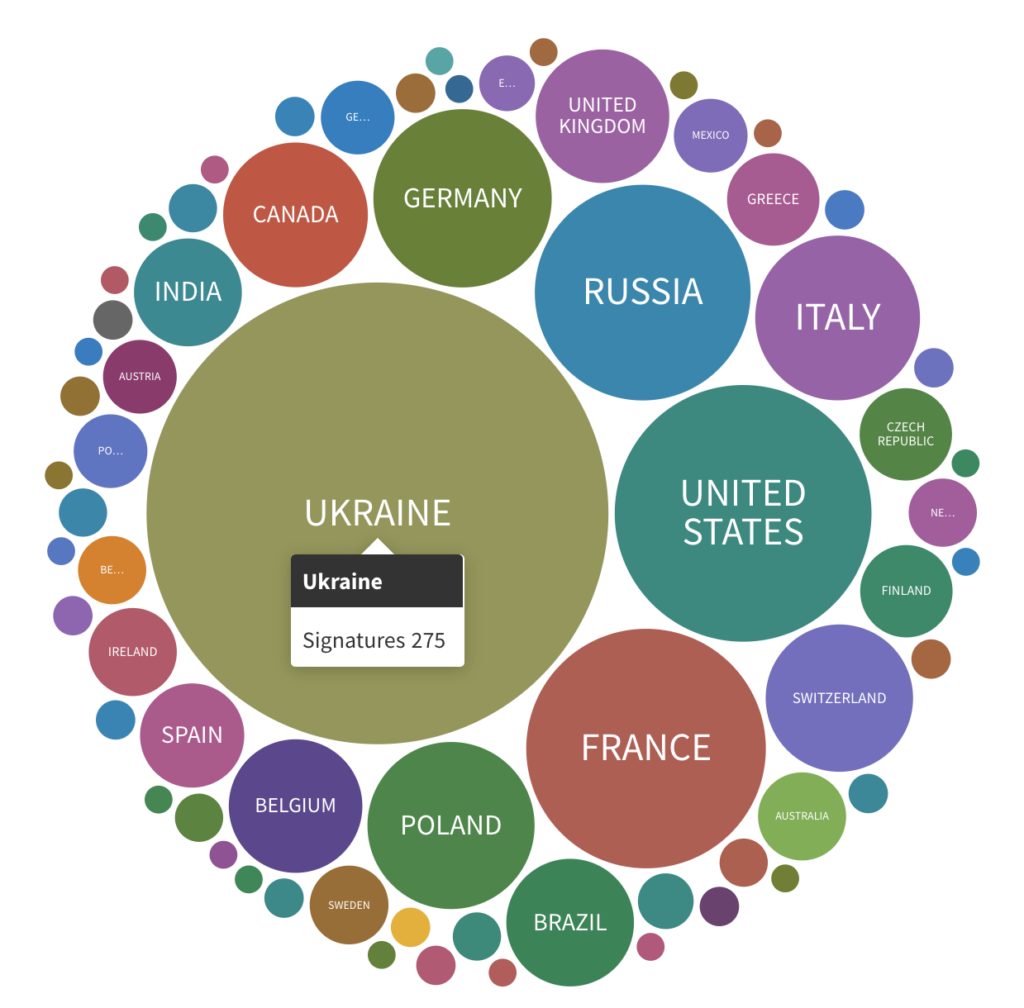
Nearly 900 feminists, both Ukrainian and international, and 75 organisations signed the manifesto, demonstrating substantial support for this position among feminists worldwide. This support was also reflected in academic publications.
For example, Heleen Zorgdrager, Professor of Gender Theology and a visiting lecturer at the Ukrainian Catholic University, published an article entitled “Gender, War and Religion: Feminist Perspectives on Pathways to a Just Peace” in the academic journal Feminist Theology.9 In it, she proposed five principles of a feminist political theology of war and peace, including “nothing for Ukraine without the voices of Ukrainian women.”
In September 2025, Heleen Zorgdrager delivered a keynote address at the “Paths to Peace 2025” conference in Germany, entitled “Making Peace Without Force? Learning from Ukrainian Feminists for a Christian Ethics of War and Peace.” In her lecture, she stated, among other things, “In difficult and exhausting circumstances, Ukrainian feminists are grappling with how to respond to the war. What do they bring, from their feminist standpoint, to the ethical, political, and theological discourse on war and peace? For me, it is a matter of epistemic justice to listen first to their marginalised voices. Particularly given that Russia’s war of aggression seeks to dehumanise Ukrainians, strip them of their agency, deny Ukraine’s right to exist, and destroy Ukraine as an independent country and culture, there is a moral obligation to recognise the unique perspectives of Ukrainian scholars on their own situation.”
This is an example of an understanding of the specific nature of Russia’s war against Ukraine and the importance of Ukrainian feminists’ agency. It is not always easy to discuss women’s experiences of war, particularly those of women serving in the military, with Western pacifist feminists. Sometimes, following international conferences, it is necessary to set out the key points of a presentation separately, explaining why Ukrainian women have the right to resist and why feminists are calling for weapons: “What is needed in this situation is informed solidarity and understanding. Working towards gender equality in one’s own country is an extremely difficult task when the overriding concern is survival during war.”10
Ukrainian women have been fighting for their right to armed resistance since 2014, when Russia annexed Crimea and occupied parts of Donetsk and Luhansk oblasts. Since the beginning of Russia’s war against Ukraine in 2014, the country has transformed its military from a force with limited combat capabilities into an effective army guided by the values of dignity and professionalism. Women have been and remain an integral part of this process, playing an effective role in combat operations and fighting for equal rights and opportunities in the security and defence sector. Moreover, there is a historical continuity of women’s military leadership, dating back to the First and Second World Wars. The stories of several prominent women, including Olena Stepaniv, the first female officer in the Austro-Hungarian Empire, can be heard in “Founding Mothers: A Podcast about the Women Who Shaped the Tradition of Ukrainian Feminism”, produced by the Civic Alliance Political Action of Women.11
The findings of the first large-scale study on women’s experiences in Russia’s war against Ukraine, “Invisible Battalion: Women’s Participation in Combat Operations during the Anti-Terrorist Operation (2015-2017)”, gained the support of women serving in the military, who decided to fight for their rights and advance gender equality in the Armed Forces of Ukraine. The series of sociological studies conducted as part of the Invisible Battalion project represents a grassroots effort to advance gender equality, examining women veterans’ return to civilian life, sexual harassment in Ukraine’s military, and women’s access to military education.12 Combined with top-down measures (legislative reforms and policy changes), these grassroots efforts have helped bring about significant improvements in equal rights and opportunities within the Armed Forces of Ukraine. More than a decade has now passed since the first study and the launch of the broader advocacy campaign, allowing us to assess the achievements of the movement for women’s rights in the military.
The Invisible Battalion project and its advocacy campaign sparked debate among feminists. Some feminists criticised the Invisible Battalion project, arguing that it promoted the militarisation of women without addressing the underlying problems of the military as a male-dominated hierarchical institution. These critiques drew on arguments commonly associated with radical (critical) feminism, which views the security and defence sector as inherently problematic and discriminatory towards women and some men. By contrast, the Invisible Battalion project exemplifies liberal feminism, representing a sustained, step-by-step struggle by women for equal rights and opportunities in a field as challenging as the military. Moreover, the project also addresses women’s labour rights in the military, thereby engaging with ideas associated with left-wing (socialist) feminism. Another group facing discrimination, LGBT+ military personnel, has also begun speaking out about their visibility and rights, including the right to marry or enter into a registered partnership and inheritance rights following a partner’s death.
Liberal feminists identify the following achievements of the 12-year struggle for gender equality in Ukraine’s military: the adoption of relevant legislation, the gradual reduction of vertical gender segregation (with more women attaining higher military ranks) and horizontal gender segregation (with more women serving in combat roles), a shift away from paternalistic gender policies, and the removal of formal barriers to women’s access to all combat roles and military education. Amid a prolonged war and the need to develop a highly skilled pool of personnel for Ukraine’s security and defence sector, expanding women’s access to military education is both a practical application of the principle of equal rights and opportunities and a strategic measure aimed at strengthening the country’s military personnel capacity and defence capabilities.
The findings of the most recent major study on women’s experiences in the military highlight several priorities for women’s fuller integration: creating a safe, non-discriminatory environment; updating the regulatory framework; introducing effective complaints procedures and mechanisms to prevent and address harassment; and improving social protections and healthcare provision.13
The question of women’s mobilisation remains a subject of debate in Ukrainian society. Under Ukrainian law, mobilisation remains voluntary for women. However, some women who are not serving in the military are registered for military service, particularly those with medical or pharmaceutical qualifications. Supporters of women’s mobilisation put forward three main arguments: (1) in a prolonged war, it is necessary to draw on all available human resources, including women, following Israel’s example; (2) the civic duty to defend the country should be gender-neutral and apply to women as well as men; and (3) mobilisation would focus on women without children and those whose children are no longer young.
Some men invoke the principle of gender equality in this context, calling on feminists to fight alongside men on equal terms. Yet they overlook the fact that more than 75,000 women serve in Ukraine’s Defence Forces, and that their number continues to grow.14 According to Ukraine’s Ministry of Defence, women are showing strong interest in voluntarily joining the Defence Forces, consistently accounting for one in five applicants. Women account for 21% of all enquiries received by Ukrainian army recruitment centres.15 Despite women’s substantial and longstanding presence in Ukraine’s security and defence sector, feminists continue to draw attention to the challenges they face: gender stereotypes, sexism and discrimination, hostility from men, and sexual violence. Moreover, military infrastructure does not always take into account women’s needs and interests as a group, reflecting a lack of attention to gender-sensitive approaches. Ukraine’s Defence Forces are not prepared for the large-scale recruitment of women, while some men still struggle to accept women fighting alongside them.
Feminist Iryna Tyshko also outlined a number of gender-sensitive arguments on her Facebook page, concluding, “Mobilising women into the military is a social reform in its own right. … The question is not whether Ukrainian women are ready to serve. They are already serving. The question is whether Ukraine is ready to build a military in which a woman does not first have to prove that she is a human being and only then that she is a servicewoman. And this is no longer a ‘women’s issue.’ It is a question of justice on the part of the state. Because the fight for equality should not be left to women alone.”16
Men and War
War is traditionally regarded as a “man’s domain”, offering men an opportunity to demonstrate masculinity, heroism, strength, endurance, and courage — qualities associated with hegemonic (normative) masculinity. The image of the soldier as a heroic warrior is regarded as an embodiment of idealised masculinity.
Since 2014, when women began volunteering to defend Ukraine against Russian aggression, they have faced stereotypical attitudes, being labelled “bad wives and mothers”, “mothers who have abandoned their children”, and so on.17 On the other hand, men who have not gone to fight but have stayed at home to undertake care work may also face gender-based stereotypes and judgements. For example, a man may be shamed for raising his children, working in a civilian job, or taking on other responsibilities instead of serving in the military, which is traditionally regarded as a “man’s duty.”
Not all men are able to live up to these ideals and societal expectations, which are rooted in gender stereotypes. As a result, a crisis of masculinity may emerge, accompanied by various destructive behaviours, including suicide, risk-taking behaviour, poor health, and alcohol and drug dependence. Over the years of war, both the number and visibility of women in the military have increased, and women have actively fought for their rights. This may also cause frustration among some men who believe they stand to lose some of their rights and privileges. In other words, public discourse surrounding men in wartime tends towards two extremes: they are either excessively glorified as heroes or, conversely, portrayed as victims (or stigmatised). Feminists draw attention to these polarised representations and the problems they pose, arguing that lived realities are more complex and may contain elements of both heroisation and victimisation.
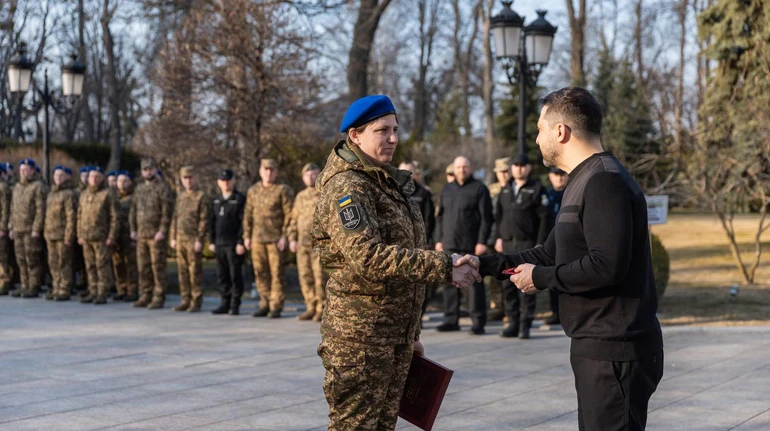
Photo: Ruslan Muzychuk / Facebook, 2026.
And because war is regarded as a “man’s domain”, women may be excluded from positions of power and decision-making, despite their participation in various forms of resistance. Ukraine’s political and military leadership involves relatively few women in international negotiations concerning the war. As data from ongoing professional media monitoring show, the number of women appearing as experts in the media has declined since the full-scale invasion.18 Yana Mashkova, an expert at the Institute of Mass Information (IMI), comments, “Male military personnel, officials, and their statements have pushed women out of the public sphere. Understandably, this is linked to the ongoing hostilities and the prominence of the issue. However, there are women in the military too, who can offer commentary and contribute their own experience and expertise.”19
There are also calls for only those who have fought in the war to be allowed to participate in elections. Such rhetoric overlooks the contributions of the many women involved in volunteering and military service away from the front line. As Oksana Kis, a scholar of the women’s movement, observes, “The volunteer movement has clearly demonstrated just how effective women can be as managers. They find optimal solutions under tight time constraints and are capable of managing resources, including very limited human resources. They are skilled at fundraising and organising logistics. This challenges stereotypes about women being emotional, incapable of making rational or difficult decisions, and being closer to nature than to civilisation.”20
The situation surrounding men’s mobilisation reveals both a shortage of personnel and a reluctance among men to fulfil the civic duty prescribed by state policy. Several international studies have examined Ukrainian male refugees following the full-scale invasion, exploring experiences of “shame and ambiguity”21, as well as feelings of guilt in relation to citizenship and the dilemma faced by men who chose to flee the war rather than fulfil their military duty.22
In recent years, increasing attention has been paid to studying and discussing the masculinities of different groups of men in the context of war. In particular, LGBT+ military personnel have become more visible to activist and research communities.23 There are also findings from a survey of military chaplains examining the construction of their masculinities in the context of war.24
Men’s gender roles are gradually changing in the context of war and care work. As Yosh aptly observes in their column, “Mass mobilisation, social pressure on men and threats to their lives have brought about significant shifts in the country’s gender landscape. Women are now entering many sectors previously dominated by men: they are starting businesses, moving into construction, and becoming public transportation drivers (driving buses, trolleybuses, and even metro trains). On the one hand, this is a logical continuation of Ukrainian women’s struggle for access to different professions: programmes supporting women’s leadership and entrepreneurship had been running for years, and in 2017, restrictions on driving certain types of transport and working in a number of other occupations were lifted. At the same time, job vacancies have clearly opened up. Another shift is the emergence of a group of men who have started working remotely more often or simply ‘staying at home’ to avoid mobilisation. This is giving rise to new patterns of domestic life and new kinds of roles that would have seemed impossible just a few years ago.”25
Gender-Based Violence in Ukraine During the Full-Scale War
Gender-based violence (GBV) is widespread in armed conflicts, disproportionately targeting women and used as a means of intimidation, control, and humiliation. In her book Our Bodies, Their Battlefield (2020; Ukrainian translation published in 2024), Christina Lamb draws on examples from Bosnia and Herzegovina, Rwanda, the Democratic Republic of the Congo, Iraq, Syria, Nigeria, Myanmar, Bangladesh, the Philippines, and Argentina to demonstrate that sexual violence is a systematic practice accompanying many armed conflicts and can be used as a tool to intimidate and destroy communities. In Ukraine, the full-scale war has not only led to incidents of conflict-related sexual violence (CRSV) but has also heightened the risk of an increase in GBV. The prevalence of GBV is influenced not only by war crimes themselves but also by psychological trauma, forced displacement, economic instability, unemployment, overcrowded living conditions, and the reinforcement of traditional gender roles.26
One of the most notable trends is the increasing prevalence of domestic violence. According to police data, 349,355 cases of domestic violence were recorded in the first five months of 2023, an increase of 83.6% compared with the same period in 2021, when 190,277 cases were recorded.
However, official statistics do not capture the full extent of the problem. Data from different government agencies may vary considerably due to differences in recording methods, while a significant proportion of incidents of violence go unreported, often because of fear of judgement, societal stereotypes, and expectations placed on women to preserve the family “at any cost.” According to UN data, in 2025, approximately 2.4 million people in Ukraine, predominantly women and girls, had either experienced or were at risk of GBV and required related support services.
War creates conditions in which factors contributing to domestic violence can accumulate. Prolonged stress, loss, economic instability, and overcrowded living conditions increase tensions within families. Internally displaced persons and families of military personnel remain particularly vulnerable. Traumatic experiences, difficulties adjusting to civilian life after military service, and psychological exhaustion may increase the risk of aggressive behaviour in some families.
At the same time, access to support services for survivors remains inconsistent. The destruction of infrastructure, population displacement, shortages of qualified professionals, and cuts to humanitarian funding make it more difficult to access psychological, medical, legal, and social support, particularly in frontline and hard-to-reach communities.
Today, feminist and human rights organisations play an important role in addressing GBV, combining support for survivors with advocacy for systemic change. In particular, the non-governmental organisation (NGO) Veterankа, together with the expert platform Gender in Detail, co-initiated a petition calling for a mechanism to address sexual harassment and sex-based violence in the Armed Forces of Ukraine (AFU), emphasising the need for clear procedures for reporting and responding to such incidents. One of the outcomes of the awareness-raising campaign accompanying the petition was the adoption of Law #13037 in February 2026, which strengthens mechanisms for preventing and addressing discrimination and sexual harassment in the AFU.
Another area of work is addressing sexual harassment and violence in universities, which involves establishing effective mechanisms for preventing, reporting, and investigating such incidents, as well as protecting survivors.
At the same time, feminist organisations focus not only on responding to violence that has already occurred but also on creating an environment in which such violence is not tolerated. This includes fostering a culture of consent, challenging gender stereotypes, reforming education, and introducing comprehensive sexuality education. It is also important to establish a culture of reputational accountability in which those who perpetrate physical, psychological, or sexual violence, or systematically harass others, cannot escape the social consequences of their actions. Such an approach involves not only legal penalties but also establishing social and institutional mechanisms that make violence unacceptable and strengthen accountability for it. The cases of Andrii Bilous and Professor Yosyp Los are illustrative. Bilous stepped down as director of the Kyiv National Academic Molodyi Theatre in May 2025 following public allegations of sexual harassment. In October 2025, he was formally notified that he was suspected of systematic sexual violence and the rape of female students. Los was dismissed from Ivan Franko National University of Lviv in March 2025 following similar allegations. These cases suggest that cancel culture and reputational accountability in Ukraine have become more prominent during the full-scale war, even as public attention has focused primarily on security and survival.
CRSV constitutes a distinct dimension of the problem. According to UN data, 484 cases of CRSV perpetrated by Russian authorities against civilians and prisoners of war were documented between February 2022 and December 2024, involving 350 men, 119 women, 13 girls, and two boys. However, these figures do not reflect the true scale of the problem due to the occupation of parts of Ukraine, stigmatisation, risks to survivors’ safety, and difficulties in reporting and documenting cases. In the context of the Russo-Ukrainian war, CRSV should be understood not only as individual crimes against survivors but also as a weapon of war. Sexual violence can be used to intimidate civilian populations, humiliate, punish, enforce submission, and destroy social bonds. In occupied territories, such practices are accompanied by other forms of coercion, including unlawful detention; torture; deportation; the imposition of Russian citizenship; and the suppression of Ukrainian language, culture, and identity. Moreover, acts of CRSV committed by Russian military personnel in Ukraine are a direct extension of the culture of violence that dominates Russian society and serve as an instrument of Russia’s colonial regime. One striking example of this attitude towards sexual violence is a telephone conversation between a Russian serviceman and his wife, intercepted by the Security Service of Ukraine (SBU) in April 2022, in which the woman laughs as she encourages him to rape Ukrainian women. Evidence gathered by women human rights defenders suggests that sexual violence in occupied territories was neither isolated nor spontaneous. According to Kateryna Cherepakha of the NGO La Strada-Ukraine, women human rights defenders heard testimonies describing how Russian military personnel repeatedly entered Ukrainian homes in occupied territories and raped women, accompanying these crimes with the words, “Now you won’t give birth to any more Nazis.”27 Such statements suggest that sexual violence may have been used not only to humiliate and intimidate but also as a deliberate instrument of Russia’s genocidal policy aimed at destroying Ukrainian national identity and the Ukrainian community.
It is also telling that the Russian state not only fails to punish military personnel for such crimes but effectively legitimises them: after returning from Ukraine, servicemen from a Russian military unit implicated in atrocities, including sexual violence, in Bucha, Irpin, and Borodianka were awarded medals by Vladimir Putin. These events expose the cynicism and imperial logic underpinning Russia’s actions, within which the Ukrainian population is treated as subordinate and denied the right to bodily autonomy, dignity, and safety. It is precisely the dehumanisation of the “Other” that enables sexual violence to be justified as acceptable treatment of a subjugated population and turns the victim’s body into a site for the demonstration of power and control, further demonstrating the colonial logic of Russia’s war against Ukraine.
GBV in wartime should be understood as a multifaceted problem that extends far beyond individual incidents of violence. It encompasses issues of power, inequality, human dignity, and the right to safety, and therefore requires not only legal mechanisms for addressing violence but also broader societal changes aimed at ending the tolerance of violence and the culture of impunity.
Education and Public Awareness During Wartime
The gender dimension of the Russo-Ukrainian war and disinformation is evident in the media landscape. Feminists highlight that women politicians, journalists, and activists are all affected by this. Violence against women active in public and political life — including gendered disinformation, the non-consensual sharing of intimate images, cyberviolence, cyberstalking, blackmail involving threats to share intimate images, the dissemination of deepfakes, and threats of rape and murder — can be perpetrated by social media users, political opponents, national governments, and foreign states alike.28 Furthermore, mobilisation measures in Ukraine have become a tool of Russian disinformation campaigns. For example, false claims may be circulated alleging that women will be mobilised within a certain period. Feminists point out that this is a sensitive issue in Ukrainian society, which is why it is actively exploited in disinformation campaigns.
This is why it is important to highlight the role of education in combating discrimination and gender inequality. Limited awareness of gender issues among primary and secondary school teachers remains a problem. Gender issues are part of social, emotional, and ethical learning (SEE Learning), which is being introduced by civil society organisations, including EdCamp Ukraine.29 In addition, textbooks underwent an anti-discrimination review conducted at the level of the Ministry of Education and Science, and the principles underpinning this review were incorporated into the training of new textbook authors.30
In 2025, the Ministry of Education and Science finally approved the Methodological Guidelines for Implementing Policies to Combat Discrimination and Sexual Harassment and Promote Equality in Ukrainian Higher Education Institutions.31 Thus, despite the full-scale war, gradual changes are taking place within the education system, including greater attention to gender equality and increased visibility of women’s contributions to the war effort.
Feminists point out that efforts have been made in recent years to integrate a gender perspective into military education in Ukraine. In 2025, the team at the NGO Institute of Gender Programmes developed and piloted gender-sensitive military leadership programmes for specialised secondary military educational institutions and higher military educational institutions.32 Professionalism, dignity, and equality are essential values for the participation of women and men in the war.
Care Work During Wartime
Since the beginning of the Russo-Ukrainian war in 2014, care work has received less attention in academic research and the activities of women’s organisations than issues such as women’s political participation, leadership, and entrepreneurship. However, since the full-scale invasion in 2022, the situation has gradually been changing, with feminists drawing attention to women’s reproductive labour. Researchers and activists are seeking to understand whose care work challenges have been exacerbated by the war and in what ways. It has become clear that the full-scale war has significantly increased the amount of unpaid and low-paid care work, most of which falls on women.
Feminists emphasise that care work must be integrated not only into policies and strategies but also into the very way we think about comprehensive defence and societal resilience.33 During the full-scale war, the intersection of paid and unpaid care work has effectively become part of the critical infrastructure of comprehensive defence: limited opportunities for temporary staff replacement, the destruction of facilities, disruptions to service provision, and fragmented work schedules lead to chronic overwork among women and reduce staffing capacity in essential sectors.34
Increasing attention is being paid to studying the care, caregiving, and unpaid work undertaken by family members of military personnel and veterans, including mothers, wives, sisters, and others.35 They are among the groups of women who have experienced some of the greatest increases in their care work burden. This raises an increasingly relevant question of how to frame care and care work not only as a problem but also as a social value, particularly in the context of the full-scale war.
Clearly, not everyone in society is ready to challenge patriarchal gender contracts in which men are expected to be breadwinners and protectors, while women are responsible for caring for the family and performing reproductive labour. Nevertheless, these issues are gradually being discussed and receiving greater attention in public discourse, despite the ongoing full-scale war. For example, some men may exploit opportunities to undertake paid or unpaid care work in order to avoid conscription. However, there are also men who are willing to challenge established gender roles, despite the war. The findings of a public opinion survey conducted after the full-scale invasion also show that fathers’ involvement in caring for children of all ages has increased significantly in recent years.36 This includes daily care, particularly for children who are ill, purchasing goods for children, taking them to nursery or school, helping with their education, going for walks, and spending time talking with them.
In Ukraine, the issue of care work is gradually moving beyond purely academic debate. Care work is becoming the focus of practical projects aimed at changing policies and approaches to the organisation of work. Gender in Detail pursued one such area of work as part of the project “Local Feminist Perspectives as a Lever for Transformation in Partner Countries”, funded by the German Federal Government through GIZ. A separate part of the project focused specifically on care work. Rather than addressing care work solely through general recommendations, the team worked with a specific government institution (Volyn Regional State Administration) to explore how employers can support employees with family responsibilities.
This work resulted in the development of a Workplace Policy for Supporting Employees with Family Responsibilities, practical recommendations for the Volyn Regional State Administration, and an accompanying guide.37 This is the first initiative of its kind within a local body of state executive authority in Ukraine. This includes, in particular, opportunities for flexible working arrangements, taking into account the needs of employees with caregiving responsibilities and, in the longer term, creating infrastructure that is more supportive of parents and caregivers. Importantly, these measures were developed with the realities of wartime and the actual resources available to the government institution in mind, rather than as a model for hypothetical situations.
Another area of work focused on raising the visibility of care in society more broadly. Together with the project’s curator, sociologist Olena Strelnyk, Gender in Detail initiated a series of articles dedicated to the International Day of Care and Support, observed annually on 29 October. It aimed to draw the attention of Ukrainian society and the feminist movement to the importance of unpaid and paid care work, while highlighting the critical contribution of those caring for children, people with disabilities, wounded military personnel, and older people to societal resilience during wartime. Such initiatives are also important because they change the way care itself is discussed: not as a private matter for individual families, and primarily for women who are expected to find their own ways of balancing childcare, caring for older relatives and paid work, but as a social function that requires infrastructure, employment policies, and state support.
This issue is also receiving increasing attention from international organisations and donors. UN Women already considers the transformation of the care economy a distinct area of its work in Ukraine. In particular, in its recommendations for gender-responsive recovery in Ukraine, the organisation emphasises the need to recognise the economic value of unpaid care work, expand access to care services, and create conditions for a more equitable distribution of this work. In the context of recovery, this is directly linked to women’s economic participation: without access to affordable care services for children, older people, and people with disabilities, many women will simply be unable to fully re-enter the labour market.
In other words, the discussion around care work has changed noticeably over the past few years. Issues that for a long time remained primarily the subject of feminist critique — the invisibility of unpaid work, its unequal distribution, and the dependence of women’s economic opportunities on access to care — are gradually becoming the focus of concrete research, policies, and donor-funded programmes. For Ukraine during wartime, this shift is particularly important: the issue is no longer just about a fairer distribution of domestic work, but also about who keeps society functioning on a daily basis and whether they receive sufficient support to do so.
Advocacy
The legislative changes between 2014 and 2024 outlined above are important not merely as a record of achievements to date. They demonstrate that efforts to expand the rights of women and LGBT+ people in Ukraine have continued even during wartime. At the same time, these changes do not happen automatically. Behind each of these changes lie years of work by civil society and human rights organisations, experts, and activists: researching the issues, drafting legislative proposals, organising petitions and public campaigns, and engaging with members of parliament and government authorities.
This work continued after 2022. Moreover, this work involves not only advancing new rights and protective mechanisms, but also responding to conservative legislative initiatives that could restrict existing rights. Thus, the Ukrainian feminist movement is working on two fronts simultaneously: seeking to expand the scope of equality while preventing setbacks in areas where certain changes have already become part of state policy and established social norms.
One of the longstanding areas of advocacy remains introducing registered partnerships. Draft Law #9103 on establishing registered partnerships was introduced back in 2023. Its significance has become particularly apparent during the full-scale war: same-sex couples, including LGBT+ military personnel and their partners, lack the legal protections automatically afforded to married couples in matters such as inheritance, hospital access to a partner, property rights, and access to information in the event of injury or death. As a result, the debate over registered partnerships during the war has moved beyond abstract discussions of “family values” and become a matter of concrete social and legal protection. At the same time, advocacy for registered partnerships faces resistance from conservative political circles, which continue to use LGBT+ issues to mobilise fears around the “protection of the family.”
Another major area of advocacy is creating safe educational environments, providing sexuality education, and combating sexual violence and harassment in schools and universities. Ukraine still lacks a systematic approach to comprehensive sexuality education, even though it provides children and adolescents not only with knowledge about reproductive health but also with a basic understanding of personal boundaries, consent, safety in relationships, and how to recognise violence. Together with Iryna Tyshko, Gender in Detail co-initiated a campaign to introduce compulsory sexuality education in schools, while also developing educational materials on sexuality education.
The problem does not disappear after students leave school. Ukrainian universities often lack clear internal procedures that allow students to report sexual harassment, abuse of power, or violence and receive support without having to deal alone with university administrators or lecturers on whom they depend. Consequently, another area of advocacy has focused on establishing a comprehensive system for preventing sexual harassment and violence in higher education institutions. Gender in Detail launched an advocacy campaign to this end, including a petition to the Cabinet of Ministers of Ukraine, calling for systematic mechanisms to respond to such incidents and support survivors.
A similar problem exists within Ukraine’s Defence Forces. The growing number of women in the military and the formal opening of combat positions to them do not automatically create a safe and non-discriminatory environment. Research conducted by Invisible Battalion, alongside subsequent advocacy efforts, has documented sexism, discrimination, and sexual harassment in the military over many years. One of the next priorities was to establish a separate, clear mechanism for responding to sexual harassment and sex-based violence, as the standard military chain of command can make reporting particularly dangerous for survivors if the perpetrator holds a higher rank or has influence within the military. Work on developing such a mechanism began before the full-scale invasion, with the involvement of civil society organisations and the General Staff. In March 2026, President of Ukraine Volodymyr Zelenskyy signed a law aimed at preventing discrimination and sexual harassment in the military.
Advocacy during wartime involves not only proposing new mechanisms but also protecting existing rights from conservative attempts to roll them back. The debate surrounding the new Civil Code was particularly illustrative of this in 2026. The initial draft, #14394, contained a number of provisions38 that human rights, feminist, and media organisations regarded as posing a threat to the rights of women and LGBT+ people, freedom of expression, and the alignment of Ukrainian legislation with European standards.39 Following public criticism, the draft law was withdrawn, but a new draft, #15150, was registered in April 2026. A coalition of civil society organisations continued its work on the new draft law, preparing proposed amendments to provisions concerning families, de facto unions, the rights of LGBT+ people and children, and the media, as well as participating in public discussions and meetings with representatives of the Verkhovna Rada.40 Gender in Detail also joined this campaign, combining public awareness-raising with direct advocacy for amendments to the draft code. This example clearly illustrates that a “patriarchal backlash” does not necessarily involve the outright repeal of existing laws; it can also take the form of attempts to quietly reintroduce conservative definitions of family, gender roles, and acceptable forms of private life into new legislative frameworks.
Another issue that has only begun to receive the public attention it deserves in recent years is stalking. Stalking can continue for months or even years. It can involve unwanted messages and phone calls, surveillance, repeated attempts to appear near someone’s home or workplace, threats, the disclosure of their personal information, or monitoring through digital tools. Individual acts of stalking may seem insufficiently threatening when considered in isolation, but their repeated nature creates a constant sense of danger and often precedes physical violence. This is why human rights activists are campaigning for stalking to be recognised as a distinct offence under Ukrainian law and for mechanisms that would enable authorities to intervene before the behaviour escalates into a more serious crime. In 2026, the campaign gained further visibility through a petition calling for the criminalisation of stalking and widespread public discussion of the issue. Gender in Detail contributed to the campaign’s public communications, explaining why existing legal protections against systematic stalking are insufficient.41
Another distinct advocacy issue in 2026 was the decriminalisation of consensual production of pornographic content by adults.42 Article 301 of the Criminal Code, currently in force, allows adults to be prosecuted for creating and distributing content with mutual consent, while also creating opportunities for police abuse and corruption. In June 2026, Draft Law #15294 was registered with the Verkhovna Rada, and on 14 July, Parliament passed it at first reading. It proposes decriminalising certain activities involving pornographic content featuring consenting adults, while strengthening penalties for child sexual abuse material.
The debate within women’s and feminist circles is far more complex than a simple pro- or anti-porn divide. The question is how to stop criminally prosecuting adults for voluntarily creating their own sexual content without creating an unregulated industry in which platforms and intermediaries reap the profits, while women bear the main risks of exploitation, violence, and losing control over their content.
These campaigns cover very different issues, from sexuality education to the Civil Code, and from the rights of military personnel to stalking. Taken together, however, they reveal an important feature of Ukrainian feminism during the war. Its work has not been limited to responding to the humanitarian consequences of the invasion, nor has it been put on hold “until victory.” Feminist and human rights organisations continue to engage with state institutions, legislation, and social norms, working to achieve concrete changes while also defending gains already made.
This also offers a different perspective on the possibility of a patriarchal backlash. It is not a process that simply either “happens” or “does not happen” on its own. The gender order is the subject of ongoing political contestation: some actors seek to expand the rights and opportunities of different groups, while others seek to steer society back towards more conservative models. The fact that campaigns for the rights of LGBT+ couples, the safety of women in the military and in education, the criminalisation of stalking, and the reform of outdated criminal law provisions continue in Ukraine even in the fifth year of the full-scale war is itself an important indicator of the state of the Ukrainian feminist movement: it remains a political actor capable not only of responding to the war but also of continuing to shape the state.
Comprehensive Defence
One lesson that Ukraine can already offer Western societies concerns the very meaning of defence. More than four years of full-scale war have shown what can easily go unnoticed in peacetime: a country’s ability to resist aggression depends not only on the number of military personnel, its weapons, or its defence budget. The military does not exist separately from society. Behind it are people who continue to work, raise children, care for older people and the wounded, maintain critical infrastructure, manage local communities, volunteer, provide logistical support, and counter disinformation. When these systems break down, the state’s military capacity also begins to weaken.
This is precisely the broader perspective offered by the concept of Comprehensive Defence. One of the best-known examples is Sweden’s totalförsvar model of Total Defence, which comprises military and civil defence and involves the whole of society in preparing the country for war. In the Swedish system, national resilience depends not only on the armed forces but also on the readiness of government authorities, municipalities, businesses, civil society organisations, and citizens themselves to keep society functioning during a crisis or war.43
This perspective changes our understanding of what constitutes defence infrastructure in the first place. For example, the Swedish system makes provision for care facilities to operate around the clock if critical infrastructure workers are unable to leave their posts during a crisis. In Ukraine, this connection is even more apparent. If a nursery lacks a safe shelter, some parents will be unable to leave their children there and go to work. This chain of consequences extends to the functioning of hospitals, businesses and public institutions, the economy, tax revenues and, ultimately, the resources used to fund defence. Care infrastructure ceases to be a private family matter and becomes an integral part of societal resilience.
At first glance, there may seem to be nothing specifically feminist about this. Yet it is precisely a feminist perspective that allows us to ask a question often overlooked in conventional security analysis: whose labour actually sustains this resilience, and at what cost?
This question became the starting point for the research project “A Gender Perspective in the Context of Comprehensive Defence”, undertaken by the NGO Gender in Detail and conceived by feminist philosopher Tamara Zlobina. Twenty-one female researchers joined the project. Coming from different professional and academic backgrounds, they worked in seven research groups examining the volunteer movement, care work, women’s participation in the military and civil defence, the economy, local government, and information policy, comparing Ukrainian and Swedish experiences.44
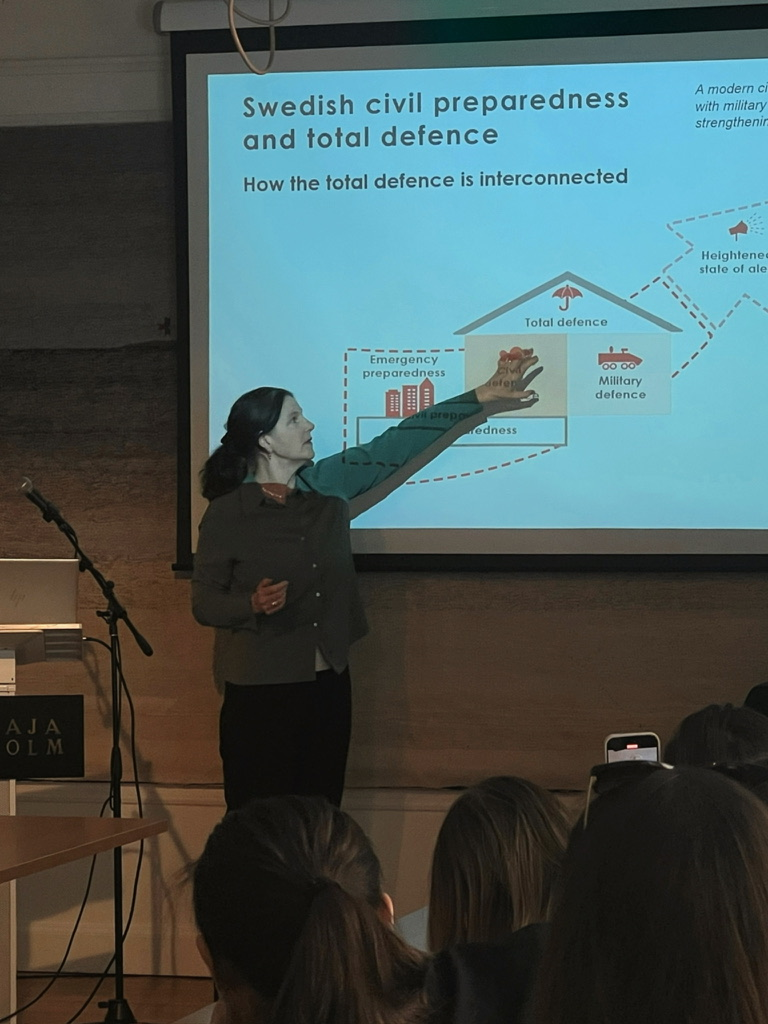
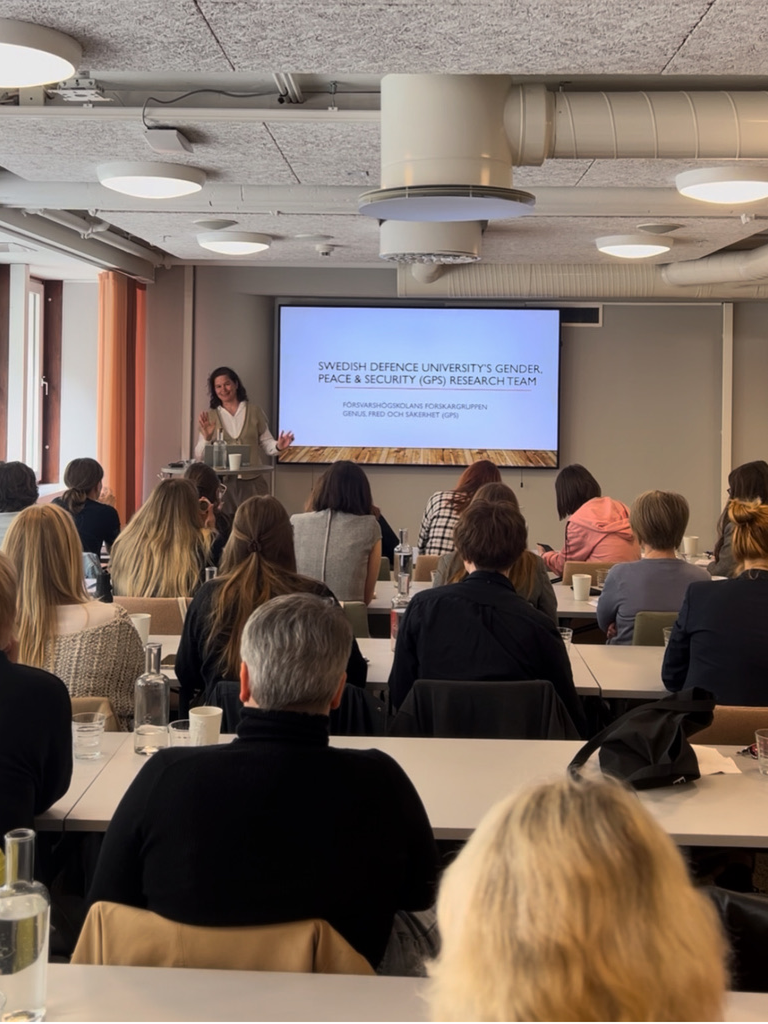
Photos from a study visit to Sweden
Sweden has a system that the state has spent decades developing, coordinating, and resourcing, but it has never been tested by a modern full-scale war. In Ukraine, by contrast, Comprehensive Defence has largely emerged from the bottom up during the war. Hundreds of thousands of people have contributed to defence efforts in ways that draw on their skills and expertise, from major volunteer foundations and businesses to grassroots initiatives, journalists, local communities, and individuals who organise fundraising campaigns or use their home 3D printers to produce drone components.
This decentralised structure has proved to be a major advantage: the system is difficult to paralyse, adapts quickly to emerging needs, and fills gaps where the state cannot respond quickly enough. Yet what was a strength in the early years of the full-scale war may become a weakness in a war of attrition. Dispersed initiatives lack stable funding, coordination, and the capacity for long-term planning. The challenge, then, is not to bring everything that has emerged from the bottom up under state control, but to provide these initiatives with resources and institutional support without undermining their flexibility. As Tamara Zlobina writes, we need to transform the “exhausting marathon of volunteering” into sustainable civic work.45
Yet volunteering has another dimension that is important for feminist analysis. Over the years of war, thousands of women have learned to manage complex operations, raise substantial funds, set up production facilities, negotiate with businesses and the military, write grant applications, build networks and earn the trust of local communities. Alongside this experience, they accumulate social and symbolic capital, but it is important to recognise that this does not automatically translate into political capital. For Ukrainian feminism, this issue goes far beyond visibility. Who will have the right to decide how budgets are allocated and what communities, social policy, defence, and reconstruction should look like after the war? Women may spend years sustaining the country’s resilience, but this does not guarantee them a seat at the decision-making table. A longstanding feminist concern takes on a new form: women’s labour is readily accepted when it is needed, but the responsibility they assume is rarely accompanied by a corresponding transfer of resources and power.
A gender perspective on Comprehensive Defence, therefore, is not simply a matter of how many women have been “involved.” Women are already involved. What matters more is examining who does the work, who receives public recognition for it, who gets access to resources, and who ultimately makes the decisions. Otherwise, we risk building a highly resilient society on the foundations of an outdated gender order: women help it withstand the crisis, while men decide where it goes next.
For Western colleagues, the Ukrainian experience is also valuable because knowledge can flow in both directions. Sweden demonstrates how civil preparedness can be institutionalised over decades, while Ukraine shows what happens to such a system when a crisis actually strikes.
Europe is also moving towards a whole-of-society approach to preparedness and resilience.46 The role of civil society, local communities, and civilian sectors in security is increasingly being discussed at European security conferences and expert meetings. And the discussion is no longer just about preparing for a possible future war. Hybrid warfare against European democracies is already under way, through disinformation and information operations, cyberattacks, interference in political processes, sabotage, and attacks on critical infrastructure.
Ukraine is already ahead in some respects in this debate. We know how military, information, economic, and political warfare intertwine; how quickly society can organise itself; and at what point this resilience begins to take a toll on people. Ukraine’s experience adds an important caveat to the European whole-of-society approach: involving “everyone” is not enough. We also need to consider the infrastructure that enables participation and how to reconcile defence with everyday life, because life must go on during wartime.
This brings us back to the broader discussion of the decolonisation of Ukrainian feminism. Ukrainian feminists are no longer simply interpreting their own experience through Western theories or explaining to Western colleagues why certain frameworks do not work well in the context of Russian aggression. They are producing knowledge themselves about a society that has been living through full-scale and hybrid warfare for years. And today, Europe needs this knowledge just as much as Ukraine once needed European models.
Sources Used:
- Francis Fukuyama, The End of History? (1989), https://www.ekof.bg.ac.rs/wp-content/uploads/2014/05/Fukuyama-The-End-of-History.pdf ↩︎
- Olena Suslova, “Orhanizatsiina zbroia: genderna skladova” [Organisational Weaponry: The Gender Dimension] (2018). https://wicc.net.ua/media/organizat_zbroya.pdf ↩︎
- Leela Gandhi, Postcolonial Theory (1998). ↩︎
- See: Martha Bohachevsky-Chomiak, Bilym po bilomu [White on White], Chapter 16, “Women as a Political Force” (2026). ↩︎
- Bros, Aurélie (ed.). (2024). Women and War: Letters from Ukraine to the Free World. Boston: Academic Studies Press. The Ukrainian translation was made freely available with financial support from the Heinrich Böll Foundation, Kyiv–Ukraine Office. https://ua.boell.org/sites/default/files/2024-02/bross-boell-web.pdf ↩︎
- https://spectrejournal.com/feminist-resistance-against-war/ ↩︎
- https://www.opendemocracy.net/en/ukraine-russia-war-feminists-we-must-lobby-for-air-defence/ ↩︎
- https://commons.com.ua/en/right-resist-feminist-manifesto/#elementor-toc__heading-anchor-1 ↩︎
- Zorgdrager, Heleen (2024). “Gender, War, and Religion: Feminist Perspectives on Pathways to Just Peace.” Feminist Theology, 33(1):461-477. https://doi.org/10.1177/09667350241268046 ↩︎
- Martsenyuk, T. (2024). “Women’s Participation in the Defence of Ukraine in the War against Russia.” Journal of the European Society of Women in Theological Research. Vol. 32, p. 47-60. 10.2143/ESWTR.32.0.3293699. https://poj.peeters-leuven.be/content.php?url=article&id=3293699&journal_code=ESWTR ↩︎
- https://linktr.ee/uafoundingmothers ↩︎
- https://invisiblebattalion.org/ ↩︎
- https://genderindetail.org.ua/post/bariery-dlia-zhinok-u-zsu-ta-instytutsiini-rishennia/
↩︎ - https://www.armyfm.com.ua/ponad–tysiach-zhinok-sluzhat-u-zbroinykh-sylakh-ukrainy–oksana-hryhorieva-radnytsia-henshtabu-zsu/ ↩︎
- https://life.pravda.com.ua/society/u-rekrutingovi-centri-yakih-oblastey-zvertayetsya-naybilshe-zhinok-dani-minoboroni-306599/
↩︎ - https://www.facebook.com/ira.tishko/posts/pfbid023295oRd8222ZLZkues7vRq5cwgsnhjMzbeQu4BgAqMK6cYsoKyR6afdjipJAyUWol?__cft__[0]=AZiuiROn_nr-LOLoqAZ8Q3XO5CfTEItFPtyv4z0dkEXFELLwz68WaPQVctc3l0FzqNQjWtV6cFXwrRYBl4lmHt6Ixt0R8ODtQu7da-0Y8AL8D-A8qvMc5kWpCSLBIsWnfHEayyL4V0AtTWlWUDzeLcYX5B31k0BlpQ&__tn__=%2CO%2CP-R
↩︎ - Martsenyuk, T., Hrytsenko, H., Kvit, A., and Berlinska, M. (2015). “Invisible Battalion: Women’s Participation in Military Operations during the Anti-Terrorist Operation (ATO) (A Sociological Study).” Edited by T. Martsenyuk. Kyiv: Ukrainian Women’s Fund. http://www.ekmair.ukma.edu.ua/bitstream/handle/123456789/7746/Martsenyuk_Nevydymyi_bataloin.pdf
↩︎ - https://imi.org.ua/monitorings/zhertvy-abo-krasuni-yak-ukrayinski-onlajn-media-vysvitlyuyut-zhinok-na-pyatomu-rotsi-vijny-doslidzhennya-imi ↩︎
- https://divoche.media/2024/03/08/v-ukrainskykh-media-pislia-povnomasshtabnoho-vtorhnennia-znachno-zmenshylas-kilkist-ekspertok-i-heroin-materialiv-doslidzhennia/
↩︎ - Slavinska, I. (9 October 2015). “‘Traditional’ Women’s Roles Take on Military Significance in Wartime: An Interview with Oksana Kis.” Ukrainska Pravda. https://life.pravda.com.ua/culture/2015/10/9/201525/ ↩︎
- Blomqvist Mickelsson, T. (2023). “Safety, Shame, and Ambiguity—the Case of Ukrainian Male Refugees.” International Migration Review, 01979183231216075. https://journals.sagepub.com/doi/full/10.1177/01979183231216075
↩︎ - Rose, S. (29 July 2026). “Masculinity, Guilt, and Citizenship: How Men of Conscription Age Make Sense of Leaving Ukraine.” Commons: Journal of Social Criticism. https://commons.com.ua/en/maskulinnist-provyna-i-hromadianstvo/ ↩︎
- Shcherba, D., & Diachenko, I. (2025). “LGBT military personnel in Ukraine during the Russo-Ukrainian War: Trends in public attitudes and prospects for implementing anti-discrimination policies in the Ukrainian military.” NaUKMA Research Papers. Sociology, 8, 117-125. https://doi.org/10.18523/2617-9067.2025.8.117-125
↩︎ - Surovtseva, N., & Martsenyuk, T. (2025). “Can I hug you?”: Constructing masculinities among chaplains of the Armed Forces of Ukraine. NaUKMA Research Papers. Sociology, 8, 104-116. https://doi.org/10.18523/2617-9067.2025.8.104-116
↩︎ - Yosh. (7 August 2025). “And Mine Is at a Rally: On Gender Roles in Ukraine and Stories That Inspire the World.” Hromadskyi Prostir. https://www.prostir.ua/?blogs=a-moya-na-mitynhu
↩︎ - Galyna Kotliuk, “Healing and Rebuilding: A Community-Based Approach to Addressing Gender Based Violence”, https://www.gmfus.org/news/healing-and-rebuilding-community-based-approach-addressing-gender-based-violence-ukraines ↩︎
- Kvinna till Kvinna, “They Came Together Not To Be Silent”, 2023. https://kvinnatillkvinna.org/wp-content/uploads/2023/08/The-Kvinna-till-Kvinna-Foundation-they-came-together-not-to-be-silenced-gender-based-violence-in-conflict-the-role-of-womens-rights-organisations.pdf
↩︎ - Tyshko, I. (2024, 11 April). “(Un)safe digital space, or how to protect women from online violence.” https://50vidsotkiv.org.ua/ne-bezpechnyj-tsyfrovyj-prostir-abo-yak-zahystyty-zhinok-vid-onlajn-nasylstva/
↩︎ - https://www.edcamp.ua/seelukraine/
↩︎ - As part of the comprehensive Education for Life policy, the Ministry of Education and Science is working to update guidelines for teams of authors developing textbooks and model curricula for the New Ukrainian School. ↩︎
- https://mon.gov.ua/npa/pro-zatverdzhennia-metodychnykh-rekomendatsii-shchodo-vprovadzhennia-polityky-protydii-dyskryminatsii-seksualnym-domahanniam-ta-pidtrymky-rivnosti-u-zakladakh-vyshchoi-osvity-ukrainy
↩︎ - https://ekmair.ukma.edu.ua/server/api/core/bitstreams/fd2e0a2c-af84-4537-8a79-f4cb5d5dcb53/content
↩︎ - Korkach, D. (2026, 24 February). “The home front in the shadows: Why care work is part of defence.” Gender in Detail. https://genderindetail.org.ua/post/chomu-dohliadova-pratsia-ie-chastynoiu-oborony/
↩︎ - Medina, T., Konovalova, T., & Korkach, D. (2026, 13 February). “Care work in the context of comprehensive defence.” Gender in Detail. https://genderindetail.org.ua/season-topic/feminism-in-detail/doslidzhennya-doglyadova-pratsya-v-kontexti-vseohopnoi-oboroni-1342203.html
↩︎ - Pryncyp. (2023). “Care, caregiving and unpaid work undertaken by those close to veterans: A review of international experience with support programmes and the situation in Ukraine.” Tina Polek, Yelyzaveta Noskova, Liubov Halan, Oksana Yavorska, Ivan Shmatko, Anna Pashkina; edited by L. Halan and I. Shmatko. Kyiv. https://www.pryncyp.org/wp-content/uploads/2024/02/turbota.pdf ↩︎
- Volosevych, I., & Maksymenko, O. (2023). “Men’s role in fatherhood during the full-scale war.” Prepared for the United Nations Population Fund (UNFPA). https://www.sapiens.com.ua/publications/socpol-research/283/ukr_rol_cholovikiv_u_batkivstvi_u_chas_povnomasshtabnoi_viyny_.pptx_.pdf ↩︎
- https://genderindetail.org.ua/post/posibnyk-pidtrymka-pratsivnykiv-iz-simeinymy-oboviazkamy/
↩︎ - https://www.pravda.com.ua/columns/2026/02/09/8020025/
↩︎ - https://genderindetail.org.ua/post/novyi-tsyvilnyi-kodeks-stefanchuka-chomu-tse-vazhlyvo/
↩︎ - https://genderindetail.org.ua/post/dobrozvychainist-i-protesty-proty-novoho-tsyvilnoho-kodeksu/
↩︎ - https://genderindetail.org.ua/post/kryminalizatsiia-stalkinhu-v-ukraini-petytsiia/
↩︎ - https://genderindetail.org.ua/post/dekryminalizatsiia-pornoindustrii-svitovyi-dosvid/
↩︎ - https://www.government.se/government-policy/total-defence/
↩︎ - Hanna Hrytsenko, “Analytical Report on the Project ‘A Gender Perspective in the Context of Total Defence’”, Gender in Detail, 16 February 2026; https://genderindetail.org.ua/post/analitychnyi-zvit-hendernyi-pidkhid-vseokhopna-oborona/
↩︎ - Tamara Zlobina, “How Ukraine Can Build Comprehensive Defence”, Ukrainska Pravda, 24 February 2026
↩︎ - EU Preparedness Union Strategy, European Commission https://civil-protection-humanitarian-aid.ec.europa.eu/news-stories/news/eu-preparedness-union-strategy-prevent-and-react-emerging-threats-and-crises-2025-03-26_en
↩︎


