

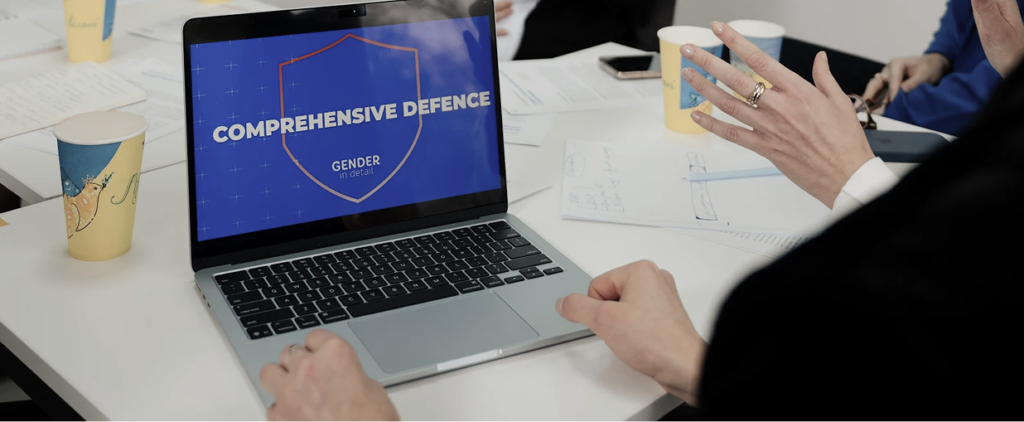
Research and educational project “Gender Mainstreaming in the Context of Comprehensive Defence”
Russia’s full-scale war against Ukraine has demonstrated that a country’s defence capability depends not only on its Armed Forces, but also on the ability of society as a whole to withstand threats, maintain the country’s essential functions, and sustain its resilience. Amid a prolonged war, continuous attacks, cyberattacks, and limited resources, this requires coordinated efforts by the military, government institutions, businesses, and the civilian population.
This is the principle underlying the Swedish concept of Sveriges totalförsvar — comprehensive (total) defence, which integrates military and civilian defence and involves the whole of society in protecting the country.
For decades, Sweden has been developing the institutions, coordination mechanisms, and civil preparedness system needed for comprehensive defence. In Ukraine, by contrast, many comprehensive defence practices have emerged during the war itself, driven by the self-organisation of citizens, local communities, and businesses.
The Swedish experience inspired Tamara Zlobina, a philosopher and head of the CSO Expert Resource Gender in Detail, to initiate the research and training project “Gender Mainstreaming in the Context of Comprehensive Defence.” The project was conceived to study the Swedish model, examine which elements of comprehensive defence were already functioning in Ukraine, and identify how they could be developed systematically, taking into account Ukraine’s specific circumstances.
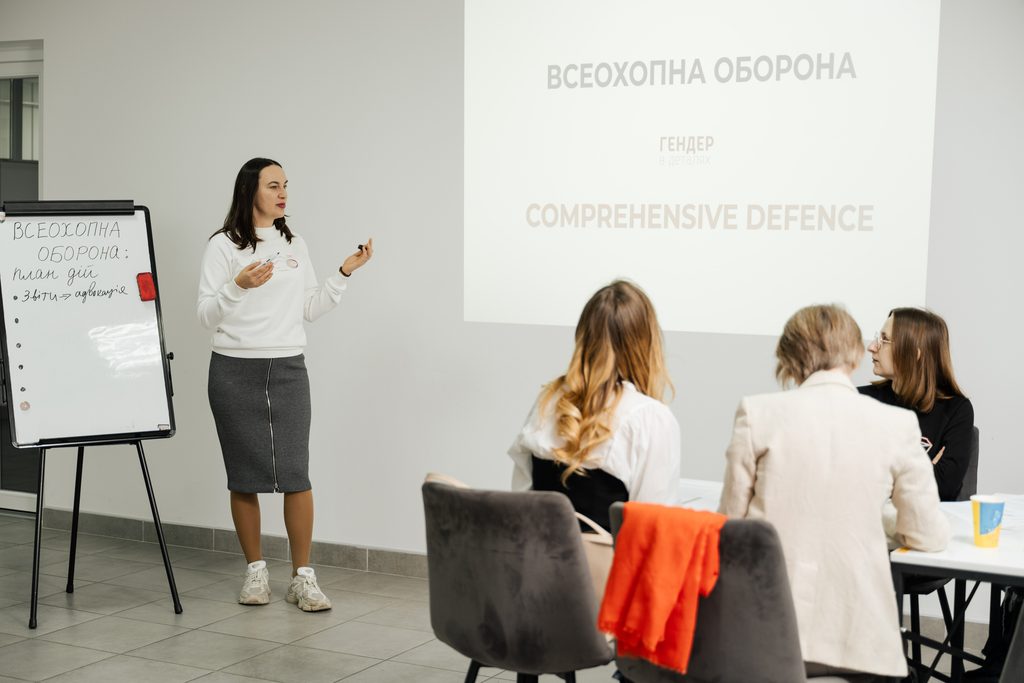
The research was based on the understanding that the effectiveness of any system depends on the people who make it work. Defence planning must therefore take into account who will carry out specific tasks, how responsibilities are distributed, what resources different population groups have access to, and what barriers they face. Without this understanding, even well-designed solutions may prove impossible to implement in practice.
The project was implemented by the CSO Expert Resource Gender in Detail in cooperation with the Swedish International Liberal Centre (SILC), with support from the Swedish Institute. It combined training, the study of Sweden’s experience, and interdisciplinary research.
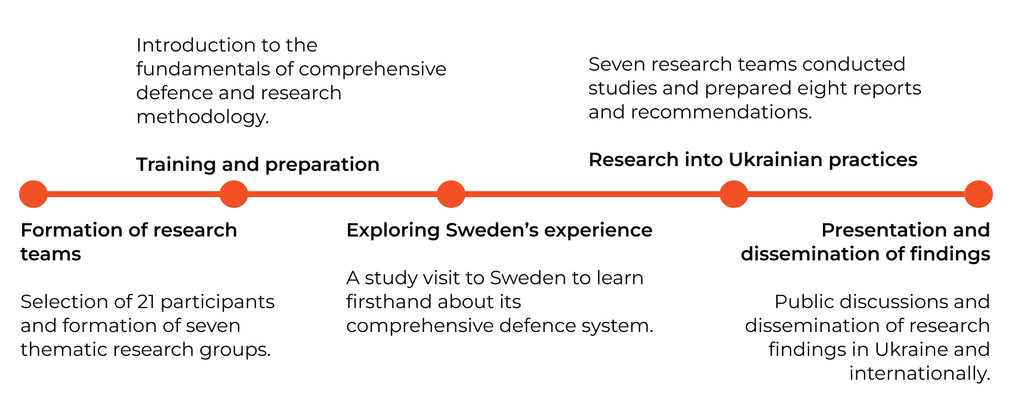
As part of the project, 21 women researchers examined seven areas of Ukraine’s comprehensive defence system. Their work resulted in eight research reports, a synthesis analysis, and recommendations for the further development of Ukraine’s comprehensive defence system.
Seven areas of research on Ukraine’s comprehensive defence
1. Civil defence
Civil defence encompasses activities aimed at protecting the population and maintaining the functioning of society in the face of threats. The researchers examined women’s participation in this area, existing practices, and opportunities for their further development.
“WOMEN IN CIVIL DEFENCE”. Authors: Daria Hapirova, Nataliia Machalina, Svitlana Hanaba
Learn more2. Volunteer movement
Grassroots volunteer initiatives have become an integral part of Ukraine’s defence. The researchers examined their role in meeting the needs of military personnel and civilians, how volunteer activities are organised, and the challenges these initiatives face.
“COMPREHENSIVE CARE: THE GRASSROOTS VOLUNTEER MOVEMENT AS PART OF UKRAINE’S DEFENCE”. Authors: Daria Hrosul, Maryna Aleksandrovych, Anastasiia Omelianiuk
Learn more3. CARE WORK
Caring for children, older people, and those who need support remains essential during wartime. The study explores how the organisation of care work relates to societal resilience and people’s ability to contribute to other aspects of defence.
“CARE WORK IN THE CONTEXT OF COMPREHENSIVE DEFENCE”. Authors: Daryna Korkach, Tetiana Medina, Tetiana Konovalova
Learn more4. WOMEN IN THE MILITARY
The study catalogues the barriers that limit women’s participation in Ukraine’s Defence Forces and prevent servicewomen from fully realising their potential.
“BARRIERS PREVENTING WOMEN FROM ENTERING MILITARY SERVICE AND INSTITUTIONAL SOLUTIONS TO OVERCOME THEM”. Authors: Daryna Zavhorodnia, Mariia Zviahintseva, Anna Pashkina
Learn more5. CHANGES IN THE ECONOMY
The development of defence technologies is reshaping the needs of the economy and labour market. The researchers examined how these changes affect women’s opportunities for economic participation and what new prospects emerge as warfare becomes increasingly technology-driven.
“TECHNOLOGIZATION OF WAR: EXPANDING OPPORTUNITIES FOR WOMEN’S ECONOMIC PARTICIPATION”. Authors: Mariia Krymova, Maryna Rudenko, Snizhana Shevchenko
Learn more6. INFORMATION POLICY
Communication by government institutions shapes how society understands its role in defence and perceives the participation of different population groups. The researchers examined the gender sensitivity of government communications on defence issues and identified opportunities for improvement.
“GENDER SENSITIVITY OF GOVERNMENT COMMUNICATIONS IN THE DEFENCE SECTOR”. Authors: Olena Poburko, Anna Romandash, Ada Krasenko
Learn moreDrawing on research into government communications in the defence sector, the project team developed How (Not) to Congratulate on Important Holidays: A Practical Guide for Public Authorities, Businesses, and Public Figures.
7. LOCAL SELF-GOVERNMENT
National and local government authorities are responsible for many of the tasks involved in civil preparedness and keeping communities functioning during wartime.
Two separate studies were conducted in this area: one examining the role of local self-government and public administration in comprehensive defence, and the other exploring how comprehensive defence approaches can be implemented at the local level through the National Action Plan on UN Security Council Resolution 1325, “Women, Peace and Security.”
“COMPREHENSIVE DEFENCE IN THE CONTEXT OF LOCAL SELF-GOVERNMENT AND PUBLIC ADMINISTRATION”. Author: Yuliia Dziuba
Learn more“PERSPECTIVES ON IMPLEMENTING THE COMPREHENSIVE DEFENCE CONCEPT AT THE LOCAL LEVEL: A CASE STUDY OF 1325 NATIONAL ACTION PLAN LOCALISATION”. Authors: Nataliia Vyshnevetska, Mariia Ushakova
Learn moreThe eight studies conducted as part of the project revealed that comprehensive defence in Ukraine has emerged organically, operating spontaneously and in a decentralised manner. This enables it to respond flexibly to the challenges of war. However, alongside this strength lies a significant weakness: these efforts lack systematic coordination and rely on their own limited resources and on the solidarity of people who themselves need support and solidarity.
For a concise overview of the project’s main findings and recommendations for representatives of government institutions, local authorities, civil society organisations, and everyone working to develop Ukraine’s comprehensive defence system, read the analytical report.
Studying Sweden’s comprehensive defence system
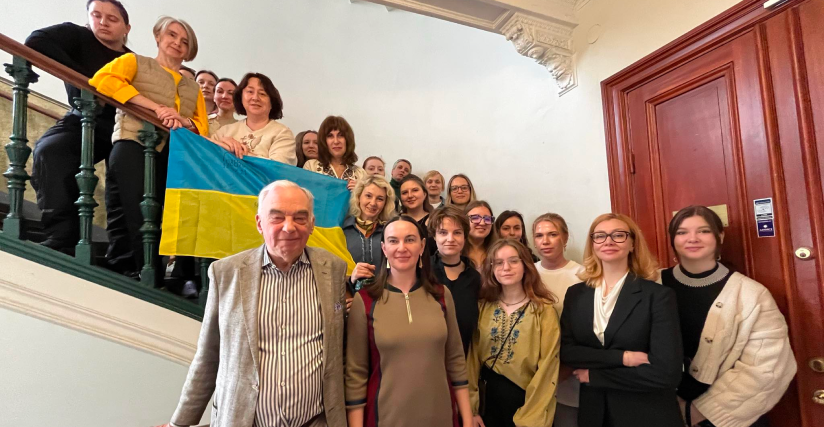
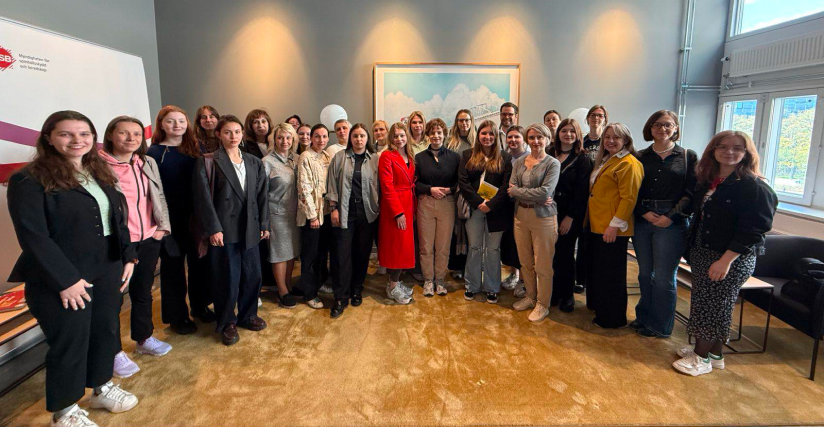
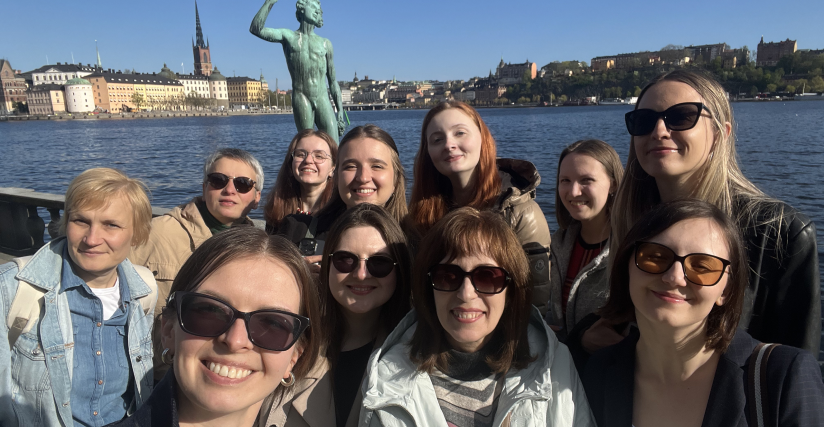
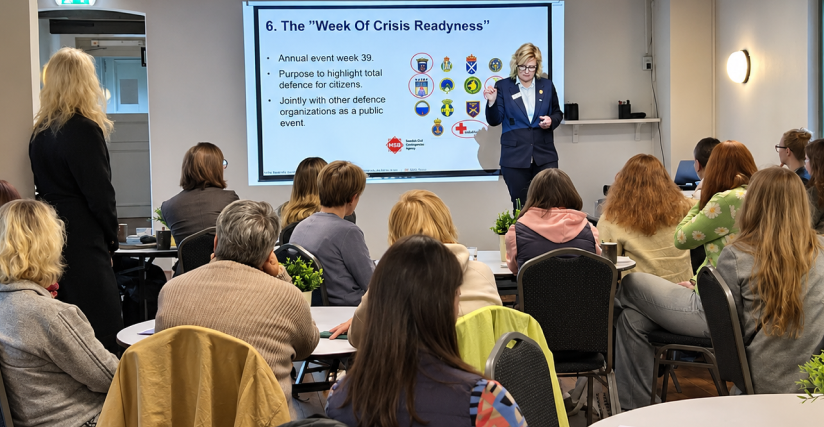
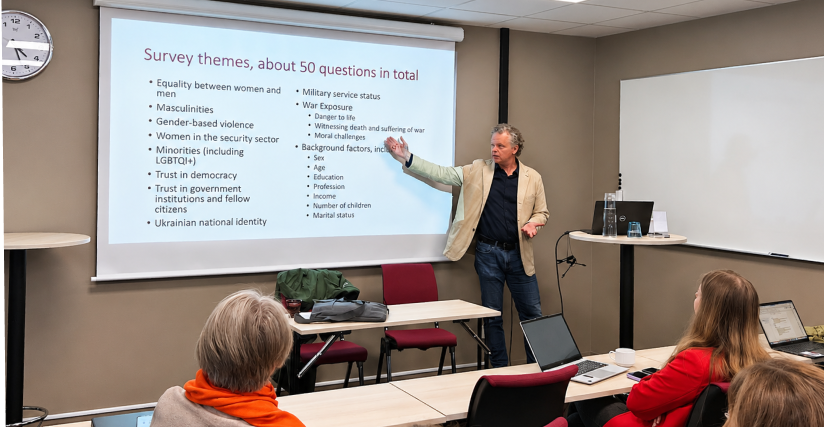
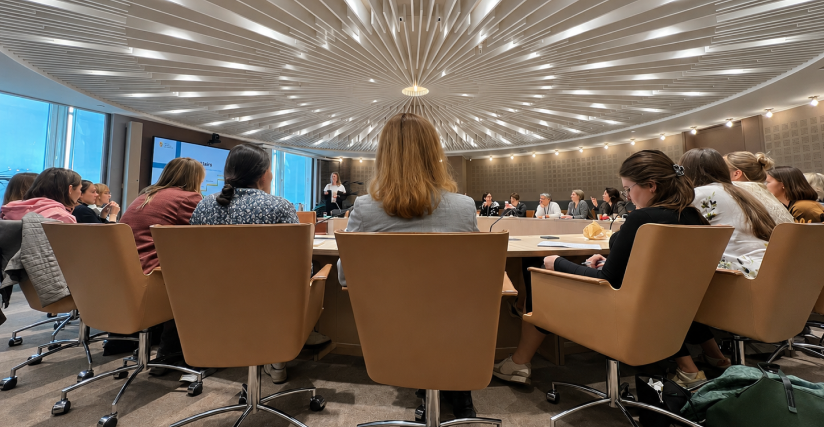
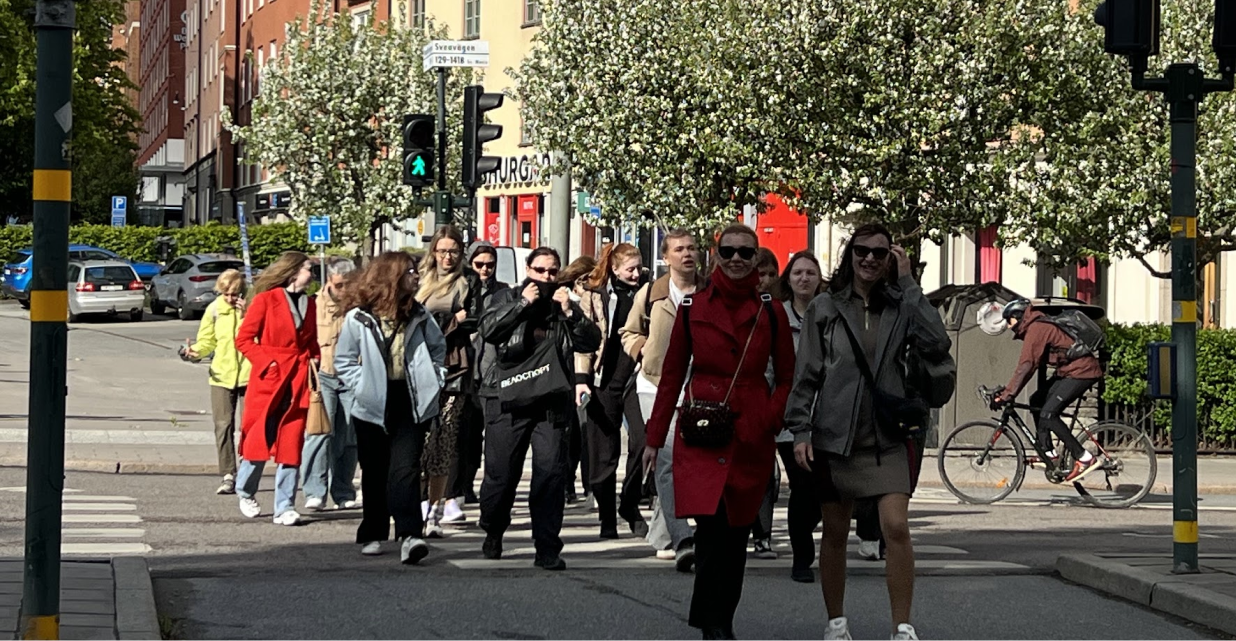
One of the main components of the project was a study visit to Sweden, during which the participants learned how the totalförsvar (comprehensive defence) system operates in practice.
The programme included visits to government agencies, civil society organisations, and volunteer organisations involved in civil preparedness, psychological defence, and societal resilience:
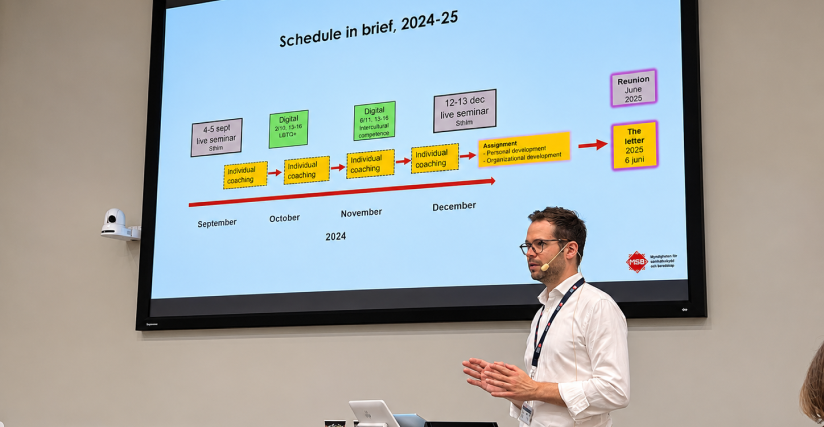
- Swedish Agency for Civil Defence (formerly MSB) — civil preparedness and crisis response.
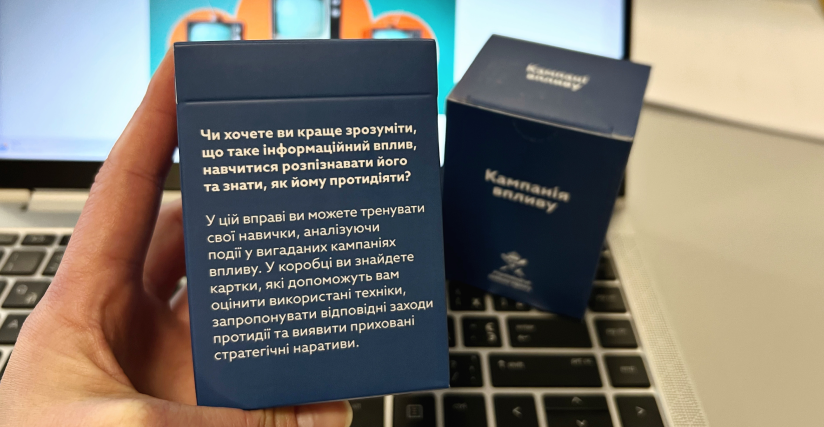
- Swedish Psychological Defence Agency — countering hostile information influence and strengthening society’s resilience to information threats.
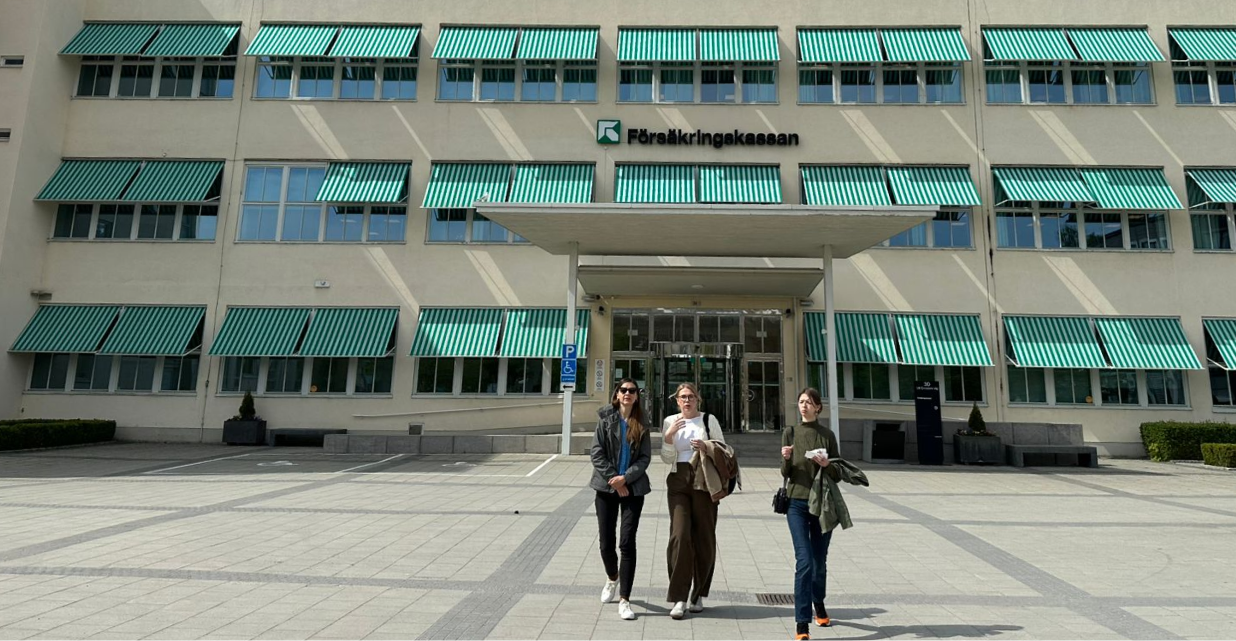
- Swedish Social Insurance Agency — social protection and support for the population.
- Swedish Red Cross — humanitarian activities and emergency assistance.
- Swedish Women’s Voluntary Defence Organisation (Lottakåren) — volunteer participation in supporting the defence system.
- Women’s International League for Peace and Freedom (WILPF) — peace, security, and civil society participation.
- Uppsala University — academic research on peace, conflict, and security.
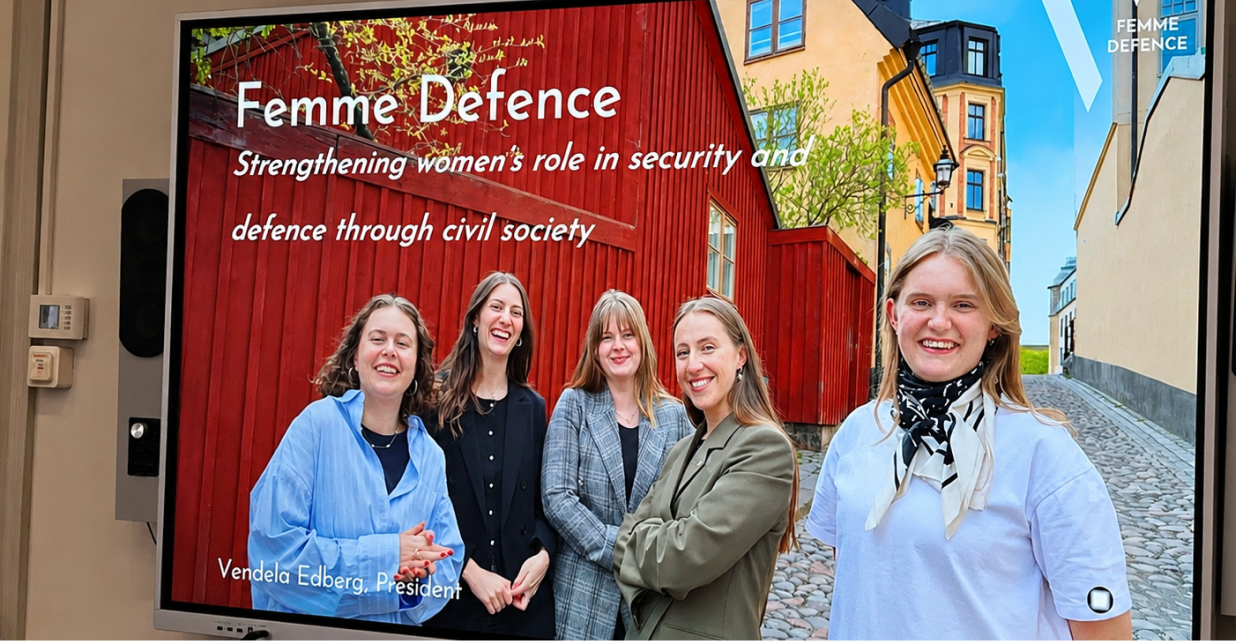
- The programme also included an introduction to the work of Femme Defence and other Swedish initiatives.
The knowledge gained provided a foundation for further research. Rather than seeking to replicate the Swedish model in Ukraine, the participants explored which approaches could be useful in light of Ukraine’s experience of war.
Public presentation of the findings
Between December 2025 and April 2026, the team held seven public online presentations, during which the researchers shared their findings and discussed their recommendations with interested audiences and stakeholders.
International engagement
The project findings also contributed to international discussions on defence, societal resilience, and Ukraine’s recovery.
Café Kyiv 2026, Berlin, 2026
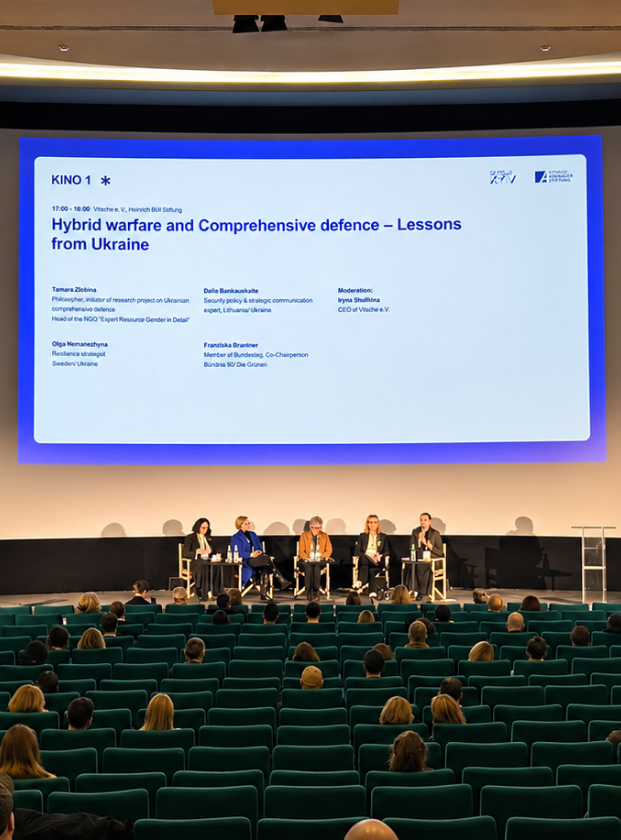
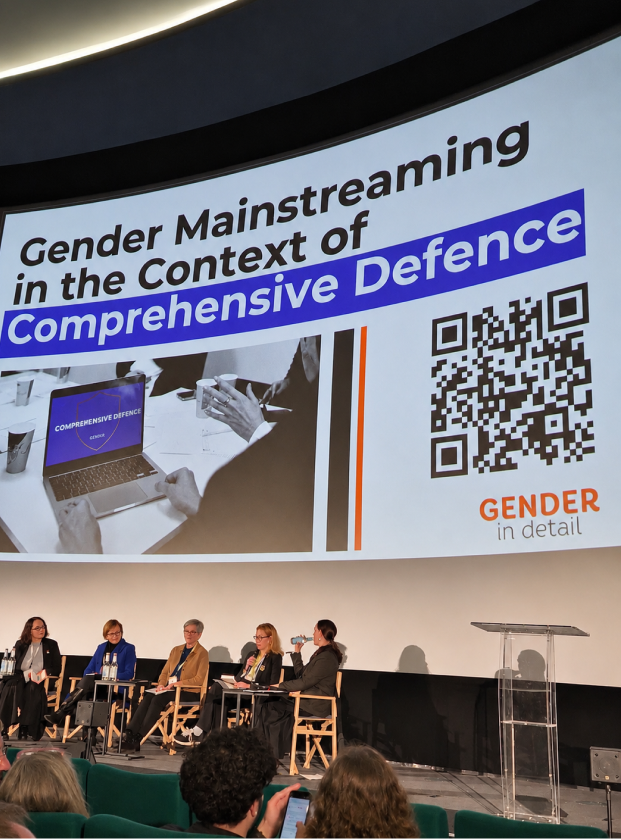
Presentation of Ukraine’s experience in comprehensive defence and the research findings to an international audience during the panel discussion “Hybrid warfare and comprehensive defence: lessons from Ukraine.”
Heinrich Böll Foundation panel discussion, Berlin, 2026
Discussion of civil defence and care infrastructure as components of societal resilience.
ALDA event, Gdańsk, 2026
Presentation of the project findings as part of a discussion on local democracy, resilience, and Ukraine’s recovery.
Riga Security Conference, Riga, 2026
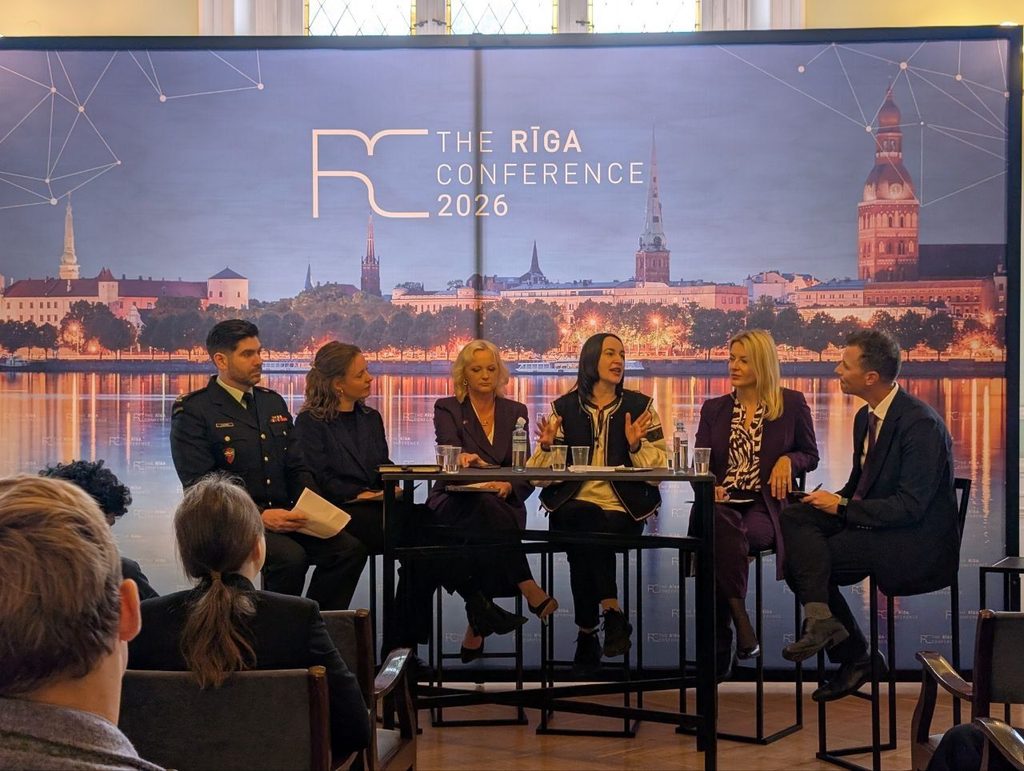
The researchers also presented their findings at other international conferences, expert meetings, and in academic and professional publications.
All eight research reports, the synthesis report, and the policy brief were translated into English. This made the findings accessible to international partners, research institutions, and organisations working on defence and security issues, as well as anyone interested in Ukraine’s experience.
Project team
Tamara Zlobina — project initiator and director, feminist philosopher, and head of the CSO Expert Resource Gender in Detail.
Hanna Hrytsenko and Olena Strelnyk — research programme mentors.
Halyna Repetska and Alyona Hruzina — project managers.
Research team: 21 women researchers organised into seven thematic groups. The authors of each study are credited alongside their respective research reports.

The research was conducted by the CSO “Expert Resource Gender in Detail” as part of the project “Gender Mainstreaming in the Context of Comprehensive Defence”. It was funded by the grant “Swedish Gender Approach Best Practices as a Tool for Empowering Ukrainian Women to Implement Sustainable Reforms and Facilitate Ukraine’s European Integration,” with financial support from the Swedish Institute and in partnership with the Swedish International Liberal Centre.
The project draws on Sweden’s experience of integrating a gender perspective into its total defence system. It is the first initiative in the Ukrainian context to explore how a Swedish-inspired total defence model could be adapted and implemented in Ukraine while systematically incorporating a gender perspective across such areas as the economy, care work, the military, civil defence, governance, information policy, and the volunteer movement.


