On the coast of Australia, many, many miles from the nearest town, in a house filled with the love of her mother Agnes and the cruelty of her father, lives nine-year-old Alice Hart. Her mother’s beautiful garden is the only place where she can be unafraid, hiding from sudden outbursts of anger. Until a fire, bringing with it inevitable tragedy and death, forces Alice to abandon everything she feared so much and at the same time loved so much.
The novel “The Lost Flowers of Alice Hart” by Holly Ringland, soon to be published by the Laboratory Publishing House, is the story of how, over twenty years, between the lush sugarcane fields on the seashore, between an Australian flower farm and a celestial crater in the central desert, Alice is forced to understand that the most powerful story she will ever own is her own. We publish an excerpt from the book.
Alice followed Candy past the dormitory where the Flowers lived. When they reached the workshop, they stopped at a door that was covered in thick vines. Candy pushed it aside, took her keys from her pocket, and inserted one into the keyhole.
“Ready?” she asked, smiling broadly.
The door opened.
They stopped together at the doorway of the workshop. The morning sun warmed their backs, but the air conditioning in the room made Alice suddenly feel cold. She rubbed her hands together, remembering the boy who had raised his hand to wave.
“You sighed so deeply,” Candy raised an eyebrow, looking at Alice. “Are you okay?”
Alice wanted to say so much, but all that came out was another sigh.
“Words are sometimes overrated,” Candy said, and took Alice’s hand. “Don’t you think so?”
Alice nodded. Candy squeezed her hand before letting go.
“Come on,” she said, holding the door open, “let’s take a look around.”
They went inside. The first half of the workshop was filled with benches stacked like a tower of buckets, a row of sinks, and refrigerators along the wall. On the shelves were tools, rolls of sunscreen, and assorted bottles and spray cans. On hooks on the wall hung wide-brimmed hats, aprons, and gardening gloves, beneath which stood rubber boots, lined up like invisible flower soldiers, frozen in place on the rack. Alice turned back to the benches. Under each of them were additional shelves filled with jars and containers. The workshop smelled of fertile soil.
“We bring the flowers here after we cut them in the fields. We inspect each flower before we send them on their way. They have to be perfect. We get orders from customers all over the country; our flowers are delivered to every corner of the country, to flower shops and supermarkets, to gas stations and market vendors. They are worn by brides and widows and,” Candy’s voice trembled, “women who have just become mothers.” She ran her hand along one of the benches. “Isn’t it magical, Alice? The flowers we grow here speak for people when words can’t, in almost every situation imaginable.”
Alice repeated Candy’s motion and ran her hand along the work surface. Who are the people who send flowers instead of words? How can a flower say the same thing as a word? What would one of her thousand-word books be like if it were written in flowers? No one ever sent her mother flowers.
She squatted down to examine the boxes of cutting tools, the spools of string, and the little buckets of markers and pens of all colors under the bench. She took the cap off the blue marker and sniffed it. On the back of her hand she drew a circle, a straight vertical line, and then another, a slant, the letter “I.” In a moment she had added a dash and the word “t-u-t.” As Candy approached her, Alice erased the words.
“Shh. Alice Blue,” Candy stuck her head out over the bench where Alice sat. “Follow me.”
They made their way between the benches, past the sinks and refrigerators, to the other side of the workshop, which was set up as an art studio. There were tables covered with plain tablecloths, strewn with paint cans and paintbrushes. In one corner stood easels, stools, and a box filled with tubes of paint. On one of the tables lay rolls of copper foil, pieces of colored glass, and jars of tools. When Alice reached the closed corner at the end of the studio, she forgot about the boy. She forgot about June and the statues of her father. She was too absorbed in what was right in front of her.
“The corner under the letter “X,” Candy giggled.
Dozens of flowers in various stages of drying hung from a frame overhead. A long bench ran along a makeshift wall. On it lay tools and fabrics, blackened by frequent use, and dried flower petals, scattered, discarded like clothes abandoned on a beach. Alice pressed her palms to the wooden surface, remembering her mother’s hands floating over the flower heads in the garden.
At one end of the bench lay a velvet sheet adorned with bracelets, necklaces, earrings, and rings decorated with pressed resin flowers.
“This is June’s place,” Candy said. Here she creates magic from the stories that Thornfie is built on.ld.
Magic. Alice stood before the jewelry, each shimmering in the light.
“June grows every flower here,” Candy said, holding up a bracelet that held a pendant with a pale peach petal. “She presses each petal and pours it in clear resin, then seals it in silver.”
Candy replaced the bracelet. Alice studied the rainbow of other flowers pressed into the pendants of the necklaces, earrings, and rings. Each flower was sealed forever, frozen in time, but still holding the colors of life. They would never turn brown or wither. They would never rot or die.
Candy moved to stand beside her.
“In the days of Queen Victoria, people in Europe spoke through flowers. It’s true. June’s ancestors—your ancestors, Alice—women who lived a long time ago brought this language of flowers from across the ocean, from England, and preserved it for generations until Ruth Stone brought it here to Thornfield.
They say she didn’t use it for a long time. It wasn’t until she fell in love that she began to speak in flowers. However, unlike the language of flowers she brought from England, she only used the flowers her lover gave her.” Candy stopped, her face turning red. “Whatever…” she interrupted herself again.
Ruth Stone. Her great-grandmother. Alice’s cheeks flushed with curiosity. She wanted to put a ring on each finger, press cool silver pendants against her warm skin, throw bracelets on her wrists, and press earrings into her unpierced ears.
She wanted to carry the secret language of flowers around her, so that they could say for her what her voice could not.
At the other end of the bench lay a small handmade book. Alice leaned over it. The cracked spine had been repaired many times, tied with many red ribbons. The inscription on the cover was handwritten, in gold calligraphy, with red flowers that looked like spinning wheels. “The Language of the Australian Wildflowers of Thornfield.”
“Ruth Stone was your great-great-grandmother,” Candy said. “This was her dictionary. Ruth’s heirs cultivated language the same way they cultivate flowers here,” she ran her hand over the corners of the worn pages. “It has been in June’s family for generations. Or rather, in your family,” she corrected herself.
Alice ran her fingertip over the cover. She wanted to open it, but she wasn’t sure if she could. The pages were yellowed and stuck out at odd angles. There were bits of handwritten words in the margins. Alice tilted her head. She could only read a few complete words. Darkness. Branches. Crumpled. Fragrant. Butterflies. Paradise. It was the best book Alice had ever seen.
“Alice,” Candy leaned down so that she was at Alice’s eye level. “Have you ever heard that story before? About Ruth Stone?”
Alice shook her head.
“Do you know much about your family, Pea?” Candy asked gently.
A feeling of shame that Alice couldn’t understand made her look away. She shook her head again.
“Oh, what a lucky girl,” Candy smiled sadly.
Alice looked at her in confusion. She wiped her nose with the back of her hand.
“Do you know Alice Blue, the woman I wrote to you about in the letter, the daughter of a king?”
Alice nodded.
“Her mother died when she was little,” Candy took her hand. “She was heartbroken and sent to live with her aunt, in her palace filled with books. Later, when Alice Blue was older, she said that it was the stories her aunt told her and the stories she read in books that saved her.
Alice imagined Alice Blue, a girl in a dress the color of her name, reading in the pale light that filtered through the window onto the pages of a book.
“You are lucky to have found this place, and with it your story, Alice. How lucky you are to be able to know and understand where you come from and where you belong,” Candy turned her face away. In a moment, she wiped her cheeks.
Air conditioners clicked and hummed in the distance. Alice looked at the old book and imagined women who had bent over it long ago. Perhaps they were clutching a sprig of wildflowers in their hand to add a new entry in their secret language.
Alice began to shift nervously from foot to foot, because she was bored. Candy turned to her and asked a question that filled Alice’s whole body with impatience:
— Do you want me to show you how to get to the river?
You can purchase the book at the link on the Laboratory publishing house website.
On November 12, 2015, a landmark event took place in Ukraine: the majority of the Verkhovna Rada deputies, albeit only on the fifth attempt, after long inter-faction negotiations, under pressure from civil society and European institutions, voted to amend the current Labor Code, prohibiting any discrimination in the workplace, in particular on the basis of sexual orientation and gender identity. “Better a gay pride parade on Khreshchatyk than Russian tanks in the capital,” was how Yuriy Lutsenko, the leader of the BPP faction, explained his vote in support of the bill at the time, clarifying that he himself did not support the “LGBT+ way of life,” but “if we are going to Europe, we must recognize all norms, including LGBT+ rights.”
Amendments to the Code should potentially significantly improve the lives of LGBTQI+ people in our country, because the prohibition of discrimination means that a person would not have to worry, for example, that they would be fired or harassed at work if colleagues or management found out about their homosexuality or bisexuality. However, what do we know about (non-)discrimination of LGBT+ employees by Ukrainian employers almost ten years after the adoption of the amendments to the Code?
Before the start of the full-scale invasion in Ukraine, extremely few studies were conducted on the living conditions of LGBT+ people, and the situation on the labor market is no exception. At the end of 2023, the NGO “Tochka Opory UA” conducted a qualitative study “(non-)discrimination of LGBTQI+ people in the workplace and an inclusive labor market. Results of a national survey of the LGBTQI+ community”[1], which sheds some light on the experiences of LGBT+ people living and working in our country. More details about its results, as well as the best practices of Ukrainian and foreign employers, can be found in this article.
I am not beaten, therefore I am not discriminated against. “Marrying a heterosexual” and other survival strategies Despite the fact that the norm of non-discrimination in the workplace has existed in Ukraine for almost ten years, during all this time there have been no precedents with lawsuits against employers on the grounds of discrimination against an employee due to their sexual orientation or gender identity. However, this does not mean that such discrimination does not exist in Ukraine. Instead, one of the explanations is that, contrary to the claims of opponents about equal rights for LGBT+ people, proving the fact of discrimination in the workplace and holding the perpetrator accountable is a rather difficult and laborious procedure. In addition, many LGBT+ people have a well-founded distrust of the Ukrainian judicial system and police, as they or their acquaintances have already had negative experiences with these institutions.
Another reason for the lack of information about cases of discrimination against LGBT+ people is the generally low awareness of what is and is not discrimination and what rights a person can expect in a democratic country. Many LGBT+ people are so used to living in a society where they are not considered the norm that they have normalized things such as homophobic and transphobic jokes and comments, the lack of inclusive practices in the workplace, and limited access to certain services, such as friendly doctors or housing. Often in the interviews I conducted, my interlocutors answered that they were fine, since they had never encountered direct violence or physical threats against themselves, everything else did not seem “serious enough” to them to have the right to “complain”.
At the same time, many LGBT+ people in Ukraine, when asked whether they had encountered discrimination or violation of rights in the workplace, answered that they had not had such experience, since no one among their management or colleagues guessed about their sexual orientation or gender identity. In other words, they use the so-called straight-passing strategy — “passing off as heterosexual”.
Most LGBT+ people are forced to hide their sexual orientation and gender identity at work.
However, following such a strategy means that LGBT+ people have to constantly hide at work, monitor their behavior and words, and often endure tactless questions about their personal lives and the alleged absence of a loved one. Such people cannot bring their partner to a corporate party or put a photo with their loved one on their desk or as a mobile phone screen saver. They have to control their social networks, photos, content, in which photos and with whom they are tagged, under which posts they have liked.
Among the participants in the study by the NGO “Tochka opory UA” was a person who, in particular, said: “It’s like wearing a collar on a dog. You have to sit and think all the time, assess the situation. I have never felt safe. Every time, before opening up to someone and saying something, you have to think 20–50 steps ahead. There is no ease when you are just honest with people, just living your life because you are who you are, no… you have to think ahead. Because you know that any careless word, any show of weakness, that tiny bit of trust that you have in any person… all of that can affect you ; you cannot simply be independent, free from everything. When you work, you depend on this job, you hope for it. Because, perhaps, you have a debt or you are saving money to buy something, for example, for your dream. And then you are forced to leave this job due to harassment or bullying. It is not because you work badly, you do your job perfectly, but you cannot work with these people, because they simply laugh in your face.
Such behavior, as a rule, is a response to the atmosphere of rejection in the organization where a person works, to his feeling or assessment that opening up to colleagues or management at this workplace will be dangerous. Usually this is expressed in inappropriate jokes by colleagues, comments on relevant news, private discussions, etc. As most participants in the study of the NGO “Tochka opory UA” agreed, the tone in the organization is set by the management, and it mainly depends on it whether the team will be accepting and tolerant or not. In those Ukrainian companies where the values and principles of the organization were clearly discussed and where it was clearly declared that discrimination and oppression of any groups are unacceptable, and, most importantly, where management did not separate words from deeds, employees were more likely to admit to some colleagues or even the entire team about their homosexuality or bisexuality, or felt comfortable enough to make a transgender transition while working at the same workplace. Unfortunately, the number of such companies in Ukraine is still small.
Outing and harassment: what LGBT+ people working in Ukraine face Even if a person consciously chooses not to talk to colleagues and management about their private life, there are always risks that someone, accidentally or intentionally, will not only find out about their sexual orientation or gender identity, but also make this information public without permission, that is, they will make the person so-called out.
Outing is the public disclosure of information about a person’s sexual orientation or gender identity without their consent. Source
The participants in the study spoke about very different experiences and consequences of outing. Someone was seen by colleagues with a partner in a cafe, someone had their phone hacked, and there were several stories about how information that directly indicated or hinted at a person’s non-heterosexuality came from their private social media profile. As a result, rumors spread in the workplace, the person heard inappropriate jokes about them, and in several situations there was outright harassment, as a result of which the person had to resign from their job.
Such stories show that the fears of LGBT+ people who hide their sexual orientation or gender identity are well-founded. In addition to the risk of verbal or even physical harassment from management and colleagues, one must also consider how difficult it will be to find the next job. While it is easier to start a new life in big cities, in small towns or rural areas, opportunities for career changes may be limited. In addition, the profession plays a role: it is very difficult for LGBT+ people associated with the school education system, since in our society there are still a lot of stigmas and stereotypes about homosexual orientation and transgenderism related to how it can potentially affect children (none, except for a healthy expansion of the understanding of diversity in society). Not to mention the mythical connection between homosexuality and pedophilia, which is actively propagated by some conservative and religious groups. For example, one of the participants in the study, a school teacher in a district center, said that she was forced to leave school because she was constantly worried that someone would find out about her relationship with another woman. Moreover, when she and her partner broke up, she did not dare to register on a dating site, because she was afraid that if one of her students’ parents suddenly found out, the consequences would be painful.
Of course, there are also positive examples. Several participants spoke of complete support at work from both colleagues and management. As a rule, such people said that if they had to look for a new job, they would no longer agree to work in a company where they would have to hide who they really were. Many of these people are professionals, so inclusivity in the workplace is a small price to pay to retain valuable specialists/current. And why else are businesses turning to creating a safe and tolerant work environment?
Why is tolerance profitable? Probably, many have seen, at least in photos or videos, that in Western countries, for example in Germany, the Netherlands or the United States, large corporations very actively support Pride Month: they hang rainbow flags, produce thematic branded products, and often organize their own platform at the Pride March.
IKEA in support of Pride Month. Source
Source
This is how companies declare their values (both for employees and potential consumers)
c), and also improve brand visibility and recognition. In past years, many Ukrainian companies and organizations have supported this trend in different ways. In 2023 and 2024, rainbow flags were placed on logos by retail chains and Ukrainian mobile operators, posts in support of Pride Month were made by some Ukrainian channels, and PrivatBank, in partnership with Gender in Details, even offered thematic plastic cards.
You can install skins in the Privat24 application.
Of course, we can talk about the general improvement in attitudes towards LGBT+ people in Ukraine, which is evidenced by recent sociological research, and about the principles of business owners and heads of organizations, who are more likely to support so-called European values during a full-scale invasion. However, we also know that private business is not least about profits. What motivates business owners to take steps that potentially involve the risk of losing a share of a more conservative group of consumers?
Ukrainian society’s attitude towards LGBT+ people, 2022 – 2024. Source
Economists and experts from international organizations such as the World Bank and UN Aids have long considered the economic and financial consequences of discrimination and exclusion of vulnerable groups, and in particular LGBT+ people. Back in 2019, Professor Lee Budgett from the University of Massachusetts at Amherst (USA), having analyzed legal and economic information from 132 countries for 1966 – 2011, together with colleagues, recognized that there is a strong connection between the inclusion of LGBT+ people and the economic development of the country.
Discrimination against LGBT+ people not only harms them themselves, but also harms the country’s economy. Legal equality for LGBT+ people is strongly associated with higher GDP per capita.[2] In addition to GDP, experts point to a close association between the level of LGBT+ rights and such economic indicators as the World Economic Forum’s Competitiveness Index, the World Bank’s Ease of Doing Business ranking, and the World Intellectual Property Organization’s (WIPO) Global Innovation Index (GII).[3]
In 2021, a study conducted by Open For Business on the economic impact of LGBT+ inclusion in Central and Eastern Europe, which also covered Ukraine,[4] found that discrimination against LGBT+ people costs Ukraine between UAH 15.5 billion and UAH 37.4 billion (USD 553 million and USD 1.3 billion) annually. Such high figures are due to a number of factors caused by discrimination and exclusion of LGBT+ people from the labor market. These factors include, for example, the emigration of highly skilled professionals to more LGBT+-friendly countries, a decrease in attractiveness for Western investors, health inequalities that reduce the productivity of workers who identify as LGBT+, and the wage gap.
When it comes to creating a safe work environment within individual companies, scientists also agree that a non-discriminatory approach and cultivating diversity in the workplace work to the benefit of economic indicators. For example, a study published in 2019 by the US Chamber of Commerce shows that the shares of companies that support diversity and inclusion policies are on average 6.5% more expensive than the average stock in the relevant industry. The report also proves the positive impact of a safe work environment on a number of critical business indicators, such as team loyalty, engagement in work processes, innovative approach to work and creativity, and overall employee satisfaction. It is not surprising that if a person feels safe and comfortable in a team and does not have to spend energy hiding who they are, they will be more motivated to work productively and will probably be less inclined to change jobs.
Best global practices So, the awareness of the fact of economic benefit can push companies and organizations to be more inclusive. And what are the strategies for encouraging private and public institutions to support diversity in their teams?
In addition to making appropriate changes to national legislation to create legal mechanisms to counteract and prevent discrimination (including on the grounds of sexual orientation and gender identity), there are also less formal tools.
One common practice is the creation and promotion of rankings and indices in which companies compete for the status of “more inclusive”. An example of such an index is the Corporate Equality Index, a survey of leading American companies and law firms published annually by the Human Rights Campaign Foundation. In 2023 and 2024, almost 1,400 companies participated in this ranking in the United States alone. By the way, there is a similar initiative in Ukraine, the Ukrainian Corporate Equality Index, a national study of corporate policies, rules, and practices of private and public companies regarding the support of equality and diversity, as well as the prohibition of discrimination in the workplace. An analogue of the Index In the EU member states, there is a Diversity Charter, by signing which the organization undertakes to make efforts to create a diverse and inclusive work environment. It is important to note that not only private companies and corporations can participate, but also state structures.
In addition to creating policies and procedures, another common way to support the inclusion of LGBT+ people in the workplace is to create networks and groups within organizations or institutions. Such groups are organized so that LGBT+ people working in the same institution have a safe space to communicate and discuss their problems, do not feel alone in the team and have additional safe channels to voice their needs to the company’s management. These groups can be partially or completely anonymous, in case not all employees feel insecure about disclosing information about their identity for various reasons. In addition to being established within an organization, groups can be sectoral, such as LGBT+ police or healthcare workers (or, as in Ukraine, LGBTQI+ military groups).
Fig. 4. Representatives of the British LGBT+ Police Group. Source.
In cases where it is important to protect particularly vulnerable groups, one option may be to introduce additional mechanisms of state regulation of the labor market. Transgender people remain one of the most marginalized and discriminated groups in Ukraine and abroad. Due to limited access to medical services, complex legal procedures, and a general high level of social rejection, many of them do not dare or simply cannot afford the transgender transition procedure and continue to live with documents that do not match their gender expression, which often makes it impossible to find employment and can push them into prostitution. All the more interesting is the example of some Latin American countries, whose governments are concerned about the high level of transphobic violence and have launched inclusion programs. Uruguay and Argentina became the first countries in the region to introduce quotas for the employment of transgender people.
Fig. 5. Photo from the March for Diversity in Montevideo, Uruguay, 2014. Source.
The government of Uruguay in 2018 and the government of Argentina in 2020 adopted bills according to which one percent of positions in the public sector must be held by transgender people. Although the quota mechanism is often criticized for its imperfections, civil society activists in both countries have generally supported the initiative, hoping that it will lead to increased visibility of the transgender community and attract more attention to the issues. Unfortunately, so far, only a small number of transgender people have actually been able to take up such positions, as they face structural inequality and discrimination very early in their lives, which reduces access to education and qualifications. Therefore, they advocate for educational reforms and try to draw more attention to the problems of this group.
Consulting: how to make your workplace safe and comfortable for LGBT+ people too If this article has convinced you and you are already thinking about how you can make your company or organization a comfortable place to work for everyone, including LGBT+ people, I offer you a few simple steps.
Ensuring gen
Develop and implement policies. Some people think that developing policies or procedures is just a waste of team time that could be spent more productively. In fact, having policies such as an anti-discrimination or equal opportunities policy that clearly state that any discrimination in the team (including on the grounds of sexual orientation and gender identity) is unacceptable sends a clear signal to the team about the principles and values of the organization. Of course, it is important that the company’s employees participate in the development of policies and that all new employees first familiarize themselves with these policies and understand their importance for all members of the work team.
Education and awareness raising. Very often, people behave tactlessly or unconsciously discriminate against others due to lack of awareness. Raising awareness of colleagues on issues of sexual orientation and gender identity should not be the task of LGBT+ people already working in your team. Instead, regular training for employees on diversity and inclusion, as well as specific issues related to the LGBT+ community, will contribute to understanding and acceptance of LGBT+ people.
Creating a supportive environment. As Ukrainian and global research shows, creating a supportive environment begins with the leadership of the organization. If the leaders of the company, departments and divisions openly support and encourage an inclusive culture, where diversity is respected and valued, and gossip, inappropriate jokes and bullying are not allowed, as a rule, subordinates also become more inclined to reproduce appropriate behavioral models and organizational culture.
The history of the Ukrainian women’s movement began with those fundamental principles and ideas around which the concept of Ukrainian feminism began to develop, showing its relevance and continuity in different periods of the life of Ukrainian women. In the mid-1880s of the 19th century, Natalia Kobrynska, the founder of the Ukrainian women’s movement, laid the foundations of a new worldview and positioning of women in society, adapting the latest emancipatory trends of Europe to national challenges. Therefore, she is still rightly considered one of the most interesting European feminists, the first theoretician of Ukrainian feminism, who formulated and embodied its main principles, aimed at the formation of a nationally conscious, educated, socially active woman.
Natalia Kobrynska, 1890s
“The women’s issue has penetrated my soul too deeply,” Kobrynska declared 140 years ago in a letter to Ivan Franko about her preoccupation with modern feminist ideas. She gradually crystallized them in her fundamental journalistic works, which still remain the historical foundation of the women’s movement: “On the Women’s Movement in Modern Times”, “Russian Women in Galicia”, “Married Woman of the Middle Class”, “On the Original Goal of the “Norwegian Women’s Society in Stanislaviv” (all published in “First Wreath”, Lviv, 1887), “Women’s Affairs in Galicia” (collection “Our Destiny”, Stryi, 1893), “Domestic Women’s Crafts” (“Our Destiny”, 1893, co-authored with M. Revakovych), “News from Abroad and the Land” (“Our Destiny”, 1893, co-authored with O. Kobylyanska), “Aspirations of the Women’s Movement” (“Our Destiny”, 1895, 1896), “On Ibsen’s Nora” (“The Deed”, 1900).
What were the main messages to Ukrainian women from Kobrynska? What ideas and slogans of their time formed the basis of Ukrainian feminism? How do these imperatives speak to modern women today?
The women’s movement is a component of broader socio-cultural struggles.
“The women’s issue reaches further, it embraces all fields in which women as women are oppressed: in the field of social positions, since they are excluded from them, in the field of higher culture, and finally – in the field of law, both public and civil, since this law treats women differently than men” [10:25 – 26].
Nataliya Kobrynska considered the women’s issue in the context of women’s broad socio-political and spiritual aspirations for their own freedom, individual development, and social visibility. She believed that calls for emancipation, which arose from economic conditions, under the influence of European democratic developments, must develop together with other social issues, and not separately, because this would narrow the essence and principles of women’s aspirations. Therefore, the women’s issue, according to Kobrynska, should not be reduced to a narrow understanding of the struggle for equal socio-political rights for women, but should be interpreted in the broader context of deep socio-psychological and cultural-historical changes in patriarchal society.
Gender equality.
“In general, women have never spoken out against men as such, but only against the social order, the order that made men masters and pushed women into the position of slaves, excluded from the protection of equal rights, even from science and material independence” [9:374].
The idea of equality between men and women was and is the basis of feminism, but from the beginning of the women’s movement there have been myths about “man-haters” and “women’s struggle against men”. Natalia Kobrynska first addressed the issue of gender parity in her “Report at the meeting of the Stanislavov Women’s Society” in 1884, emphasizing: “I declare to men that we can live with them in common thought for a common idea, and do not consider ourselves only as eternal candidates for their hearts” [3]. With this clear statement, she openly polemicized with the anti-feminist theory of F. Nietzsche: “life knows no equality and in itself is nothing other than the insult and appropriation of what is alien and weaker” [12:21]. And since a woman is weaker, it is worth “keeping her under lock and key, as something that is already condemned to slavery by nature and can only have some value in strong hands” [12:21]. Following Nietzsche’s ideas later provoked the emergence of a separate layer of artistic narrative in literature, in which the main motive is “strength and passion”, and a woman is treated only as an element of a “true strong man”. In contrast, Ukrainian feminism from the very beginning consistently affirmed the idea of equality and socio-cultural partnership between men and women. “It must be so that a woman, as a conscious person, stands next to a conscious man” (letter from Natalia Kobrynska to Osyp Nazariev, 1912) [2, F. 13, No. 35].
Ivan Franko, 1896 Mykhailo Pavlyk
Natalia Kobrynska’s ideas were confirmed in the reality of the time: the development of the women’s movement in Galicia was in every way facilitated by authoritative men such as Ivan Franko, Mykhailo Pavlyk, Mykhailo Drahomanov, Panteleimon Kulish, Vasyl Polyansky, who not only with personal support but also with their own works worked out the ideological ground for emancipatory ideas and consensus.
home actively supported women on this path.
Feminism as humanism. “Kobrinskaya took into account a woman exclusively as a person, and considered the women’s movement to be the only means at that time for the elevation of this part of humanity” [6:3].
The desire to revive and affirm in a woman, first of all, a person with equal rights and opportunities for personal self-realization was a significant achievement of the emancipatory ideas of the founder of the women’s movement. It is in this context that feminism was consonant with humanism.
Nationalism and civil responsibility of women. “A woman has always and everywhere been able to understand the spirit of her time and the demands of her society” [13:328].
The national vector is a unique feature of the Ukrainian women’s movement, which was due to a long period of Ukrainian statelessness and national oppression. Therefore, the idea of Ukrainian feminism from its very inception was clearly based on national principles. The acquisition of an independent status of women in public and family life in the understanding of Kobrinska is consonant with the concepts of national, autochthonous, spiritually rooted in one’s own tradition. Hence the close connection between feminism and nationalism, the identification of women’s emancipation and national liberation struggles, which was especially relevant in the conditions of an imperially divided Ukraine. In the words of Natalia Kobrinska, with the emergence of the emancipation movement, “our women throughout the vast expanse of Rus’-Ukraine felt their national existence,” “our intelligent woman felt herself simultaneously a Ruthenian and a man, and remembered her national and public rights” [8:287] (in the language of that time, the word “Rusyns” was used to designate Ukrainians, and “man” in the meaning of “person.” — Ed.).
In a broader sense, feminism was also associated with a state-building strategy, in which women were assigned the constructive mission of a creative citizen, because, as Kobrynska believed, “women took an active part in all the great evolutions of human development” [14:325]. Responding in a timely manner to the national-patriotic challenges of the era, the “spirit of women” and their civic intuition were harbingers of historical transformations and indicators of the life of the people.
Under the slogan of national unity, the women’s almanac “The First Wreath” was published in 1887, proclaiming the main slogan of the publication: “In the name of our national unity.”
Later, in the interwar period, the national idea became central to the ideology of the Ukrainian women’s movement, and was clearly expressed in the journalism of Milena Rudnytska: “Service to the Nation was and is one of the leading ideas of the Ukrainian women’s movement, from which it draws its ethos and its ultimate justification” [16:201].
Feminism, European Integration, and National Identity “The so often praised Europeanism should not consist in subordinating our spirit to a foreign country, in neglecting everything that is our own, but rather in the ability to elevate ourselves, our own and our national individuality to the heights of European culture and art. And we will never achieve this without learning to preserve the features of our specific character, without learning to truly “be ourselves”” [11:387].
The women’s question arose on the waves of the European progressive movement, associated, in particular, with the change in industrial, socio-economic and cultural relations. Therefore, observing the rapid progress of the women’s movement in Europe, where it had long had its own tradition, literature and achievements, Nataliya Kobrynska sought, on the one hand, to adopt the main trends of European feminism, and on the other – to adapt them to Ukrainian socio-political conditions. “This is quite natural, when we notice how vividly and strongly our society is drawn into its circles by the modern European development of social and economic relations” [8:287], she explained the growing interest in the women’s question in Galicia. It is no coincidence that Kobrynska purposefully projects all her subsequent feminist activities onto Europe, focusing on the European experience of women’s emancipation, primarily in the educational and socio-economic plan, becoming, in the words of M. Bohachevska, “one of the most interesting European feminists” [1:17].
Kobrynska’s unwavering interest in world feminism is indicated by her interesting studies-reviews, which describe the experience and social and legal status of European women, ― “On the Women’s Movement in Modern Times” (“The First Wreath”, pp. 5 – 25); trends in the women’s movement in Europe ― “News from Abroad and the Land” (“Our Destiny”. Stryi, 1893, pp. 79 – 93, co-authored with O. Kobylyanska). Striving, in Frankov’s words, “to involve our women in the sphere of ideas and interests of advanced European women” [17:502], Nataliya Kobrynska initiated the practice of effective cooperation with representatives of other nationalities – Czechs, Poles, Germans, with whom she jointly submitted petitions to the Austrian parliament on women’s educational and electoral rights.
Nataliya Kobrynska popularized European feminism in every possible way, borrowed European stylistic trends in her work, summarized and translated advanced European works and works in order to “introduce the spirit of Europe into Ukrainian relations.” But she perceived the need for Europeanization primarily as an organic
development, the path of formation and self-affirmation of a mature nation while preserving its self-identity in order to expand intellectual horizons. Therefore, Kobrynska advised to assimilate Europeanism in the form of a mental formula – “to be oneself” in all manifestations of national existence: political, spiritual, cultural and historical.
Woman and literature.
“We set ourselves the goal of influencing the development of the female spirit through literature, because literature was always a true image of the bright and dark sides of the social order, its needs and shortcomings” [13:328].
Almanac “The First Wreath”, published in Lviv in 1887.
The principles of early Ukrainian feminism are closely connected with educational and intellectual slogans, with the attempt of women to declare themselves through their own writing. “I came to understand the position of women in society through literature” [7:322], Kobrynska explained the origin of her emancipatory ideas. After all, with her own feminist works, the writer formed a new reading for Ukrainian women, striving to give her sisters exactly the book that would show a different essence of women through concrete life examples and women’s destinies, emancipate their multifaceted personality, and encourage them to take an active social role. It is no coincidence that the goal of the first Ukrainian feminist organization, the “Society of Russian Women,” founded in 1884 in Stanislaviv (now Ivano-Frankivsk) by Natalia Kobrynska, was the slogan “awakening the female spirit through literature.” Initially, it was planned that it would be a women’s reading room with its own publishing house, created for literary purposes. Why did literature become the most effective way of representing women then? In the conditions of Ukrainian statelessness, when the press and Ukrainian parliamentarism were silent, when a shameful linguocide was taking place in the Dnieper region, writing became an important resource for self-realization and expression of will, a sign of the people’s intelligentsia. According to Kobrinska, “in times of political unfreedom, literature is a kind of refuge for freedom” (letter from N. Kobrinska to Ivan Beley dated September 11, 1885). Also, through literature, a woman could become spiritually liberated, express her feelings and needs, and express herself in writing.
Olena Pchilka and Natalia Kobrinska – co-editors and patrons of “Pershy Vinek”
According to the idea of the founder of the Ukrainian women’s movement, it was literature that was to play an important consolidating role, gathering all conscious “women under the banner of literature for the purpose of explaining and uniting thoughts” [13:299]. In a broader state-building and national-historical perspective, literature, according to Natalia Kobrynska, served as a unifying factor for the nation: “Rus-Ukraine, also divided politically, comes together with the help of literature” [13:290]. This was fully demonstrated by the publication of the women’s almanac “The First Wreath”, which initiated the tradition of women’s writing and literary sisterhood and united 17 Ukrainian women writers on both sides of the Zbruch River.
The Almanac “The First Wreath” — a modern reprint
Woman and War. “Our capabilities are as small as our environment, but our work is as great as our goals” [6:3].
Natalia Kobrynska, 1910s
Having personally experienced all the hardships of the First World War, Natalia Kobrynska advises passionate Ukrainian women to actively participate in the struggle for national freedom and their own state, and to understand the importance of even the smallest help to the front. The writer suffered morally in this war, becoming the victim of a baseless denunciation with accusations of espionage, barely escaping arrest, remaining alone in the devastated Bolekhov. However, in her civic consciousness, the war events also stirred up optimistic faith in the solution of the Ukrainian question. Already physically and spiritually exhausted, she refused to lead the national liberation leadership in Bolekhov, more willingly devoting herself to concrete work aimed at helping the army: she participated in fundraising and charity missions, made dressing materials for the front, and gladly hosted Sich riflemen who heroically repulsed Bolekhov from the Russian rear in her hut. The writer described all the tragic experience of the war in her military short stories in the cycle “War Stories”, depicting terrible pictures of national martyrology. In these literary texts, the motif of femininity permeates the idea of a viable power of Ukraine, capable of raising triumphant life over the victims of death. In the works of Natalia Kobrinskaya, the idea of saving the nation is feminine in its essence.
The conflict between motherhood and civic mission.
“…In order to bring my idea to life, I renounced the happiness that motherhood gives!” [4:6].
According to Olga Duchyminska, Natalia Kobrynska tried to “give new goals and values to the female soul” [5:15], to affirm the “individuality of the female spirit” whether in married life or in personal self-realization and intellectual development. Kobrynska considered the defining value of a woman to be her moral dignity (“purity”), which was most valued at all times: “I consider those women who preserve [protect] purity to be the healthy nerve of society, which preserves the human race.
“…for some reason I don’t laugh at women’s jokes, they seem naive or primitive! Men have more arrogant humor)” – writes a viewer under one of my videos (punctuation and spelling preserved). Before that, he half-jokingly asks “can women joke?” and adds that “Humor is for girls, boys aren’t funny!!!”
Despite the fact that there are people who simply generalize thoughtlessly, but in the case of a specific comic they laugh at what they find funny, and are surprised that “a woman is funny!”, there are also those who really don’t find it funny at all when a woman is on stage. And not only with specifically female topics of jokes (childbirth, menstruation), but also with completely gender-neutral ones, but performed by women.
A woman who jokes (or, as they define it, “tries to joke”) on stage or in life evokes a whole range of emotions: surprise, irritation, contempt, anger, even admiration (“whatever, she’s also joking”), but not laughter at all.
This fact may not seem like a problem to some, but to me, as a stand-up comic, it is tangible and noticeable. Women in Ukrainian comedy have to make a lot of efforts to feel equal to men. So that we are not singled out as a separate subgenre of comedy, for example, or not declared superior “let’s support the girl”. I believe that the problem exists, and in fact not only for comedians, but also for all women who are regularly denied a say, whose jokes are not responded to, who mostly feel insecure, while men absolutely calmly make even extremely unfunny jokes.
So why do some people find “female humor” unfunny?
In short, it’s a completely social phenomenon and an indicator of deeply internalized and almost unconscious sexism. More on that later.
Laughter is essential to social interaction. It’s a surprisingly rich and varied form of communication, occurring in over 95% of conversations, if you think about it. People laugh (and joke) for a variety of reasons. We laugh when we’re happy, to establish a hierarchy, to express agreement, to relieve tension in a group, to signal cooperation, to communicate a safe environment, and so on 1.
Laughter can be “dominant” or “subordinate” (it even sounds different). The higher a person’s status, the more likely they are to laugh dominantly, and the less likely they are to laugh submissively, conformingly, or reactively. To give an example: the one who teases someone laughs dominantly, while the one who is teased usually laughs as a subordinate 2.
Dominant laughter is casual and does not depend on the situation. The one who is joking at that moment feels relaxed and is the initiator of this laughter. Subordinate laughter is reactive, it is a response to the joke that was made. Subordinate laughter is very contextual. For example, a person may laugh when someone he considers to be higher in status makes a joke, and ignore someone he considers to be lower. Have you ever had a situation where no one reacts to a woman’s joke in the company, and then one of the men repeats it — and everyone laughs? That’s it.
By the way, the very establishment of hierarchy is constantly happening in stand-up. The stand-up comedian has to prove to the audience that he is the boss here, at least for those 15 minutes, while the hecklers who shout from the audience challenge this status. And sometimes the audience can express its higher status with silence. It is precisely because the more famous you are, the easier it is for you to perform, the more willing the audience will laugh at any of your jokes. That is why stand-up comedians really need the “attributes of power”: a microphone, a stage, lights. That is why the same jokes can “fly in” in one hall and completely fail in the next.
We are not talking about conditionally objective criteria for the quality of jokes now, especially since the hypothesis that women’s jokes are less funny than men’s is refuted by research. For example, in a study by Kim Edwards (University of Western Ontario), participants were asked to evaluate comedic captions to pictures (without specifying the names or gender of the authors) – jokes created by men and women were evaluated exactly the same.
That is, the perception of a joke as funny or not is significantly influenced by the personality of the person telling the joke: their social status and rank in the group.
Here we must note that in studies that examined people with different ranks, this rank was determined by involving guys from the same fraternity. And the more senior were the fraternities with “experience” of two years or more, and the lower-ranking were the newcomers.
In the absence of a background in the group, the hierarchy is established on the spot. Of course, it all depends on the presentation of each person, on his or her status (for example, I just entered the auditorium, but I am a teacher – and this immediately gives me a higher rank), but also on certain stereotypical assessments. For example, older people often consider themselves more important, and younger people are often considered to be of lower rank. Do you already feel what I am leaning towards?
It is precisely to the point that people who never laugh (have no desire to) at women’s jokes, regardless of what kind of jokes they are, almost certainly also default to perceiving women as inferior, regardless of objective fact. I assume (I think not without reason) that this is related to the blatant contempt for women in general. After all, feeling that a person is hierarchically inferior just because she is a woman is classic, textbook sexism.
Women themselves resort to this, by the way, considering themselves low-ranking, but they only agree to show consent and laugh with men whom they perceive as dominant.
And, of course, all this can also be extended to phrases: “all young comedians are not funny”, “men in stand-up always make stupid jokes”, “if there are swear words in the jokes – it’s bad humor” (here a feeling of superiority arises thanks to the white coat).
And I have a separate remark for those who want to give me examples of stand-up comedians who are not funny to them (including myself). I will not say that all women are funny, I will only say that not all men are. I checked.
Bachorowski, J.-A. and Owren, M.J., 2001, Keltner, D., 2009, Grammer, 1990. [↩]
Humor is a very important socio-cultural element of our everyday life. It reflects the prevailing mood, reaction to certain events, attitude towards them. With the help of humor, we talk about everyday life and distract ourselves from it. The famous quote by Les Poderviansky: “Ukrainians often laugh at themselves — this is a sign of mental health.”
We are used to talking about Ukrainian humor and especially the sexism in it in the modernity of the already independent Ukraine — with the flourishing of television shows and humor in magazines and newspapers. And this is quite fair, but in fact certain manifestations can be traced much earlier.
Ukrainian humor and folk traditions. Ukrainian humor is rooted in folk traditions that reflected the stereotypes and gender roles inherent in that time. Women acted as objects of jokes and laughter, often in connection with their family status and/or role in the household. The specifics of humor of each people are determined by its worldview, and Ukrainians are no exception.
Much information can be gleaned from folklore: folk songs and legends, proverbs and superstitions. An equally interesting source of information is the collection of anecdotes published in 1899 by ethnographer Volodymyr Hnatiuk. This is one of the most complete collections of that time, from which one can draw conclusions about what was considered funny. An entire section in the collection is devoted to women and is called “Women”[1].
There is nothing in such collections that was considered wrong in the realities of that time. A woman is stupid because she is a woman. A woman can only do household chores because she is a woman. This is the norm of that time and sexism today.
Women in folk anecdotes, legends and fables appear in typical roles – wives, mothers, housewives: “The girl carried water with a jug from the cistern”; “A vigilant hostess”; “A young man came to woo a woman’s maid”; “A stepmother came to look after other people’s children and cooked a full pot of porridge.” Traditionalism is no different: women are depicted as housewives, responsible for household chores and the family, men are shown as the main owners, a leading figure in work or public affairs.
A woman’s inability to manage the household was ridiculed, and a man’s manifestation of power over her was welcomed. There is, for example, such an “anecdote.”
It is interesting that even despite the low respect for women, the 1899 collection includes feminine nouns: “strong woman,” “doctor,” “spinning woman,” “young woman,” etc. This suggests that feminine nouns are inherent in the Ukrainian language, they are recorded both in the vernacular and in historical literary sources.
Stereotypical, traditional attitudes towards women were the norm – other roles were not considered possible in principle. Humor as a reflection of the state of society also did not provide an understanding of gender inequality or sexism, so female images were often objects of jokes and laughter. Women were portrayed as careless, stupid, and unable to do anything without a man.
The humor and satire of that time focused mainly on political phenomena, so it is difficult to systematize jokes about women, but several stereotypes can be distinguished.
A woman – a mistress, a prostitute or a “walking problem”? Everything is clear about the woman-mistress: this image was mainly used in jokes, either ridiculing a woman’s skills and her household chores, or this image ruled in the background – a woman was a secondary heroine of a funny story about a man and his antics or about children. The image of a “walking problem” was often repeated here: although a woman had many tasks that she solved independently, most often a man was equally positioned as the one who knows better and whose word is decisive.
From the second half of the 19th century, sorority folklore began to be recorded. The largest collection of it was left by Khvedir Vovk. True, not only women but also men were ridiculed here. The humor is very reminiscent of today’s: the size of the genitals, the number of partners were considered funny. At the same time, sexual relations were not considered something dirty, and Ukrainian folklore contains a lot of information about how our ancestors made love. A woman who had many sexual partners appeared as a funny figure, not always ready for marriage and “open” to everyone. A man with the same number of partners was criticized at most mildly for being unpretentious, but was not particularly ridiculed.
Watching modern humorous TV shows, one gets the impression that nothing has changed since the 19th century. A woman is also portrayed as a housewife who constantly makes scandals with her husband for the mess at home and waits for March 8 as her only day off; women are also ridiculed, calling them easily accessible, commenting on their figure, sexual preferences or number of partners; it is also considered funny to show that a woman does not know how to do anything and cannot do anything herself: neither drive a car, nor do repairs, nor plan, nor decide.
Soviet satire – about sexism or equality?
The position of women in the Soviet Union is a separate big topic, which often becomes the subject of heated debate. On the one hand, equality was supposedly achieved: women in production and construction of factories, in war and in everyday life. In reality, equality was only declared, not fixed, because while men were in the factory, women were in everyday life and in the factory. The reproduction did not disappear anywhere The role of the mother was elevated to the highest level in the USSR. Such a division could not but affect humor as a reflection (and often a construction) of reality.
Satire and humor in the USSR were assigned the role of a “party weapon”. Soviet newspapers and magazines relied, on the one hand, on caricatures, feuilletons and humorous stories, which were more entertaining than serious. On the other hand, these genres were based on typical recognizable images, because the laughing effect was achieved precisely at the expense of recognizability.
Read more about this in the article by Katerina Yeremeyeva “Worker, Victim, Consumer: Female Images in Soviet Satire”
Periodic publications exploited typical images. A woman had to be a conscious citizen of her state, obey the authorities, be a patriot, understand world events and evaluate them accordingly. At the same time, she is the guardian of the home: her house is clean, her children are well-groomed, dinner is ready, and the woman herself is a skilled housewife and a faithful wife. She must look good – an athletic, toned figure is in fashion, clothing patterns and makeup tips were printed for her. That’s her, the ideal Soviet woman.
Magazines and newspapers, and even folk art, are isolated sources of humor. Most of it is political and strictly prohibited, because the Soviet authorities perceive it as agitation and propaganda. Of all the jokes that have come down to us, it is difficult to determine which of them is Ukrainian humor: some jokes exist in different languages, others exist in a bunch of variants in different territories. It is impossible to trace the history of their distribution and say for sure that such and such jokes were created by the Ukrainian people. The information was not recorded, because from the beginning of the 1930s, a joke could lead to 2 years in prison, and in 1935 this term was increased to 3 years. Any jokes, especially if they criticized the authorities, social roles, ridiculed stereotypes or certain groups of people, were considered discrediting the authorities. In 1937, unsuccessful jokes could lead to execution. All this did not contribute at all to the creation of jokes or their dissemination. Of course, jokes existed, but they were passed on from mouth to mouth or presented in a mild form in the text.
The most famous representative of Ukrainian Soviet humor, Ostap Vyshnya, also chose mainly political topics for jokes, ridiculing the authorities and certain human flaws through images of animals or random passers-by. He also used images of women – mainly wives and housewives. Sexism? It seems so, but it should be borne in mind that humor reflects the cultural context and what is unacceptable today can be considered in a different historical context.
However, this does not mean that today we should perceive such humor as the norm, saying that there are women who drive poorly, and there are blondes who do not understand anything. Isolated cases do not characterize a group of people, and our task is to respond to sexism in humor.
Is modern humor a stronghold of sexism?
The situation is changing greatly when it comes to modern Ukrainian humor. Just as in the past, political and social themes remain the main ones, but humor on everyday topics is in full swing, and sexism in it (mainly towards women) is becoming a leading motif.
It is difficult to say whether public humor normalizes sexism, or whether the existence of sexism in society normalizes such humor. The fact remains: sexism exists, and with the development of television and the Internet, it has become ubiquitous.
In 1991, Andriy Danylko appeared on the Ukrainian stage in the image of Verka Serdyuchka. The image became iconic: a certain type of woman began to be called “serdyuchka”.
Verka Serdyuchka is a costumed performance: a man dresses up in women’s clothing. He uses padded breasts, high-heeled shoes, and wigs. The clothes are always flashy.
This resembles drag, a technique of personifying the opposite sex by dressing up in women’s or men’s clothing. However, this is not said and is presented as comedic. Most people identify Verka Serdyuchka first as a comic, then as a musical project. Her lyrics are always everyday, with a twist, she makes fun of herself. The image debuted in the theater, and Danilko gained nationwide fame in 1997 thanks to the humorous “SV-show”.
Literary critic Tamara Gundorova noted in her book “Transit Culture”: “First of all, it is important that Serdyuchka, by her origin, originally personifies the type of an uncultured provincial woman of low social status”[2]. The image of a simple woman from the people seems funny, although it is often used even in politics (for example, Yulia Tymoshenko). Thanks to self-mockery, this does not seem like a problem, although in fact it stigmatizes not only women, but also “nationality” in general, understanding it as provinciality. In Ukrainian humor, the image of “village life” or “village girl” appears.
This type of humor has another negative feature: Verka Serdyuchka speaks either Russian or a recognizable Poltava surzhyk. Later, most of these images of a “simple village girl” are Ukrainian-speaking, and in addition to the moment of misogyny – hatred of women, there is humiliation and ridicule of the Ukrainian language. In particular, because of such humor, Ukrainian began to be associated with something rural.
sly and uncultured. However, again, it is inappropriate to criticize only the image of Serdyuchka as sexist: she is an element in the great history of Ukrainian humor and, as Volodymyr Beglov notes, “she was what, I apologize, we were”[3].
The rapid formation of post-Soviet media culture made possible many phenomena, including television shows and visual clowning. In 1996, “The Weevil Show” was released on screens – an absurd multi-part production with a lot of special effects. The show had five sections: “The New Adventures of Sherlock Holmes and Doctor Watson” (a parody of the Soviet TV series of the same name), “The Residence of Wonderful People” (an absurd retelling of biographies of famous people), “My New Program”, “News with Shendorovich” (news in a funny poetic form), “In Case of a Fire, Call 01” (parodies of social advertising).
No sexism — and this is an important indicator of the new humor of the 1990s. The realm of humor has not yet been explored, television shows are just emerging, and with them a wide audience throughout Ukraine. Sexism is too simple, everyday humor, some minimal manifestations of it on TV are perceived as the norm — everything is like in life.
September, 2021. The Verkhovna Rada of Ukraine adopts Bill No. 3427 “On Amendments to the Law of Ukraine “On Advertising” to Combat Discrimination on the Basis of Gender”. Accordingly, the Law “On Advertising” includes a new definition of the concept of “discrimination” and the amount of fines that brands and advertising agencies that resort to sexism must pay. However, half a year passes and the National Council of Ukraine on Television and Radio Broadcasting concludes: a quarter of advertising on nationwide channels is gender-unbalanced. Even a direct ban and fines do not motivate advertisers to advertise without sexism. Has it always been like this, or did sex not sell at one time?
It is difficult to imagine the modern world without advertising, even despite the fact that during the full-scale invasion, its volume has significantly decreased. We see it on TV, hear it on the radio, see billboards along the roads, in transport, in the feed of social networks.
Advertising is everywhere — let’s look chronologically at the history of its development in Ukraine and its relationship with sexism.
1990s, 2000s, 2010: the formation of the advertising market and sexism on it In 1992, the Internet and the ua domain appeared in Ukraine. At the same time, the ICTV, TET, and U2 television channels went on the air. This year can be considered a milestone for the Ukrainian advertising market. Newspapers and magazines existed in parallel — more than 2,000 different publications, including even the first fashionable women’s magazines.
The 1990s in Ukraine were a time when many spheres emerged. A lot of printed publications were inherited from the USSR, and they began to gradually develop and expand them. New channels appeared on television, and the cultural sphere — music, cinema, and art exhibitions — was developing. There were no frameworks or templates yet.
60–70% of advertising was in print media, the rest was on television. Television was dominated by advertising for foreign goods, designed for the Western consumer. This was primarily due to the fact that filming video advertising required large amounts of money, which was simply not available. In conditions of shortage, truly necessary everyday goods were purchased without advertising, and if they were used at all, it was more often in printed form – newspapers, signboards, flyers and business cards.
Since the beginning of the 2000s, the now-famous TV channels “Ukraine”, “Inter”, “1+1”, “STB”, “Novyi Kanal”, radio stations “Lux FM”, “Hit FM”, “Radio Chanson” have been operating. The advertising that was broadcast on them was mainly Western, translated, but not adapted for the Ukrainian consumer. Most of the advertised goods were products: chewing gum, chocolates, candies, sweet drinks, baby food. That is, everything that was not yet part of everyday goods, but there was a great desire to make them so. If the advertisement had one main character, then usually a male expert image was used. The man recommended a magazine, product or service. For general consumer goods, the image of a family was used: happy children eating sweets or a married couple preparing fragrant soup.
It is difficult to trace the manifestations of sexism here. One of the few advertisements with a hint of sexualization is an advertisement for Cadbury chocolate, where the camera focuses on a woman’s lips in close-up, as if trying to evoke an association of pleasure.
There are also completely atypical images. For example, a daring policewoman in an advertisement for Stimorol chewing gum: she is the first to court the man whom, according to the plot, she stopped for a violation.
Changes in the 2021 law and the ban on using sexism in advertising are just one step in the history of legislative permits and prohibitions in the marketing sphere.
In 1993, an advertising tax was introduced. For one-time advertising placement — 0.1% of the fee, for permanent — 0.5%. In 1996, the well-known law “On Advertising” was adopted, which has been supplemented more than once. For example, today not only discrimination is unacceptable, but also products that are harmful to health are unacceptable for advertising — alcohol, tobacco.
In the second half of the 1990s, Ukrainian advertising becomes more, but it is very chaotic. The law does not regulate the content much, directors juggle different sketches: someone copies European advertising, someone transfers scenes from the KVN into advertising, and someone tries to come up with something new and unusual. The focus of attention is on the idea. Often, advertising was “bought” with a plot, rather than with specific visual images or aesthetics, which gravitate towards sexualization.
“Family”, which is so abundant in advertising in the 1990s and which arouses admiration, in the 2000s began to be overexploited. Television advertising can be conditionally divided into several categories according to products: pharmacological products (medicines, dietary supplements, auxiliary drugs), household goods (washing powders, detergents, some appliances), food products (this also includes sweets, baby food, etc.) and other (delivery services, mobile communications, banks). Social advertising commissioned by the state and election campaigning can be distinguished separately.
Advertising for household products used family images the most, and along with them, stereotypical roles. A housewife has to do the housework: wash dishes and floors, put laundry away, and at the same time take care of children. Men are usually absent or completely absent from such advertising.
, or existed as a background for several lines of dialogue.
The famous advertisement for the floor cleaner “Mr. Proper” is interesting in this regard. The concept was criticized, saying that Mr. Proper is an idealized male image that every woman dreams of: he is conventionally handsome (although depicted in a cartoon style), pumped up, knows how to clean quickly and efficiently and does it. In fact, the advertising of this brand is one of the most successful in terms of overcoming stereotypes. For example, in the 1994 advertisement, only a woman cleans, there are no other characters. In 2003–2009, both a man and a woman clean. There are variations of the advertisement where a father and son take on the cleaning task so that the mother comes to a clean apartment, or where the father instructs his teenage son to clean the kitchen. As we can see, there is no stereotyping.
Another commercial for dishwashing detergent “Fairy” tells about a dinner meeting of the Petrenko family and their neighbors. The men in the frame are eating, the women are washing the dishes. In the commercial from another year, with the Kovalenko family, a mother teaches a teenage girl to wash the dishes; in another commercial from this period, a mother-in-law teaches her daughter-in-law this difficult task.
Is this sexism? It is difficult to say for sure. Indeed, even now, not to mention the zero years, most of the household chores fell on women’s shoulders, so such advertising is more a reflection of reality and familiar role models for many. When such plots are present in the advertising of almost all products, it only confirms the correctness of reality and consolidates it.
Gala, Tide, Drug, Perwoll, and even Bosch dishwashers — all of these brands have been actively using images of women washing clothes, cleaning apartments, and washing dishes in their advertising for years. Male images were not included in this sample.
The people who developed the Ukrainian advertising market were not professionals. They achieved everything by trial and error: trying to make a joke, trying to shoot something aesthetic, trying to tell about a product through a poignant or close story. Gradually, with the development of radio and television, and later the Internet, all this began to form into large media holdings and advertising corporations.
From the mid-2000s, wireless Internet appeared in Ukraine, the digital era began, and later Internet advertising developed, which we will return to later.
Technological progress cannot be stopped. Brands began to cooperate with each other, attract international experience, and turned to specialists for advertising. The number of products grew. The decade from the 1998 crisis to the 2008 crisis was the heyday of the advertising market, which almost doubled. In 2007, about 20% of Ukrainians used the Internet, and in 2012 their number reached 50%.
But for now, let’s talk about television, because it was it that became the basis for the development of video advertising on the Internet. An interesting area is advertising for the pharmacological group of products. Even during the full-scale invasion, pharmaceutical corporations were the first to return to the advertising market after a break. As of June 2022, 80% of advertisers and 90% of advertising in the media space belonged to them. The reason is simple: no matter what happens, medicines are always needed.
The plot of such advertising is usually simple and does not require adaptation to new realities. Before the full-scale war, pharmaceutical corporations also took the maximum of the advertising market. Given such a wide representation, this advertising will definitely attract our attention. And here it gets interesting.
It would seem that advertising for pharmacology is the simplest, because we all need various medicines and support for our health from birth to old age from time to time. Therefore, advertising covers the maximum of the target audience. However, women prevail in it, and it is also aimed at women. And this is not only in advertising for painkillers for menstrual pain or medicines for children. The entire industry exists as if treating an entire family is a woman’s business. Although it must be admitted: there are exceptions, but they are rare.
The advertising for the drug “Citramon Darnitsa” in 2018 caused an ambiguous reaction in society. According to the plot, two companies are sitting next to each other in a cafe: one is completely female, the other is male. The men are discussing among themselves what is most important in a woman. One for good looks, the other says that a woman should take care of her family, the third considers the most important thing in a relationship to be a woman’s love for her man. A woman from a neighboring company intervenes in this conversation, she holds out a package of advertised pills with the words: “The main thing is that a woman does not have a headache.” This advertisement contains a metonymic reference to a folk joke, which says that a woman always has a headache when she does not want to have sex.
Everything is clear about stereotypical roles. Advertising actively exploited them in such a way that we did not even notice it, because we understood this state of affairs as the norm at that time. And what about sexualization?
One of the first in Ukraine to openly use a naked human body was the advertisement for “Bounti” in 2001. A slender girl in a swimsuit lies in a hammock on the ocean shore and receives “paradise pleasure” from a chocolate bar. At the same time, the camera captures her entire body, breasts, bikini line and how the girl directly eat candy.
The next such advertisement that was remembered by the audience was the chocolate desserts “Bonjur”. This is probably one of the loudest cases in the entire history of Ukrainian television: in addition to the conventionally ideal male body, the slogan of the advertisement sounded like “Bonjur. All for the sake of female pleasure”. The sexual overtones were not hidden at all, and it was such an unexpected and daring decision that the advertisement quickly entered the TOP.
To repeat such an advertisement immediately (the events take place in 2006) is to copy the decision and style, which few brands dared to do. For example, the “5 Golden” crackers tried to use the sexualized image of the female body in the same frank way, in the advertisement of which, under the words “thoroughly fried and saturated”, young slender girls in swimsuits are shown
And “Mobilochka” went even further: in its advertisement, a woman is ready to give herself to a man for a new phone.
As we can see, such advertising did not prevail in the market, but its rapid flourishing began. It seemed like a bold decision: to talk not about the product, but about the hidden desires and pleasure that the product could potentially bring. Gradually, this began to be used more and more often, and not only in television advertising. Billboards simply adored sexism, here are some examples of typical old advertising.
In 2005, YouTube appeared, and since 2007 it has been gradually monetized. In 2006, the Russian social networks VKontakte and Odnoklassniki.ru appeared, which were actively used in Ukraine, and the American Twitter (now the X network). In 2010, Instagram joined them, so we can talk about the era of digital marketing.
And therefore, more and more advertising is being made comprehensive. There are a lot of products, advertising platforms too, it is very difficult to cover them all, but companies and businesses are trying, giving more and more money to agencies. Given the number of brands and money in the industry, it is difficult to come up with something completely new. Some advertising was taken from Russian television (which was generally typical at that time, as well as the same entertainment shows, films, series, etc.) and simply translated or subtitled; they constantly turned to stars and famous people to become the face of the brand.
However, the use of a naked body (mostly female) and allusions to sex were so obvious and repetitive that already in 2013 such advertising was called low-grade and clichéd, they said that it harmed business, not helped.
They even conducted sociological studies to determine what women and men pay attention to if they see a naked woman on static advertising (billboards, flyers, leaflets). Thanks to them, more than a decade ago, in the early 2010s, it became obvious that such advertising is not memorable. Men are more likely to look at the model’s face, women – at the whole body, consider the figure, clothing (if it is at least partially) and manicure. None of the respondents remembered the type of product or a specific brand.
However, this did not prevent television from following the beaten path. Let’s recall a few more high-profile cases from a period closer to us. Over the past six years, we can recall many cases of obviously sexist advertising on television. For example, “Prostor” (“Space”) and the embodiment of desires, this is 2017.
The advertisement almost completely copies the famous “Bonjour”: conventionally beautiful men demonstrate their naked torsos and embody women’s desires, ready to do anything for the sake of female pleasure.
Why did advertising continue to follow the path of sexism, even though it was becoming typical and contradicted research on effectiveness?
Maidan as a turning point 2012–2013 is a time of oversaturation with advertising and marketing. As already mentioned, the Internet has been at the peak of user activity since its appearance in Ukraine. Television and radio broadcasts are broadcast around the clock, technological progress allows you to create bright and dynamic commercials that begin to tire you, advertising is more likely to annoy rather than entertain. In addition, in 2012 Ukraine will host the European Football Championship, which will transform urban spaces (especially Kyiv, Donetsk, Kharkiv and Lviv, where matches were held in stadiums) into everyday advertising platforms.
The Revolution of Dignity affected everything. The political and economic crisis led to the collapse of the Ukrainian advertising market. Marketing budgets were significantly reduced, and devaluation took place. In the eastern regions and in Crimea, people are not into advertising at all – sales are falling.
But besides the obvious consequences of the crisis, there are others – the emergence of new media and the emergence of a fashion for everything Ukrainian. What we call today “gentle Ukrainization” took place: new resources appeared (for example, “Hromadske”), which quickly reached more listeners than television in general that year. The marketing sphere is increasingly switching to the Ukrainian language, brands are starting to use national authenticity. It would seem that this is a convenient moment for the death of sexism, but no.
Fewer and fewer people trust television, which leads to a reduction in advertising budgets and the number of advertisements. The main category of goods is pharmacology with the typical plots listed above. In second place is social and advertising and advertising designed to draw attention to the Ukrainian army. Brands are irrelevant on state broadcasting (we will see a repeat of this in 2022 with the creation of the Unified News Marathon), so they move to social networks, and this is convenient. For advertising, they use both static images and videos previously shot for TV format, collaborate with influencers and opinion leaders.
Feminist optics are strengthening. People no longer consider the use of a naked body or fat hints in advertising to be the norm. The flourishing of social networks helps: the more attention is paid to cases of sexism, the sooner official media will write about it. We can conclude that the marketing institute of reputation is forming, but still some brands resort to sexism in advertising not because they do not understand where the line is, but because they know that they can outrage, and black PR is also PR.
High-profile cases included a billboard in Lutsk advertising the “World of Leather and Fur” stores, and a scandalous social media ad for a pizzeria in Rivne.
Such advertising, such as the latest case, could exist exclusively on social media. There is no law banning sexism yet, but television is more cautious, and radio broadcasting is limited to purely advertising slogans, without any visuals. At the same time, social media, which has no control whatsoever, creates a feeling of permissiveness: creating an ad with a reference to a well-known pornographic video is bold, although outrageous. The half-naked men from the “Prostor” ad seem like something trivial in comparison, and television uses this. These were the three advertising spaces not long ago.
Social media, which have their own influencers and everyone tries to cooperate with them, are also not controlled by the state (with the exception of Russian resources that were blocked in Ukraine). You can do literally anything, attract attention in as many ways as possible. The naked body is becoming a popular way: the Internet is more relaxed than in real life, and even if someone is outraged by it, he or she will still comment on the advertisement. Social media algorithms have always worked like this: the more attention a post receives, the more it will be shown to other people. Television cannot afford the same relaxedness as the Internet, but all the old methods are preserved there: a half-naked body, erotic hints or actions, ambiguous slogans. Against the background of the Internet, it is not daring, so it hardly attracts the attention of the community. It is not that such marketing is beginning to be tolerated, but it is perceived to some extent as something inevitable, because the idea that sex sells has become commonplace. Moreover, if the brand is completely Ukrainian-language, not connected with any cooperation with Russia and supports the army, no one dared to criticize the advertisement at the beginning of the war. We saw this repeated at the beginning of the full-scale invasion and even now: illegal advertising is justified by paying taxes.
Billboards and flyers are becoming fewer in the digital age, but they are not disappearing. Most often, as independent advertising, they are not very successful, so they are used as an auxiliary method. They have the same images as in television or online advertising, the slogan is in large font and the brand is indicated. If the billboard is sexist, it is worth looking for a television advertisement for this brand, most likely it is even worse. A completely naked body in urban space was not very well received, but veiled hints were loved. At the same time, quite feminist advertising appears, such as the collaboration of the brand “bra bra bra” with the rapper Alyona Alyona.
What the full-scale war changed During the period of the full-scale invasion, Ukrainian brands are experiencing not the best of times. Many people have left, the economy is unstable, most of the money of every company and every person goes to providing basic needs and supporting the army. Marketing has had a hard time adjusting to this new era. We have many successful advertising cases, for example, the New Year’s ad of Nova Poshta, which was remembered by everyone for its sincerity. However, there is also a lot of sexist advertising, although it is now illegal, despite the outrage on social networks and in the media, despite what has become obvious: vulgarity does not sell.
If you are an ordinary citizen, do not tolerate sexist advertising. Yes, it no longer attracts attention and the brand is not remembered, but it is worth writing a complaint so that the marketing department understands: sexism is not black PR, it is bad form and an obstacle to business.
For more information on how to write a complaint about sexist advertising, read Kateryna Viter’s article “How and why to fight sexism in advertising.”
If you are creating an advertisement and are not sure whether it is sexist, check yourself with the advice in Alena Gruzina’s article “How to prevent sexism in advertising: five practical tips from Gender in detail”.
This project is implemented with the support of the Swedish Institute.
Derogatory sexist statements by Ukrainian politicians of various levels are still not uncommon in Ukrainian political culture. Yes, it must be admitted that over time there are fewer and fewer of them. Moreover, as soon as they gain publicity and become known to the general public, they are immediately subjected to devastating public criticism and condemnation, and this criticism is increasingly massive and influential. Society is better at identifying manifestations of sexism and more resolutely condemning them. This may indicate that we are gradually moving away from traditional patriarchal attitudes, and egalitarian views are becoming more and more firmly entrenched at the level of the social norm.
Probably, that is why fewer politicians resort to open hostile sexism. However, among deputies and civil servants of various levels there are still those who, in a veiled form, under the guise of “good intentions”, express theses that can be identified as “benevolent” sexism. After all, there are still a few politicians who are not ashamed of their sexist position and discriminate against women in an aggressively hostile manner.
After a sexist comment or act gets on TikTok or Ukrainians’ news feeds and spreads, it is interesting to observe the reaction of the main sexist character. Here, various strategies are traced – from self-defense and justifications to an active attack, accompanied by new sexist pearls. The reaction of a sexist to accusations of sexism is the main subject of research.
Usually, this reaction allows us to better understand how deep the author’s convictions are in the correctness of his words and actions. It also helps us understand what the author thinks about the phenomenon he is accused of. It is logical to assume that those for whom the criticism was convincing enough and the accusations were fair will at least admit that they were wrong and apologize. On the other hand, those who firmly adhere to their sexist beliefs and believe in their correctness will defend their position to the end and will not see manifestations of sexism in their actions / words.
Using this approach, it will be possible to assume how those who resort to it (do not) understand and interpret the phenomenon of sexism. Of course, this study does not claim to be representative, so its results and conclusions are inappropriate to extend to the entire Ukrainian political sphere. Let us consider here only the most striking cases of sexist statements and actions over the past few years.
Flowers as a “friendly gesture” of an apology for sexism The first analyzed case occurred shortly before the full-scale Russian invasion. On February 3, 2022, speaking at a plenary session of the Kyiv City Council, Mykola Tyshchenko, a People’s Deputy of Ukraine from the Servant of the People party, called one of his colleagues “a girl who smiles during the war.” On February 16, the Kyiv City Council Standing Committee on Rules of Procedure convened a meeting[1] regarding a violation of the code of parliamentary ethics. Tyshchenko (or his representative) was invited to participate in the meeting “both officially and publicly.” The MP did not appear in person; his assistant took part in the meeting. On Tyshchenko’s instructions, “in order to prevent any political speculation,” he handed over the bouquet to MP Dinara Tarlan, although according to the chairman of the committee, the address was addressed to another MP.
When asked whether he considered this statement to be discriminatory, Tyshchenko’s assistant replied:
“I was not present at the meeting. Well, if it was an address to the audience, if we cannot establish who the statement was addressed to, he could have said “woman,” “madam,” “girl.” He addressed them, I believe, this is not a violation. It’s like “sir,” “guy.” Mr. Tyshchenko respects women very much, everyone knows it, all of Kyiv knows it, how he congratulates everyone.”
This answer suggests that the People’s Deputy does not see signs of sexism in his statement and does not admit that he was wrong. The chairman of the commission once again clarified whether Mr. Tyshchenko considered the expression “smiling girl” discriminatory, to which his representative clearly replied that he did not.
Later, Tyshchenko’s assistant, Ms. Evelina, who participated in the meeting, also spoke. She also did not see anything offensive in this statement:
“Such a gesture is not a conflict or some kind of mockery, as some representatives of the Kyiv City Council are trying to speculate again. As a girl, I can also assure you that this is not offensive and Mykola Mykolayovych did not have anything wrong with him in any way and did not violate, I am sure, any political ethics.”
It is ironic that Ms. Evelina tried to change the focus of the discussion and accuse all the deputies of the Kyiv City Council, who allegedly made noise during Tyshchenko’s speech, of violating parliamentary ethics:
“But at the same time, I think that perhaps we should consider a violation of political ethics: when a people’s deputy speaks, and other deputies of the Kyiv City Council make noise, treat each other with contempt, it was very loud. I think that this is really disrespect for each other. Perhaps, of course, noise is not regulated, but there are some non-verbal rules that, I think, were violated. Therefore, this gesture with flowers is an exclusively friendly gesture towards Ms. Dinara.”
When asked whether she personally finds Tyshchenko’s statement offensive, Ms. Evelina replied that she did not:
“For me, as a citizen of Ukraine and a woman, it is not offensive, because I believe that in that sense there was no offense. Mykola Mykolayovych in no way wanted to offend anyone, because he treats every person with respect, according to any of his colleagues, so no”.
Even more interesting are the assistant’s thoughts on the situation with gender equality in Ukraine, which she voiced when answering the question about what gender discrimination and sexism are. Ms. Evelina is convinced that such phenomena simply do not exist in Ukraine and we are incredibly lucky with this:
“I think that, probably, we all understand that in our country it is very rare when women or men are discriminated against on the basis of gender or some other… well, we are probably lucky, but in our country it is not developed. We have a very large female quota, all women are treated very appropriately, responsibly and with respect. Therefore, I believe and am very proud that there is no such thing in our country, I have never encountered such a thing.”
Meeting of the Kyiv City Council Standing Commission on Rules of Procedure, Deputy Ethics and Corruption Prevention. February 16, 2022
The coordinator of the secretariat of the Kyiv City Council’s MFO “Kyiv — for Equal Opportunities” noted that the MFO had prepared a statement from 56 deputies who are members of it, stating that they categorically condemn such behavior and consider it unacceptable not only within the walls of the Kyiv City Council, but also in the political space of Ukraine in general. She called for support for the MFO’s statement and emphasized the importance of a personal apology from the deputy through a public statement.
As a result, the commission voted to:
1) recognize the inadmissibility of any statements of a discriminatory nature from persons participating in Kyiv City Council meetings;
2) condemn Tyshchenko’s statement and recommend that the Kyiv City Council leadership contact Tyshchenko if he still participates in Kyiv City Council meetings to apologize to the Kyiv City Council and individual deputies;
3) recommend that the Kyiv City Council leadership apply the rule of immediately stopping the speech in case of relevant discriminatory statements.
After this meeting, there were no more personal apologies from the people’s deputy. Overall, this situation very successfully demonstrates that Tyshchenko’s sexist statement is not at all an accident or a failed communication, which he sincerely regrets. Judging by what his assistants, who represented his views, said at the commission meeting, Tyshchenko never understood what was wrong with his words. The gift given by the MP is more like a “kind gesture” on his part, to gently smooth over sharp corners and prevent public publicity of the situation, which could negatively affect his reputation.
“Sincere apologies for sincere impressions in an unacceptable form”
A somewhat different strategy of sexists’ behavior can be traced in the situation with Oleksandr Kornienko and Davyd Arakhamia, which, unlike the previous one, has spread widely online. The party chairman and the head of the Servant of the People faction discussed their colleague Iryna Allahverdiyeva and resorted to obvious sexism. This was broadcast live on YouTube, so the situation quickly gained mass publicity, and the politicians were sharply criticized.
What was the reaction of the main sexist characters? That same day, Kornienko wrote an explanation and apology on Facebook[2] and gave several arguments in his favor.
Oleksandr Kornienko’s first post about sexist statements
First, he chose self-defense and stated that the recording was edited, phrases were taken out of context, and the colleague’s name had nothing to do with what was discussed in the private conversation. Regardless of its content, the very fact of the excuse indicates that the politician realizes that such statements will not find support among the electorate. Therefore, he does not try to defend his beliefs, but immediately renounces them.
Secondly, in this post, he expresses “sincere apologies” on his own behalf and on behalf of Arakhamia, because he understands that “certain frivolous words could offend people, including women.” In conclusion, after making excuses about the “specificity of language,” Kornienko calls on the social media community to “judge by deeds, not by words” and emphasizes that his legislative initiatives demonstrate that he continues to be a supporter of “true equality between women and men, particularly in politics.”
The next day, Kornienko took another step — recorded a video address[3] entitled “I will try to put an end to the history of my inappropriate conversations.” From the first seconds, it is noticeable that his arguments have changed somewhat over the past day: here he apologizes to his colleague for “that first small, short part of the conversation, where Arakhamia and I discuss our impressions, actually, of her beauty, charm, but in a completely unacceptable form.” The deputy admits that he had nothing bad in mind, and such words are his sincere impressions of his colleague’s appearance. And he declares that the next part of the conversation is not about Iryna, but about Tetyana Dombrovska, who impressed Kornienko with “her energy, her enthusiasm.” Here he also admits that the form he chose for this was unacceptable and sometimes offensive, which can indeed be perceived as sexism. In conclusion, Korniyenko admits: “I allowed myself sexist, discriminatory, disrespectful statements, for which I sincerely apologize.”
As we can see, this politician’s strategy is different. Unlike Tyshchenko, who is not ready to admit that he resorted to sexism, Kornienko does come to it. Yes, not immediately. The first post of a people’s deputy is rather an infantile justification and clumsy attempts to remove responsibility from himself and shift it to editing. However, very quickly, either under the pressure of public condemnation or out of fear for his political future, the deputy publicly admitted that his statements contained signs of sexism, and apologized for them. According to the proposed classification of behavioral strategies, the first reaction is closer to the second strategy (justification, refutation), and the reaction on the second day is closer to the first (admission, apology).
Sexists who do not hide it Although I do not want to talk about Arestovych again, each of his reactions to accusations of sexism successfully and clearly demonstrates the third model of behavior of sexist politicians. This category includes those who can be described with the phrase “Yes, I am a sexist and I am not ashamed of it”. Former non-staff advisor to the President’s Office Oleksiy Arestovych last year became the laureate of the anti-award “Sexist 2022” and, as can be seen from his reaction, is proud of it.
Oleksiy Arestovych’s reaction to his leadership in the anti-award “Sexist of the Year”
Not once after his numerous sexist statements and the public criticism that followed them, has Arestovych even tried to refute what was said, justify himself or deny it. Obviously, there is no question of a public apology. He firmly stands by his position and usually reacts with another sexist statement. This type of behavior indicates that, firstly, the hero is sincerely convinced of the correctness of his views and is ready to persistently defend them; secondly, he uses the label of sexist as part of his image, an inalienable attribute of his persona.
Oleg Lyashko’s public sexist statements and his reaction to accusations of sexism are another example of this strategy. For example, in 2019, Lyashko addressed People’s Deputy Alona Shkrum from the rostrum of the Verkhovna Rada:
“When I look at you — a wonderful, young, intelligent woman who comes here and reports on the laws on civil service and local self-government, I have one question for you: Have you worked for even a day in state bodies or in local self-government bodies?”
Undoubtedly, such rhetoric discredits the deputy, it is sexist and unacceptable within the walls of the highest legislative body of Ukraine. Iryna Gerashchenko pointed this out to the deputy and urged him to speak objectively about the bills, “and not about the age, gender, beauty or unbeauty of the representative of parliament.” Lyashko’s answer illustrates very well how he understands sexism:
“Dear colleague, she is young, smart, beautiful, if this is sexism, if this is an insult, if I have to apologize for these words of mine, then I don’t understand what kind of world we live in. What should I have told her – an old witch or what?”
Such an answer shows that the people’s deputy does not see the problem in his words at all. Unlike Tyshchenko or Arakhamia, who seemed to be trying to take a step forward, ineptly apologizing, or a step back, renouncing their words, Lyashko does not understand the reasons for the accusation and is trying in every way to attack in response.
This is not the first time that such behavior has been observed. A few years before that, Lyashko used feminine pronouns with mockery (“vice-deputy”), deliberately distorted the surname of a female deputy (“Klympush… Tsitskadze”) and never apologized for it. That is, the people’s deputy is so convinced of the correctness of his position that he is not even afraid of the risk of public condemnation. Or, like Arestovych, he deliberately uses sexism as part of his political image.
Among the recent cases is the reaction of Lutsk Mayor Ihor Polishchuk to the “Reverse Day” flash mob in one of the city schools. At an operational meeting on June 5, the mayor stated that “when a male person wears women’s clothing, it is a perversion.” In response, one of those present at the meeting commented:
“The trend towards changing women’s clothing to men’s… it seems to have come from Europe. We missed some certain points during Covid, because distance learning made its own conclusions, and thus such days for changing clothes for men and women were introduced somewhere in educational institutions. But I will say that these trends, they say, have their own basis, subtext. Regarding 24 schools, this is a day of gender equality, which focused on children supporting each other in this part of gender equality, men, women, and so on. But you understand that these scenes of children changing clothes were taken out of context…”
Operational meeting in the Lutsk City Council
Yes, this cannot be called a decisive accusation of the mayor in sexism. The response from the audience is rather uncertain attempts either to justify the school administration by blaming the pandemic, or to explain the “European” origin of the values of gender equality. However, for this study, the reaction and response of the mayor are much more important. He stated:
“These values, these trends—they are foreign to us. These are not our values, these are not our trends. We a Christian city, and we have a city of normal values. These are not our tendencies, remember that.”
That is, Polishchuk also does not even try to justify himself or, even less, apologize for his sexist statements — he confidently defends his beliefs about “traditional values.”
Sexists who “do not notice” accusations of sexism Finally, another model of behavior of politicians who are accused of sexism is the lack of any reaction to these accusations. Those who belong to this category are probably the most numerous. Among the clear examples, we will recall the manifestation of “benevolent” sexism by the mayor of Lviv, Andriy Sadovy, when he addressed the female deputies: “Girls, do not quarrel.” His colleagues stated[4] that such appeals are unacceptable and Sadovy should publicly apologize. However, there was no further communication: either an admission of his mistake, an apology, or an explanation — from the mayor.
A prime example of hostile sexism is the communication of the mayor of Dnipro, Borys Filatov. The mayor has repeatedly allowed himself misogynistic and offensive comments on social networks and has not responded in any way to criticism and accusations of sexism. For example, in the comments under A. Gorba’s post, Filatov addressed the commentator as an “exalted “heifer”” who gives advice “from afar”; “little girl.” After the woman reacted to his statements and pointed out their misogyny, Filatov continued: “There is no such emoticon that I could put on you, my dear)) Are you my electorate, a laughing stock? I do not have an electorate. I have voters. Normal and decent people.” The following commentators also noted the inadmissibility of such communication for the mayor, but all these remarks remained without a reaction and response from Filatov.
Filatov’s misogynistic communication on social networks
Another example of ignoring the accusations and the lack of any reaction is the communication of the head of the Mykolaiv Regional State Administration (then the Regional State Administration, not the Water Administration) Vitaliy Kim. Back in February 2021, at the All-Ukrainian Forum “Ukraine 30”, Kim, speaking about the region’s tourism potential, mentioned “the most beautiful girls in all of Ukraine” several times as one of the region’s advantages and a reason “to invest in places such as hotels, souvenir shops, catering establishments, whatever.” These statements did not go unnoticed by civil society, and Kim was criticized for sexism. However, he did not react to these accusations in any way, did not admit guilt, and did not apologize. In subsequent posts about the Forum on the official Facebook page, Kim summed up and outlined the main points of his speech, but neither the “most beautiful girls” nor an apology for these words were mentioned. The head of the Regional State Administration probably does not see a problem with them or simply decided to ignore them.
Conclusions Therefore, this study proposed to consider how politicians who directly resort to it understand sexism. Analysis from this angle allows us to assess how deeply sexists are convinced of the (in)correctness of their views, whether they are ready to defend them in response to public condemnation, or whether they abandon them after the first comment, which may threaten their rating.
Using the inductive logic of the analysis, the behavior patterns of sexists were classified after their sexist act/words became public and were criticized. The first category included those who publicly admit their wrongdoing and try to apologize for their actions or words. It is important that this study did not focus on evaluating these apologies, but on the behavioral strategy itself.
The second category includes those who try to deny or justify their actions. Such sexists usually resort to explanations such as “it was taken out of context,” “you misunderstood me,” or “that’s not what I meant.” Again, the study makes no attempt to assess the sincerity of their beliefs and the depth of their awareness of their guilt vs. fear of ratings. The focus is on the fact that they do not like the label of “sexist,” from which they try to distance themselves.
The third category includes those who can be characterized by the phrase “yes, I am sexist, and I am not ashamed of it.” Here, everyone who does not question the correctness of their views and after public condemnation usually makes even more sexist comments and actions.
Finally, a separate category was identified for those who take an ambivalent position and do not react to accusations of sexism. They simply ignore any criticism, do not apologize or defend their views. In such cases, it is difficult to understand the motives of actions, or rather their absence. Although it can be assumed that the representatives of this category are not so deeply convinced of their views as to endanger their reputation, and are not so brave and aware as to admit their wrongdoing and apologize.
Such a categorization of the behavior and communication strategies of sexists, of course, does not give a complete picture of the motives and beliefs of all politicians regarding sexism. However, it can be used to analyze reactions and make assumptions about how those who resort to sexism understand this phenomenon.
This project is implemented with the support of the Swedish Institute. [1] Online broadcast of the PC of the Regulations 02/16/2022. Online broadcasts Kyiv City Council.
[2] Oleksandr Korniyenko’s first post about his sexist statements. Oleksandr Korniyenko, 06/23/2020.
[3] Oleksandr Korniyenko’s second post about his sexist statements. Oleksandr Korniyenko, 06/24/2020.
[4] Olha Berezyuk’s post about accusations of sexism and the appropriateness of an apology. Olha Berezyuk, 08/13/2021.
Historically, military structures have been predominantly male institutions, and thus not free from sexism. The Ukrainian army is no exception, but by defending against Russia’s armed aggression, it plays an extremely important role not only in the defense of its own territory, but also in global military, food, and environmental security.
This requires the army to be as efficient as possible, which includes overcoming prejudices and obstacles that may prevent women in the military from fulfilling their functional duties. In addition, Ukraine is building a tolerant, human-centered society, and gender equality is one aspect. That is why overcoming sexism in the Armed Forces of Ukraine is so important.
This text is a brief overview of the main manifestations of sexism in the army over a certain period and a presentation of the most egregious cases. The article concludes with recommendations for change that civil society should advocate for.
The period before Ukraine’s independence
The specialized website Gender in Detail has already written in detail[1] about the inherited problems of the Ukrainian army, which continue from the Soviet army as its immediate predecessor. Soviet gender policy was only initially aimed at the emancipation of women; it quickly changed to viewing both men and women as a mere resource for an undemocratic state, with few specific differences. In World War II, the USSR actively recruited women as a conscription resource for the war effort, but their contribution is very incompletely reflected in commemorative practices. In general, the visibility of women soldiers and veterans was extremely low.
Later, in order to stimulate the birth rate and having disguised it as “protection of mothers and children,” women were excluded from any harmful and difficult physical work, including combat positions in the army. This finally cemented the division into “female” and “male” positions and military professions. The Soviet army evolved into the post-Soviet Ukrainian army and existed without significant changes until 2014.
The historical situation in non-Soviet Ukrainian military formations was not much better. The history of women’s participation in the Ukrainian Sich Riflemen units shows that men’s attitudes toward women who served with them were not fundamentally equal: women were subject to “punishment” and “all sorts of irritating remarks and interference from some male comrades.”
Olena Stepaniv, the first female officer of the time, admitted that women’s participation in military formations was chaotic, and the role that could be assigned to women consciously remained unclear, given the practical realities of the struggle. By 1919, she herself gradually became opposed to the mass participation of women in combat.[2]
Later, in the Ukrainian Insurgent Army (UPA), women served as liaisons, nurses, typists, scouts, and housekeepers, which were mostly auxiliary, albeit dangerous, roles, and did not directly take part in hostilities.[3] Gender inequality also existed here not only in the distribution of functions: women occasionally became mistresses of their immediate superiors. According to historian Marta Havryshko, this clearly hints that men abused their status.[4]
Olena StepanivThe district leader of the Ukrainian Red Cross in Yaroslavshchyna, a leader of the women’s network of the OUN district “Baturyn” in Zakerzonnia, Maria Labunka (née Rovenchuk).
In contrast to the Soviet army, where internal policies were largely dictated from above, members of grassroots armed groups were more likely to reproduce behavioral norms and attitudes that they had learned from civilian life. However, in both cases, there was no real gender equality.
Sexism before 2014
Until Russia’s military invasion in 2014 and a little later, the Ukrainian army inherited a predominantly Soviet army with all its problems, including the lack of women’s right to hold most combat and leadership positions.
The military positions that women soldiers could hold as privates, sergeants, and officers were defined by Ministry of Defense Order #337 of 27 May 2014. Women could only hold positions primarily related to the care and maintenance of positions related to combat, such as nurses, canteen managers, telephone operators, or seamstresses, but could not be grenade launchers, machine gunners, service dog trainers, or even interpreters.
Changes in this area were achieved only in 2016 thanks to the Invisible Battalion advocacy campaign, which showed the strong participation of women in the Anti-Terrorist Operation (ATO) [the name for the Ukrainian army’s military activities in the east after Russia’s 2014 invasion –Translator) since 2014 without proper visibility, legal and infrastructural recognition, and reward.
Until 2014, the army had a phenomenon typical of low status jobs: the feminization of poverty. The percentage of women gradually increased, but only because men avoided these jobs. Between 2001 and 2006, the total number of military personnel decreased, while the number of female service members increased in all categories. Most of them were wives, daughters, and relatives of military personnel.[5]
In 2008, the Ministry of Defense introduced the position of “officer in charge of gender policy,” which was filled by a servicewoman, Natalia Dubchak. In 2010, the position was abolished, and Natalia Dubchak became a pro bono advisor to the Minister of Defense on gender policy.[6]
Ms. Dubchak talks about the attitude of some of her male colleagues to women’s access to military professions: “We drafted two new Minister of Defense orders (developed by my colleagues in the personnel policy department) approving the list of military professions that can be held by servicewomen. Why are there two of them? Because one concerns women officers, and the other concerns women in contract service… I remember these debates, where some representatives of the General Staff Department were sitting and saying, ‘There is nothing for these women to do there, where they are going, they will not want to serve, they will not want to serve. What, they will go to the front line if necessary?’”[7]
There is a curious story about how really unprepared the army was to incorporate women. The tie, which is mandatory in women’s military uniforms, was attached to the shirt with a special clasp in the shape of a trident, but the uniform designers did not take into account that women’s shirts are fastened on the left, not the right side, so women soldiers had to wear the state symbol upside down.[8]
Nataliia Dubchak
There was also gender discrimination in the Ministry of Defense. For example, a woman who worked as a chief specialist in the military policy department, had eight years of experience in the ministry and the “best specialist” award, was fired along with other female employees by the newly appointed director of the department without any legal grounds. Later, she was offered a new position with half the seniority and wage. The department head explained that the woman could not hold the chief specialist position because she had no military service experience. After that, the woman received a position in the ministry, but in a different department. An internal investigation was initiated against her without any grounds. After the investigation was closed, the department head personally threatened that if the woman refused to resign, he would initiate a new investigation and create impossible working conditions for her.[9]
The guidebook “Actual Problems of Gender Policy in the Armed Forces of Ukraine” (2011), edited by Borys Andresiuk, notes “the ability of women present in the military environment to culturally enrich, ennoble relations in the military team, and stimulate the social and service activity of men.”[10] The word “ability” here points to an allegedly natural trait that women possess, rather than to socialization in the female gender, acquired over the years. The reference to such “abilities” itself is a classic example of benevolent sexism: the positive qualities of women, which serve the male part of the team, are listed. In the same text, there is a reference to Otto Weininger’s Gender and Character, a classic sexist work that influenced traditionalist thought, including Julius Evola.
It would be unfair to only criticize without noting the positive aspects. The guidebook simultaneously refers to the need to counteract gender discrimination, particularly such aspects as sexual harassment and vertical and horizontal segregation. It is a positive development that the problem was voiced, albeit no steps were taken to address it.
Natalia Dubchak also pointed out the need to ensure proper medical care for women in the military by introducing mandatory accounting and analysis of the morbidity of women in the military in order to determine the impact of the service conditions in certain positions on their morbidity and reproductive functions; to study the issue and, if possible, increase the number of women’s wards in hospitals.[11]
This problem has not yet been resolved. On August 22, 2022, Special Operations Forces soldier Andriana Arekhta spoke at the VI International Veterans Forum “Ukraine. Defenders. The Future”, where she described her rehabilitation experience after a mine explosion. In the military hospital where Andriana was treated after her injury, there was no separate female ward in the polytrauma department, and she could only be placed separately in gastroenterology, which caused additional pain when moving from the ward to the operating room.
Sexism after 2014
At the end of 2015, with the support of the Ukrainian Women’s Fund and with the assistance of UN Women, the Invisible Battalion study was conducted, which started the advocacy campaign of the same name for gender equality in the security sector. Since 2015, the campaign has achieved the following:
Legislative attention to ensuring gender equality in the military (the Ministry of Defense lifted restrictions on combat positions for women, including officers; amendments were made to the Law “On Military Duty and Military Service” to strengthen gender equality; a mechanism for responding to sexual harassment was developed with the participation of the General Staff);
Partially overcoming vertical gender segregation in the Armed Forces (the number of female officers has tripled and several women have been promoted to generals);
A gradual shift away from paternalistic state policy towards women (the list of 450 prohibited professions for civilian women was abolished, although the maximum cargo lifting limits for women are still in place);
The Armed Forces infrastructure is being adapted to the needs of women (female summer uniform and underwear were approved);
A partial departure from sexist rhetoric expressed by public figures regarding women in military (the word “defenders” [of female gender, tr.] was added to the name of the state holiday, Defenders’ Day);
A noticeable increase in the media visibility of women in the security sector and coverage of the issues they currently face;
Including women in the security sector as target groups in the National Action Plan for the implementation of UN Security Council Resolution 1325 “Women, Peace and Security”;
Increased subjectivity of servicewomen and female veterans in civil society (in particular, forming the Women’s Veterans Movement).
However, there were rollbacks and scandals both during the campaign and in the work of civil society and government agencies to develop and affirm new values, despite the general trend toward overcoming sexism and achieving gender equality. In early January 2016, servicewomen and activists had to picket the Ministry of Defense after the commander of military unit A1314, Major General Serhiy Nayev, commanded on December 5, 2015, to temporarily suspend the recruitment of women for military service on a contract basis.[12] The order was canceled as a result of the campaign, but work on the problem of discrimination against women has only just begun.
In 2017, an all-army competition was initiated with the benevolently sexist name “Berehynia v pogonakh” [“Goddess in epaulettes” – Editor]. The authors of this ill-timed idea were the Main Military Medical Directorate, the Main Directorate for Moral and Psychological Support of the Armed Forces, the Ministry of Defense Communications and Press Directorate, its central print organ, the Narodna Armiya newspaper, and the Ukrainian Military Medical Academy. The competition was held among military medics and included a file in evening dresses, a demonstration of creative talents, and an assessment of professional medical skills and athletic performance.[13] The competition ran until 2020.
Participants of the “Berehynia (female guardian) in Uniform 2018” competition.
Not only representatives of rear units, but also ATO participants took part in the contest. Zaxid.net commented on it: “All participants have gone through selection in their units and institutions. The combat girls wrote tests, swam, and sing for two days. Marine Olena did 32 push-ups in a minute. After the trenches of Shyrokyne [actual combat zone – Translator], it’s a cakewalk for her.”[14]
A meme from the page “X-press officer
In 2021, Ukrainian social media were outraged by the official announcement of the Independence Day parade, where cadets of the Military Institute of Taras Shevchenko National University of Kyiv were preparing to march in the Prussian step wearing high-heeled shoes, which are part of the women’s ceremonial military uniform. After a lengthy scandal that even reached the rostrum of the Verkhovna Rada, the shoes were replaced with more comfortable ones.[16]
Cadets in heels
The problem of sexist attitudes toward women in the Armed Forces persists. The media cite examples such as when soldier Lesia Hanzha, transferring from one unit to another, learned that her future company commander was “totally against women,” and reconnaissance platoon commander Yulia Mykytenko testified that after her appointment to this position, male soldiers refused to serve under a woman. She also experienced unethical comments about her after her husband’s death.[17]
Yuliia Mykytenko
The issue of sexual harassment in the Armed Forces of Ukraine is worth a separate remark. This phenomenon occurs in all countries around the world in completely different spheres of life, including the military. As elsewhere, victims are reluctant to speak publicly about this issue, and in Ukraine they are also afraid of being accused of discrediting the army in a country at war.
Currently, servicewomen who have been sexually harassed can only get help from human rights organizations. As of the beginning of 2023, it is known that the JurFem association of women lawyers is handling four such cases, and the hotlines of the non-governmental organizations (NGOs) La Strada and Legal Hundred have received two and one appeal, respectively.[18] In reality, there may be many more incidents, but the real numbers are unknown. Human rights organizations can only provide legal support, and the quality of the case remains on the conscience of the judiciary, so there is no guarantee that cases will be resolved in favor of the victims, which also demotivates women to seek help.
Nevertheless, in recent years, two servicewomen decided to speak publicly about this issue. In 2018, Lieutenant Valeriia Sikal reported long-term systematic harassment by Colonel Viktor Ivaniv. In 2021, Lieutenant Colonel Olha Derkach stated that she had long endured systematic harassment by Colonel Oleksandr Kryvoruchko. In both cases, the women claimed that there were other victims. Criminal cases were opened, but due to the full-scale invasion, both cases were suspended.[19] This is not a promising example for anyone.
There was some progress in combating sexual harassment in the military in 2021. The Gender Advisor to the Commander-in-Chief of the Armed Forces of Ukraine and the NGOs Legal Hundred, Institute of Gender Programs, and Women’s Veterans’ Movement developed a detailed system for identifying sexual harassment cases, responding, investigating, and officially inspecting. The system provided for creating institutional mechanisms for proper response and assistance. At that time, the only specialized response mechanism was a formal hotline, which did not have established systems for processing and storing the data received and responding to reported cases, or qualified employees to handle complaints from victims of sexual harassment. The developments were presented at the “Army Built on Trust” forum organized by the Armed Forces of Ukraine in October 2021, but the mechanism has not been implemented.[20]
Since the Armed Forces of Ukraine do not have an effective policy on sexual harassment, there is no policy on sexism as such. As a result, military personnel are free to express sexist prejudices against women privately and publicly, without any warnings or consequences.
In 2023, the sexism of Third Assault Brigade soldiers on the YouTube channel DVIZH gained public attention. A comedian in civilian life, Vitktor Rozovyi compared women who are fighting to children and dogs. The episode also featured jokes about how women can be useful in the army, with a lot of innuendo. Read more about it here.
After public outcry from women soldiers, no one from the brigade’s office apologized. Viktor Rozovyi continued to joke on his social media, and the soldiers decided to cement their sexist status in the New Year’s issue of DVIZH. A soldier with the call sign “Bot” advised a girl who expressed a desire to serve in the brigade to cook borscht. He then launched into an angry tirade about the war being “a man’s world” and about women who “have intruded everywhere” and want “quotas” and “equal rights.”
Shortly after the Third Assault Brigade scandal, Anton Chicha, commander of the Kraken assault company, stated his position. “I am against [girls in the army]. I will not take a girl to my company,” Anton said in the YouTube show Viddushivdushu.[21] The fighter noted that there are females in the army who perform many functions. However, Chicha himself is against females in combat positions, allegedly because of their “unstable psyche.”
Currently, the only resistance to soldiers’ public sexism is society’s reaction, as the command ignores such cases. This aggravates the situation, because civilians’ critique of the military, even if it is for sexism and misogyny, is rejected altogether by the military itself and by parts of society.
The issue of gender mainstreaming of veterans’ policy remains problematic due to the almost complete absence of such a policy. On the one hand, the register of female and male veterans, which was at the disposal of the Ministry of Veterans Affairs until 2022, has expired, NGOs that provided services to female and male veterans have largely re-profiled to provide volunteer assistance to the army, and a full return to peaceful life is impossible because Ukraine is at war. On the other hand, the Ministry has not yet proposed even an approximate version of a concept of veteran’s policy that could be used to work on gender sensitivity. In the face of such profound ambiguity, the efficiency of further work in this area is questionable, at least until the situation is clarified.
Gender consulting. Recommendations
To summarize, the most pressing problems for servicewomen are unequal treatment in combat positions and promotions, lack of an effective mechanism to combat sexual harassment and sexism, insufficient provision of uniforms, armor protection elements according to anthropometric data, medical services and hygiene products, and the lack of a veterans’ policy as such. However, there are other suggestions for gender policy in the security sector.
Civil society organizations recommend adopting two draft laws that strengthen gender equality in the Armed Forces. Draft law #5713 aims to regulate issues related to parental leave in connection with the birth of a child; compensation for unused leave for persons with children; providing sanatorium treatment, material and other support; equal access to officer positions; and mandatory official investigations in case of signs of discrimination based on beliefs and grounds defined in Article 24 of the Constitution of Ukraine. Draft law #5714 proposes equalizing the rights of men and women in the military in terms of prosecution for military offenses and crimes by lifting restrictions on penalties and punishments for women, such as detention in the brig and detention in a disciplinary battalion.
It is also recommended to increase the number of staff positions for gender advisors (currently there are 142 in the Armed Forces, but almost all of them are not staffed), and to train and certify female candidates for this position.
Conclusions
The problem of sexism in the world’s armies has always existed. The army of independent Ukraine, and the military structures that preceded it, has not been an exception to this rule. This article only briefly outlines the most egregious cases and the most common problems.
Only systematic work on solving specific problems can improve the situation, and this article outlines proposals for them. The Invisible Battalion advocacy project and other civil society organizations have been working in this area for a long time.
However, servicewomen themselves are the main stakeholders in reducing sexism in the security sector, as well as the main drivers of positive change. They are fighting for gender equality and a safe and tolerant state by giving a positive example to women who serve after them and by their daily struggle for equal treatment. And they should be supported as much as possible in this endeavor.
Illustrations: Wikipedia; Vasyl Havryshchuk’s personal archive / Local History; Natalia Dubchak’s personal Facebook page; Alla Kornienko / Zhyttia Obriyii. Khmilnyk News; X Press Officer; Army Inform; Yulia Mykytenko’s personal Facebook page
This project is implemented with the support of the Swedish Institute.
[1] Hrytsenko, Anna. How women have changed the Ukrainian army // Gender in detail. – 2019. – October 10: https://genderindetail.org.ua/season-topic/gender-after-euromaidan/yak-zhinki-zminili-ukrainsku-armiyu-1341190.html.
[2] Baidak, Mariana. Olena Stepaniv: one of the first Ukrainian women soldiers // Gender in detail. – 2021. – March 30: https://genderindetail.org.ua/spetsialni-rubriki/zhinky-yaki-toruyit-novi-shliachy/olena-stepaniv.html.
[3] Popeliuk, Roksolana. Support Front: Women in the Ukrainian Resistance Movement // Local History. – 2022. – February 1: https://localhistory.org.ua/texts/statti/front-pidtrimki-zhinki-v-ukrayinskomu-rusi-oporu/.
[4] Havryshko, Marta. Gender Aspects of Sexual Morality in the OUN and UPA in the 1940s and 1950s // Ukrainian Liberation Movement. 2015 – No. 20 – P. 199-213.
[5] Dubchak, Natalia. Women in the Armed Forces of Ukraine: Problems of Gender Policy // Strategic Priorities. – 2008. – No. 4 (9).
[6] “Invisible Battalion”: Women’s Participation in Military Operations in the ATO: (Sociological Research) / Edited by Tamara Martsenyuk – Kyiv, 2015. – P. 19-20.
[8] Women in a Time of Change, 1989-2009: Poland, the Czech Republic, Slovakia, East Germany and Ukraine. – G. Böll Foundation in Ukraine, 2012. – P. 114.
[9] On the brink: addressing discrimination and inequality in Ukraine // The Equal Rights Trust Country Report Series: 5. – London, 2015. – P. 58-59.
[10] Actual problems of gender policy in the Armed Forces of Ukraine: Educational and methodological manual edited by B. P. Andresiuk – K.: Research and Development Center of the General Staff of the Armed Forces of Ukraine, 2011.
[11] Dubchak, Natalia. Women in the Armed Forces of Ukraine: Problems of Gender Policy // Strategic Priorities. – 2008. – No. 4 (9).
[12] Plokhotnyuk, Natalia. We are not cooks, but full-fledged fighters: does not war have a female face?” // Kyiv Vechirniy. – 2016. – January 24: https://vechirniy.kyiv.ua/news/3205/.
[13] Kornienko, Alla. “Berehynia in uniform” // Zhyttevi obriyii. News of Khmilnyk. – 2018. – June 15: https://gazetahm.org/posts/berehynia-v-pohonakh.
[14] Herun, Yuriy. In Truskavets, military nurses competed in a beauty contest // Zaxid.net. – 2017. – March 10: https://zaxid.net/u_truskavtsi_viyskovi_medsestri_zmagalis_u_konkursi_krasi_n1420215.
[16] Vyacheslav Masnyi, Anna Pogrebna. Parade in heels. Servicewomen have their shoes replaced with lower-heeled boots // Suspilne. News. – 2021. – July 2: https://suspilne.media/144081-parad-na-pidborah-nardepi-vimagaut-vid-minoboroni-provesti-rozsliduvanna-gendernogo-skandalu/.
[17] Sokolova-Stekh, Anna. Women in the Armed Forces of Ukraine: “The desire to serve is perceived as a whim” // Deutsche Welle. – October 9, 2023: https://www.dw.com/uk/zinki-v-zsu-bazanna-sluziti-sprijmaut-za-primhu/a-66995226.
[18] NB 5.0. Monitoring of Recommendations and Research Results from the Invisible Battalion cycle / Edited by Tamara Martsenyuk. – Kyiv, 2023. – P. 54-55.
The problem of sexual harassment and sexual violence in the military exists in armies around the world. It affects not only women, although women suffer from it more often. American researchers Valerie Stander and Cynthia Thomsen believe that sexual harassment is facilitated by inherent factors of the military structure, such as the acceptance of violence in general, deindividualization, complete subordination to leadership, and the still widespread male dominance in this leadership.[1]
Other researchers, such as Carl Castro, argue that well-developed stress resilience results in less reports of violence, and that team spirit puts pressure on victims and makes them think that by reporting violence they are “betraying” their team.[2]
The institutional pre-condition that makes harassment or violence against others possible is a position of power. The army in general is a hierarchical structure, and the higher the person in this hierarchy is, the more opportunities they have to commit violence without consequences. The “glass ceiling” still exists in this area, so top positions in the army are occupied mainly by men.
Sexual harassment is also part of broader issues such as misogyny, toxic masculinity, gender discrimination, lack of professionalism, and, in the case of the Ukrainian army, the Soviet legacy in professional culture.
“It was a lieutenant colonel. At a long lecture that had absolutely nothing to do with gender, he talked about every possible thing and made a remark that ‘when you are in the army, do not bring women in any case… Never bring women to the training grounds or to the ATO [Anti-Terrorist Operation – Editor] because everyone will fuck them except you. Mark my words, I’m telling you, you’re young, inexperienced – never take them to the training grounds, because everyone will fuck them except you.”[3]
The problem of sexual harassment is accompanied by related negative phenomena, such as homophobia and transphobia, with the use of bullying and violent behavior by men against men.
The existence of sexual harassment cannot be a reason to discourage women from serving in the military, on the grounds of “protection.” Just as sexual harassment in a civilian job is not a reason to discourage women from earning their own money. However, harassment in the military differs from harassment in the office or at work, primarily because it is not as easy to resign from military service on the grounds of harassment as it is from a civilian job. In addition, the lack of resolving this problem can demotivate women who would like to serve in the first place, and the Ukrainian army needs volunteers.
The appropriate way to solve the problem is to create effective mechanisms to combat harassment, gender-based violence, bullying, sexism, and discrimination in general. A proper, friendly, trusting atmosphere is the key to effective service for both women and men.
Exposing the issue of sexual harassment and sexual violence to the public cannot delegitimize the entire Ukrainian army, nor can it delegitimize other armies in the world. This is not only my opinion, but also that of Ukrainian society. In 2020, the Kyiv International Institute of Sociology commissioned the Invisible Battalion project to conduct a national representative survey, implemented by the non-governmental organization (NGO) Institute of Gender Programs. According to the survey, 23% of respondents believed that exposing sexual harassment in the army was worthwhile because it was a problem often ignored by the leadership of the Armed Forces; 24% said it was worthwhile because it was perhaps the only way for victims to achieve justice; another 8% said it was worthwhile because discrimination in the Armed Forces exists. Only 17% of respondents believed that publicity can harm the victims, and only 8% explained that publicizing such problems harms the image of the Armed Forces.[4]
The problem of sexual harassment has also been recognized at the level of the General Staff of Ukraine. Viktoriia Arnautova, Gender Advisor to the Commander-in-Chief of the Armed Forces of Ukraine, publicly stated, “The Armed Forces need to recognize as a civilized institution that this phenomenon exists and respond adequately.”[5]
Sexual Harassment in the Armed Forces in Ukraine and Worldwide
Researcher of gender issues and right-wing radicalism, feminist, translator, editor of “Tovaryshka” website.
The problem of sexual harassment and sexual violence in the military exists in armies around the world. It affects not only women, although women suffer from it more often. American researchers Valerie Stander and Cynthia Thomsen believe that sexual harassment is facilitated by inherent factors of the military structure, such as the acceptance of violence in general, deindividualization, complete subordination to leadership, and the still widespread male dominance in this leadership.[1]
Other researchers, such as Carl Castro, argue that well-developed stress resilience results in less reports of violence, and that team spirit puts pressure on victims and makes them think that by reporting violence they are “betraying” their team.[2]
The institutional pre-condition that makes harassment or violence against others possible is a position of power. The army in general is a hierarchical structure, and the higher the person in this hierarchy is, the more opportunities they have to commit violence without consequences. The “glass ceiling” still exists in this area, so top positions in the army are occupied mainly by men.
Sexual harassment is also part of broader issues such as misogyny, toxic masculinity, gender discrimination, lack of professionalism, and, in the case of the Ukrainian army, the Soviet legacy in professional culture.
“It was a lieutenant colonel. At a long lecture that had absolutely nothing to do with gender, he talked about every possible thing and made a remark that ‘when you are in the army, do not bring women in any case… Never bring women to the training grounds or to the ATO [Anti-Terrorist Operation – Editor] because everyone will fuck them except you. Mark my words, I’m telling you, you’re young, inexperienced – never take them to the training grounds, because everyone will fuck them except you.”[3]
The problem of sexual harassment is accompanied by related negative phenomena, such as homophobia and transphobia, with the use of bullying and violent behavior by men against men.
The existence of sexual harassment cannot be a reason to discourage women from serving in the military, on the grounds of “protection.” Just as sexual harassment in a civilian job is not a reason to discourage women from earning their own money. However, harassment in the military differs from harassment in the office or at work, primarily because it is not as easy to resign from military service on the grounds of harassment as it is from a civilian job. In addition, the lack of resolving this problem can demotivate women who would like to serve in the first place, and the Ukrainian army needs volunteers.
The appropriate way to solve the problem is to create effective mechanisms to combat harassment, gender-based violence, bullying, sexism, and discrimination in general. A proper, friendly, trusting atmosphere is the key to effective service for both women and men.
Exposing the issue of sexual harassment and sexual violence to the public cannot delegitimize the entire Ukrainian army, nor can it delegitimize other armies in the world. This is not only my opinion, but also that of Ukrainian society. In 2020, the Kyiv International Institute of Sociology commissioned the Invisible Battalion project to conduct a national representative survey, implemented by the non-governmental organization (NGO) Institute of Gender Programs. According to the survey, 23% of respondents believed that exposing sexual harassment in the army was worthwhile because it was a problem often ignored by the leadership of the Armed Forces; 24% said it was worthwhile because it was perhaps the only way for victims to achieve justice; another 8% said it was worthwhile because discrimination in the Armed Forces exists. Only 17% of respondents believed that publicity can harm the victims, and only 8% explained that publicizing such problems harms the image of the Armed Forces.[4]
The problem of sexual harassment has also been recognized at the level of the General Staff of Ukraine. Viktoriia Arnautova, Gender Advisor to the Commander-in-Chief of the Armed Forces of Ukraine, publicly stated, “The Armed Forces need to recognize as a civilized institution that this phenomenon exists and respond adequately.”[5]
International experience
A 2015 study of NATO member states’ armies found that 80% conducted regular training to prevent sexual harassment and violence in the military, and more than 60% had policies formal procedures in place and trained personnel to prevent and record complaints of sexual harassment of women or men.[6]
Let’s take the U.S. Army as an example. The problem of sexual harassment is monitored by keeping statistics on complaints received and through an annual anonymous survey of gender and workplace relations. The first number is much smaller than the number of those who report harassment anonymously: according to 2012 data, 6% of American female soldiers filed complaints about harassment, and about a quarter of them were harassed. Among men, 1% reported harassment through a complaint, and 10% reported it anonymously. The 2018 data showed similar proportions; however, because the problem had been exposed, the number of complaints increased significantly.
The American experience emphasizes the importance of preventive work and the important role of the unit commander, who should lead this work, facilitate complaints, and, in general, be responsible for a healthy working atmosphere in the unit. Where the commander is insensitive to the issue of sexual harassment, the risks increase.[7]
In 2020, the case of Vanessa Guillen, a 20-year-old servicewoman who disappeared while on duty, gained publicity in the United States. She had previously told her family that she was being sexually harassed by a sergeant, that complaints against him by other female victims had been rejected, but that she would solve her problems herself. Two months later, the remains of her body were found. The killer was U.S. Army Specialist Aaron David Robinson; his girlfriend, Cecily Ann Aguilar, helped dismember the body and hide the remains. Robinson shot himself during his arrest, and Aguilar was sentenced to 30 years in prison.[8] The investigation concluded that the murder was a direct result of leadership failure and a climate of indulgence in sexual violence and harassment at the military unit. Fourteen other soldiers were disciplined.[9][10] As a result of the Vanessa Guillen case, sexual harassment was included as an offence in the Uniform Code of Military Justice in 2022.
Mural in memory of Vanessa Guillen
In Canada, about a quarter of female service members experience harassment or violence during their careers, while the figure for men is about 4%. About three cases of sexual harassment or violence occur every day. After an independent study published a report on “a culture hostile to women and LGBT+ people in the military,” Canadian servicewomen and veterans filed lawsuits against the Ministry of Defense for two years (2016-2017). Many of them received financial compensation after a court decision. The problem of sexual harassment in the Canadian Armed Forces was declared a threat to national security. The Standing Committee on National Security and Defense of the Senate of Canada believes that a culture of conformity, hierarchy, unquestioning obedience to orders, and placing group interests above individual ones created an atmosphere conducive to sexual harassment and violence. To remedy this situation, it is necessary to influence this culture, not just increase the number of women in the army.[11] Between 2015 and 2021, Operation Honor was conducted to comprehensively study the problem and look for ways to solve it.
In 2021, 13 high-ranking officers in Canada were simultaneously suspended, investigated, or forced to retire due to inappropriate sexual behavior. The military police did not disclose the cases on its own initiative, but answered questions from journalists.[12]
Stories from Ukraine
According to a study by the Research Center for Humanitarian Problems of the Armed Forces of Ukraine (2011), 10% of women and 5% of men (mostly cadets of higher military educational institutions) experienced sexual harassment in the army.[13]
In 2020, the authors of the study “Invisible Battalion 3.0. Sexual Harassment in the Military in Ukraine” talked to women who had experienced sexual harassment, sexual violence, sexual violence combined with physical violence, etc. There were cases of offenders damaging personal belongings and even using firearms in retaliation for refusing [intimacy – Editor].
Sometimes, in cases of sexist jokes or other minor conflicts, the perpetrator might not understand why their actions were wrong, even if they had to apologize to the victim at the request of their superiors. Sometimes the victims themselves did not immediately recognize the unpleasant incidents as harassment or sexism, rather than just interpersonal conflicts.
This brings us to the need for education on gender equality and anti-harassment. The Invisible Battalion project team developed a training course on Gender Equality and Combating Sexual Harassment in the Military, which is publicly available on the Prometheus online education platform.[14] By the beginning of 2023, more than 23,000 people had registered for the course (90% of them received certificates), and the Department of Military Education and Science of the Ministry of Defense of Ukraine recommended that higher military educational institutions and military structural units of higher education institutions include the course in their training plans for cadets.
However, it is obvious that systematic harassment of subordinates, sexual violence, physical abuse, threats, and harassment cannot be interpreted only as a lack of gender education, but also must be punished accordingly. The researches also documented cases, as well as the fact that it is rather futile for victims to expect fair punishment for the offender. As a structure that was not ready before the war in Ukraine to recruit women into combat positions and provide them with uniforms, the army was also not ready to respond to sexual harassment. Such problems were sometimes not resolved, sometimes ended in physical conflict with the offender, and sometimes led to the dismissal of women from the ranks of the Armed Forces, thus reducing the combat capability of the army by one qualified specialist. The mechanism of resolving conflicts by appealing to the commander does not work when the offender is the commander himself. Victims usually did not consider the option of calling the general “hotline” of the Armed Forces of Ukraine because of the non-anonymity of such appeals and, accordingly, the risk of worsening their situation.
At the time of the study, only one case of sexual harassment was known when the victim decided to speak publicly and name the offender. In 2018, Lieutenant Valeriia Sikal reported long-term systematic harassment by Colonel Viktor Ivaniv. She stated that when she was serving in military unit A1358, the head of the unit, using his official position, repeatedly tried to force her to have sex. The Main Department of the National Police in Vinnytsia Oblast opened a case of coercion to sexual intercourse. As of early 2024, a verdict had not been reached in the case, and Colonel Ivanov was temporarily promoted and transferred to the Ministry of Defense.[15]
Among the cases that came to the research team’s attention, sexual harassment was most often perpetrated by higher-ranking individuals and without witnesses; most often, men harassed women, although this was not the only possible scenario. Most of the victims did not tell anyone about the sexual harassment and did not seek help; the project researchers were often the first people to whom the victims confided. If any witnesses were present during the harassment, they usually supported the offender or remained neutral, either by not intervening or by declaring that they could not influence the situation. Women, usually, were not offenders themselves, but they did not always support the offended.
Illustration to the study ‘Invisible Battalion 3.0. Sexual Harassment in the Military Sphere in Ukraine’
After the study was published and the topic was brought to the public’s attention, servicewomen began to talk more about this problem. In 2021, Lieutenant Colonel Olha Derkach, an employee of the Chernihiv Regional Conscription and Social Support Center, stated that she had been harassed by her supervisor, Colonel Oleksandr Kryvoruchko, the regional military commissar. As in the case of Valeriia Sikal, a verdict in the criminal case has not yet been delivered.[16]
Valeriia Sikal and Olha Derkach
There have also been public statements in which victims did not name their perpetrators but shared their stories. Servicewoman Iryna Bazykina reported to the media that she had suffered sexual and physical violence. After a year of investigation, no criminal offense was found in the behavior of the perpetrator, and the perpetrator absolved himself by saying that “she likes hard sex.”[17]
In a podcast by the Women Veterans Movement published in early 2024, Svitlana, an aerial reconnaissance officer, shared her story, “I literally got into a fight or a struggle with an officer, a commander, but those people whom I considered friends in that unit, they just left, they came out to let the commander have a good time.”[18]
Communications officer and simultaneous interpreter Nadiya Haran went further and spoke about sexual harassment in the Armed Forces to the British newspaper The Guardian.[19] According to her, she left her unit because of a commander who harassed female subordinates and told them that if they refused to have sex with him, he would send their husbands, who were also his subordinates, to their deaths. The problem was brought into the international spotlight by Deputy Defense Minister Hanna Malyar, who promised to personally respond to the statements.[20] It was not possible to verify her promise because she was dismissed from her post a month later.
Commenting on sexist jokes by a soldier in the 3rd Separate Assault Brigade, the Women Veterans Movement claims that “every harassment case goes unpunished.”[21]
Mechanism for responding to sexual harassment and gender-based violence
In cooperation with the Institute of Gender Programs, the Women Veterans Movement, and the General Staff of Ukraine, the NGO Yurydychna Sotnia worked to develop a mechanism for responding to sexual harassment and gender-based violence in the Armed Forces of Ukraine.
On October 28, 2021, at the Army Built on Trust forum organized by the Land Forces of the Armed Forces of Ukraine, Victoria Arnautova, Gender Adviser to the Commander-in-Chief of the Armed Forces of Ukraine, presented a draft mechanism for responding to sexual harassment and gender-based violence.
Victoriia Arnautova presents a draft mechanism for responding to sexual harassment
The mechanism envisages that the victim (or survivor) or a person who has observed inappropriate behavior reports it in person, in writing, or by phone to the hotline. A designated body (department of the Office of the Assistant Commander-in-Chief for Gender Integration), a designated person (gender adviser), or a commander receives the report, which is registered immediately. The next day, the affected person is referred for legal, psychological, and medical assistance (in compliance with personal data protection requirements). Following the report’s registration, an internal inspection commission is appointed, chaired by a representative of the designated body, and the same person also ensures the victim is protected from the influence of the offender. Based on the inspection or investigation findings, a decision is made to bring the offender to justice.
As of the beginning of the full-scale war, the all the commands had agreed to the mechanism, but it was not adopted and no people were appointed to the gender integration unit positions in the Office of the Commander-in-Chief, who were supposed to perform the relevant duties. As of the beginning of 2024, the situation had not changed.
Current process of actions
What should a servicewoman or serviceman do if she or he is suffering sexual harassment right now? The YurFem Ukrainian Women Lawyers Association developed memo with general recommendations that does not replace individual legal advice in each case but gives an overall understanding of the next steps in the event of a threatening situation.[22]
The first step is to ensure one’s own safety (leave the room, involve witnesses, etc.).
The second step is to record the date, time, and place of the incident; record the position and name of the offender; and collect other information about the situation and evidence.
The next steps are to get psychological, medical, and legal assistance, after which you can agree on your next steps with a lawyer.
According to Article 110 of the Disciplinary Statute of the Armed Forces of Ukraine, in case of your rights being violated, you can file a complaint with both the command and law enforcement agencies.
Sexual violence against servicewomen and servicemen is a military crime and is qualified, depending on the position of the offender, under the following articles of the Criminal Code of Ukraine: Article 426-1 “Excess of power or official authority by a military official”, Article 406 “Violation of statutory rules of relations between military personnel in the absence of a relationship of subordination”, or Article 405 “Threat or violence against a superior.” You should consult with a lawyer to determine the crime’s exact qualification, correctly prepare an appeal, and decide on the correct addressee of the appeal.
NGOs such as YurFem, Charity Foundation Sylni, and Yurydychna Sotnia provide assistance to victims, although, based on the experience of Valeria Sikal, Olga Derkach, and Iryna Bazykina, they cannot theoretically nor practically ensure justice, which is the responsibility of the judiciary and law enforcement bodies.
Every time I say that abortion is a fundamental right of women, a decision that belongs solely to a woman and is entirely personal, I receive comments such as “terminating a pregnancy should be a decision made by both partners” or “men should also have a say in whether a pregnancy is terminated or continued.”
Here is one recent example: “I wonder why you write in your post that contraception is the responsibility of both women and men (which I completely agree with), but when it comes to deciding whether to keep a child, it suddenly becomes ‘just a collection of cells’ and ‘men have absolutely no right to make decisions for women.’ Perhaps we should be fair and acknowledge that a man also has the right to decide the fate of his future child? It seems that you are not advocating fairness between men and women, but simply looking for any excuse to shit on men. That ‘mere collection of cells’ contains 50% of the man’s cells, and the woman willingly had sexual intercourse with him, resulting in the conception of a child.”
This position may seem logical, at least in situations where partners want to and are able to agree on what to do in the event of an unwanted pregnancy. However, it restricts a woman’s right to reproductive freedom when her wish to terminate or continue a pregnancy does not align with her partner’s wishes and puts her safety at risk.
Why is that? The risks associated with pregnancy are always greater for women than for men, because only a woman can become pregnant, and only she will risk her life, mental and physical health during pregnancy and childbirth, and go through postpartum recovery. Therefore, it is the woman who should make the final decision about what to do with her pregnancy. Likewise, a woman has the right to continue a pregnancy if she wishes, because it concerns her body and a fetus that will depend entirely on her body.
Below, I will respond to some common objections and questions I have received from people who hold the opposite view.
“But it’s their child together!”
At the stage when a woman can terminate a pregnancy, the fetus is not yet “their child together,” but an embryo that cannot exist independently of the mother’s body. The fetus also has no civil legal capacity. The Constitution of Ukraine states: “The right to life belongs to a human being from birth and is protected by the state.” In other words, life protected by law begins not at conception but at birth.
The language we use to describe pregnancy also matters. There is a difference between a fetus, an embryo and a child, and there are clearly defined stages of development before birth. “Language has become part of the struggle for abortion access… The words we choose can influence our attitudes towards abortion,” writes Laurie Ray, a nurse specialising in reproductive and sexual health, in a study for the reproductive health information platform Clue. The author points out that in the United States, where the struggle for women’s abortion rights continues, the respected newspaper The Guardian decided in 2019 to stop using the term “heartbeat bill” when referring to abortion restrictions in the US. Instead, editors and journalists were encouraged to use the term “six-week abortion ban,” as well as “anti-abortion” and “pro-choice” instead of “pro-life” and “pro-abortion,” respectively, for greater clarity and accuracy. This decision was intended to avoid inaccuracies and political manipulation in discussions of women’s reproductive rights.
To demonstrate the importance of language in the struggle for reproductive freedom, the author cited a 2015 Polish study by Małgorzata Mikołajczak, which examined how language used in abortion debates influences people’s attitudes towards the issue. The results showed that using the word “fetus” instead of “child” led to greater support for abortion rights.
“Then why do you say that both partners should take responsibility for contraception?”
Contraception is the responsibility of both partners because they share equal responsibility for it: both have the ability to take contraceptive measures. Although even here inequality persists. For example, oral contraceptives are still available only for women, not for men.
As explained by the educational podcast 11-a, the reasons for the absence of such medications lie in gender inequality, which slows down research into the development of contraceptive pills for men. Men’s complaints about the side effects of contraceptive medications are taken more seriously than women’s complaints, and men are often unwilling to take hormonal medications because of potential erectile problems.
Another widespread stereotype is that preventing pregnancy is a woman’s responsibility. Most of these prejudices indicate that we still live in a society that treats men’s reproductive health more seriously than women’s. However, prejudices also exist among women, some of whom say they would not be able to fully trust men to take contraceptives consistently.
“But surely they can reach an agreement!”
If people can reach an agreement, they can find the right solution together because their views align. But it often happens that one partner is determined to have a child while the other does not want one.
In such a situation, it is inhumane to force a woman to put her body through an enormous physical burden if she genuinely does not want to. Moreover, a woman risks becoming a victim of reproductive coercion. For example, she may decide to give birth because of emotional pressure from an abusive partner.
“Then why doesn’t a man have the right to refuse to pay child support?”
When a man avoids paying child support, he is evading his obligations towards a child who has legal capacity. When a woman terminates a pregnancy, she prevents the emergence of a person towards whom such obligations would exist.
As already mentioned, the fetus is a collection of cells and has no civil rights. Child support is a legal matter, while terminating a pregnancy is a matter of women’s health.
“Then how is this equality between women and men?”
Reproductive rights are not an area where decisions can be made symmetrically, because the reproductive functions of men and women are different. Moreover, there is no such thing as a 50/50 pregnancy that partners can share equally.
However, there is, for example, the possibility of providing psychological support to men whose partners have chosen to terminate a pregnancy.
Since September 2023, Finland has made it easier for women to access abortion procedures. At the same time, the government has been working to introduce psychological counselling for couples who have decided to have an abortion and for men whose partners have chosen to terminate a pregnancy.
We must remember that we still live in a society that perpetuates patriarchal stereotypes and seeks to control women’s bodies.
Discussions about a couple’s ability to reach an agreement are all well and good, but they must not become a means of manipulation used to create a “softer” and supposedly “fair” way of controlling women’s bodies.
Blurring the boundaries of women’s rights, including the right to reproductive freedom, is harmful. That is why it is essential for every woman to know that she has the final say in her reproductive decisions.
Nationwide Minute of Silence
01:00
Every death in war is not an abstraction.
These are people. These are losses. This is a choice we did not agree to.
When we remember, we do not allow indifference to become the norm.
Memory lives on in our actions:
– in the language we use to think;
– in the donations that can save lives;
– in the words that are not afraid to call war what it is.
None of these gestures will change the past. But they can influence the future.
We honour our defenders and all those who died as a result of russian aggression.
Gender in Detail Team
Cannot be dismissed.
This banner will disappear in a minute.
But the memory must remain.
We see you have spent 15 minutes on our site.
We hope you find it interesting and invite you to follow us on social media:
It is very important for us to know where you used this material
Write to us at info@genderindetail.org.ua about your article, student work, course, Facebook post or conversation with a friend!
The Gender in Detail Team
We use cookies to improve the site and analyze traffic. Necessary cookies are always active.
Customize consent settings
We use cookies to improve your experience on our site. Cookies help us analyze traffic and improve site functionality. Functional cookies are necessary, and without them the site cannot function properly.



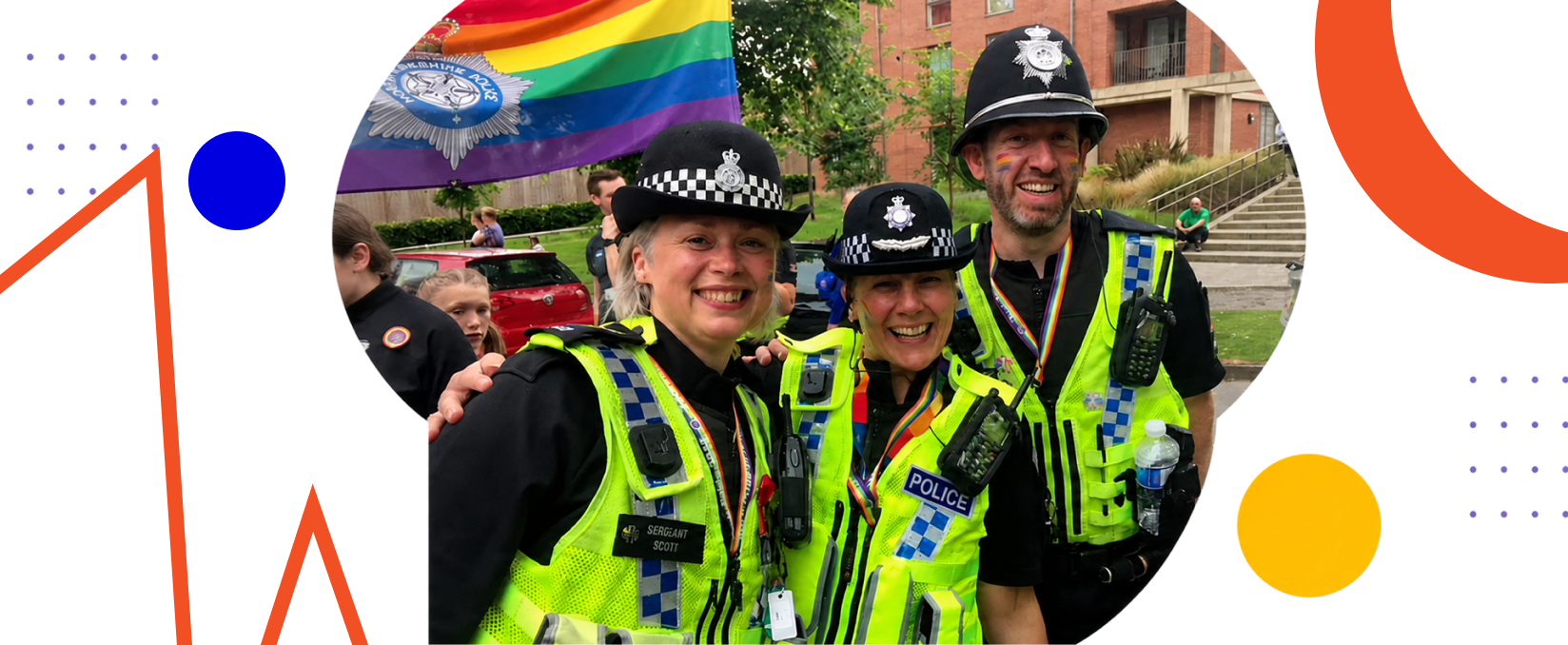
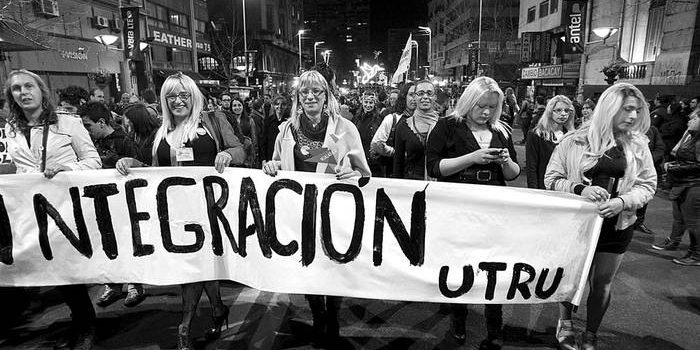
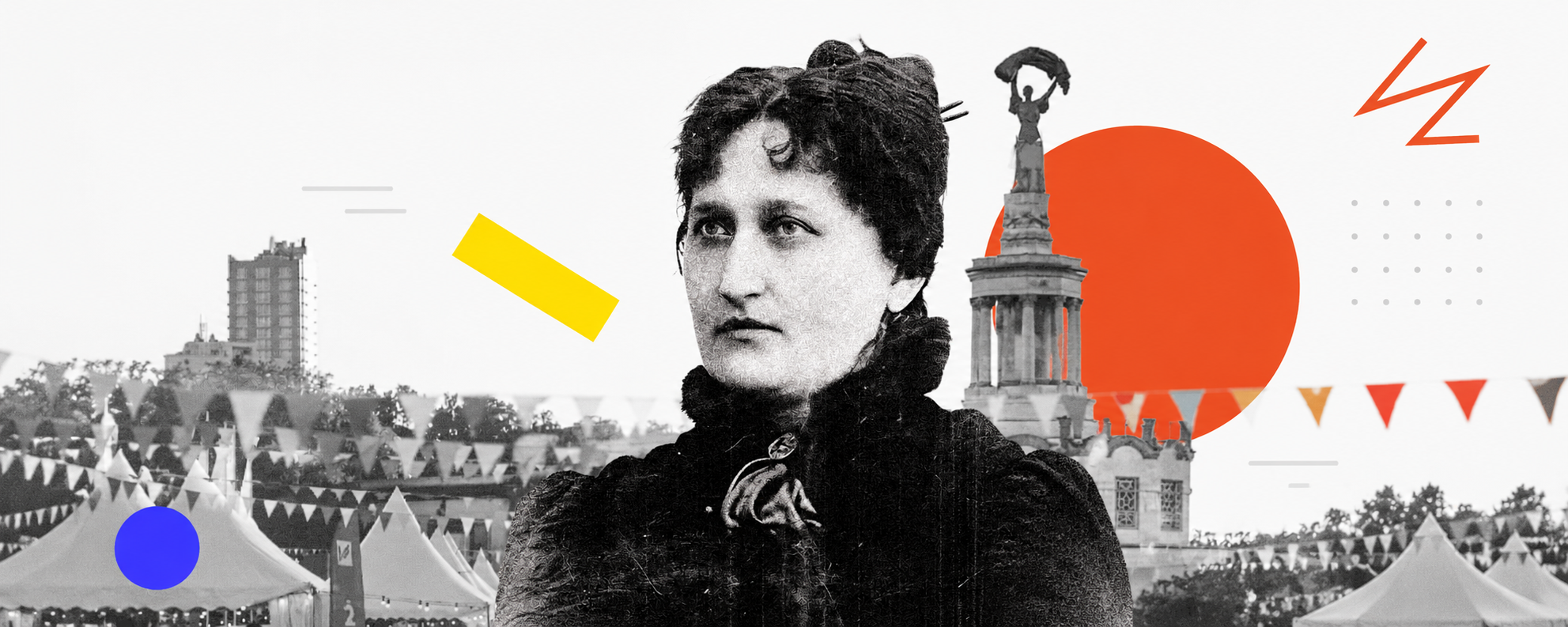
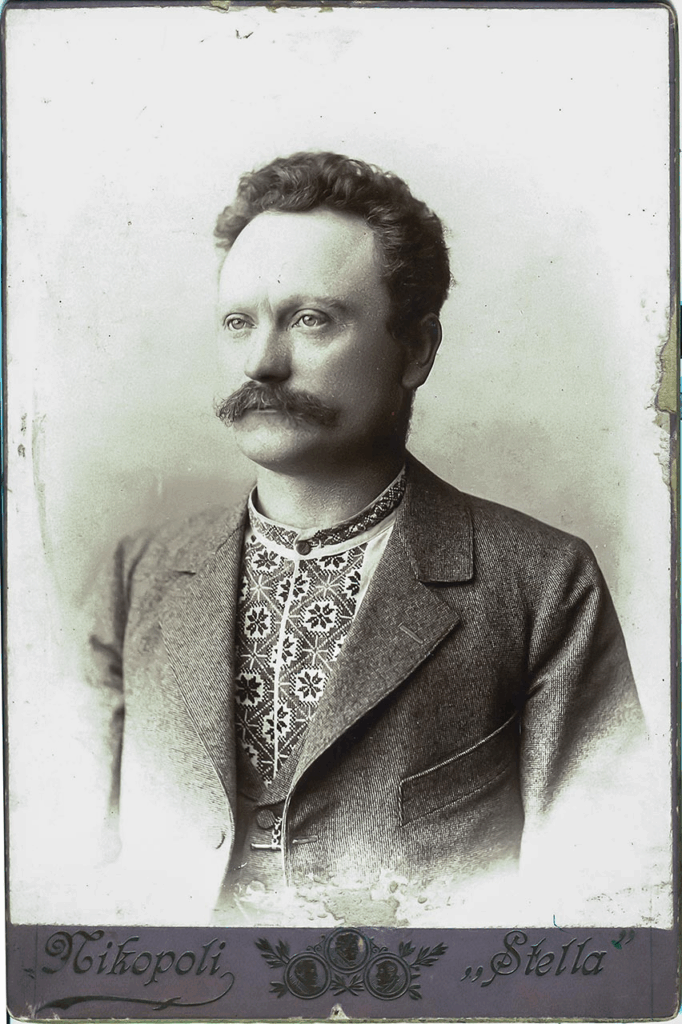
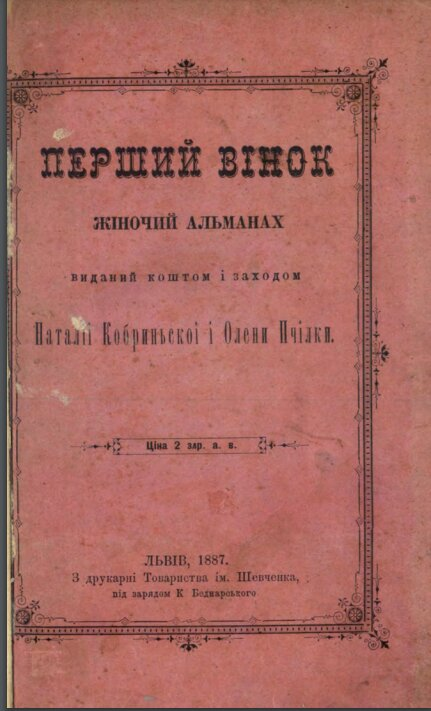
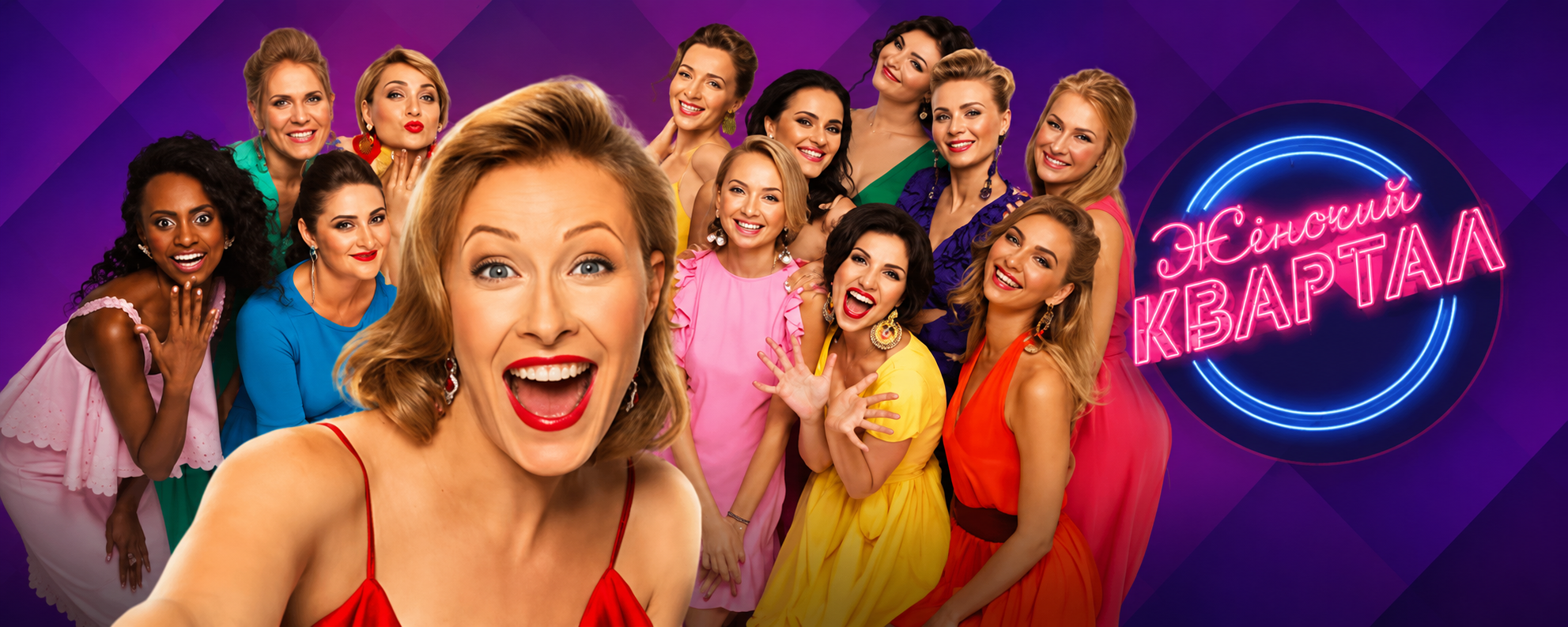
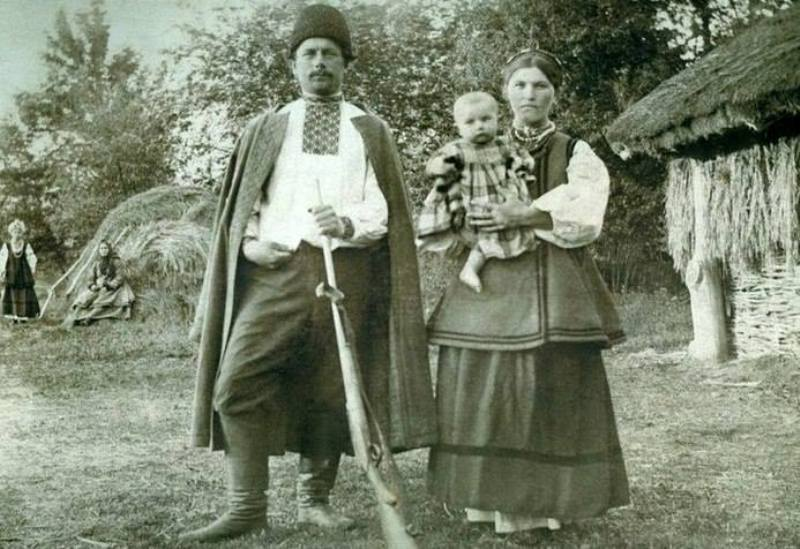
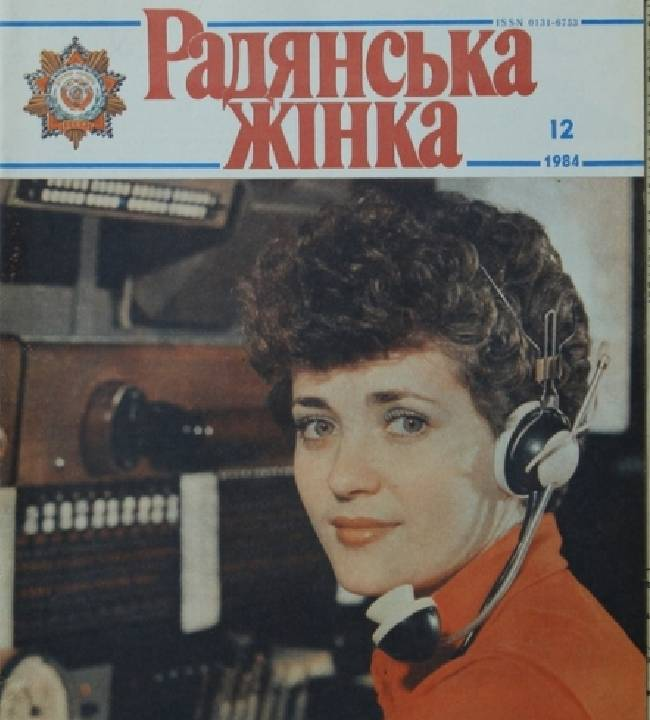
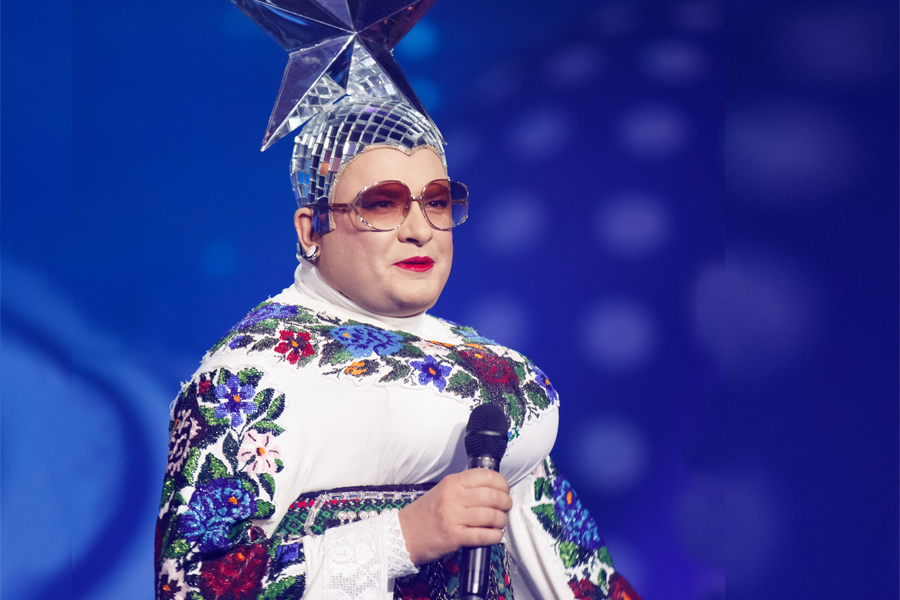
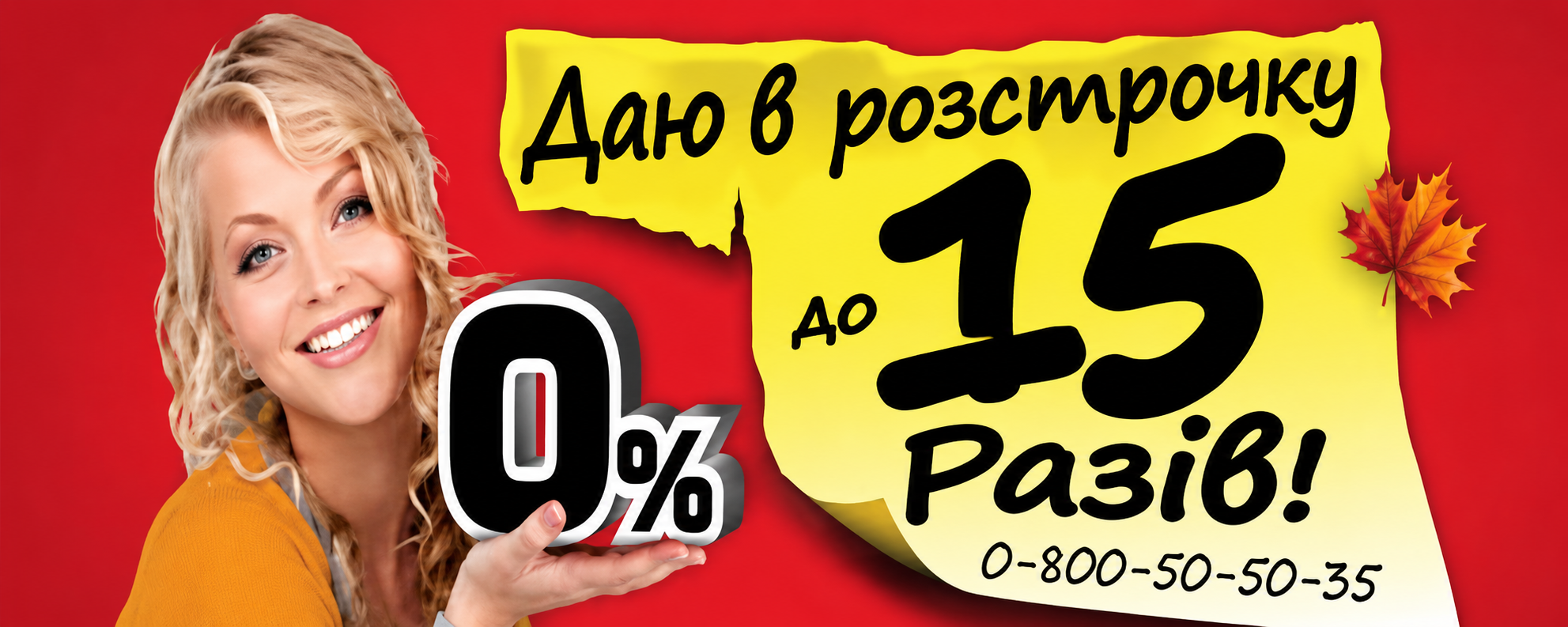

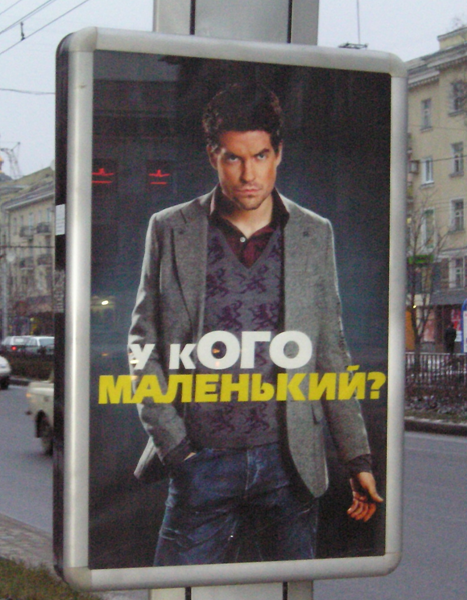
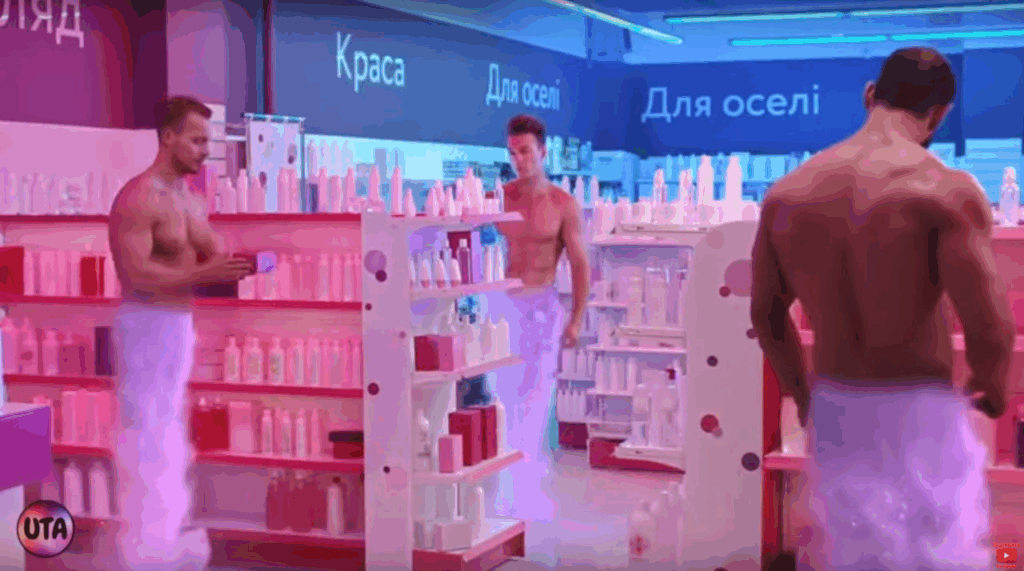

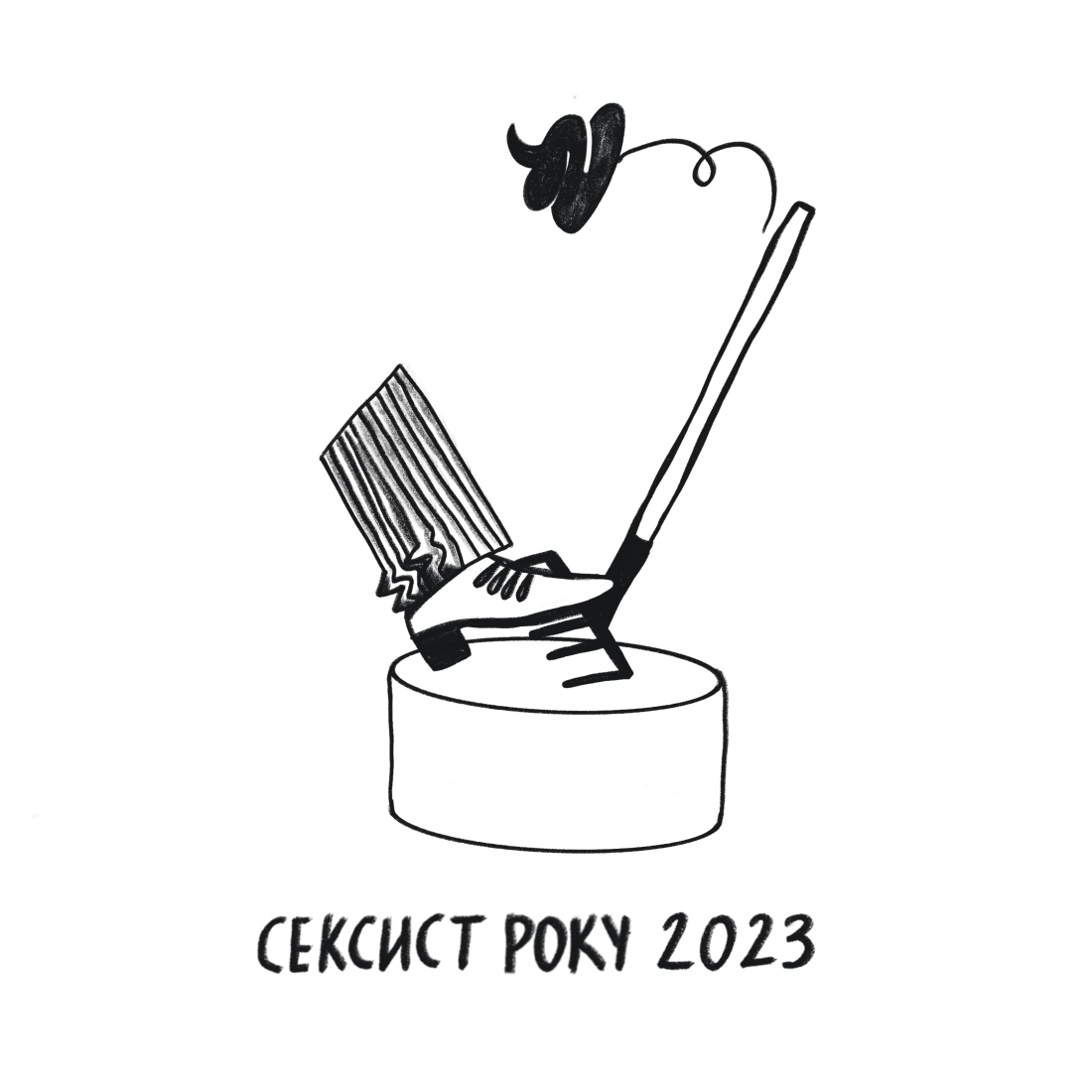
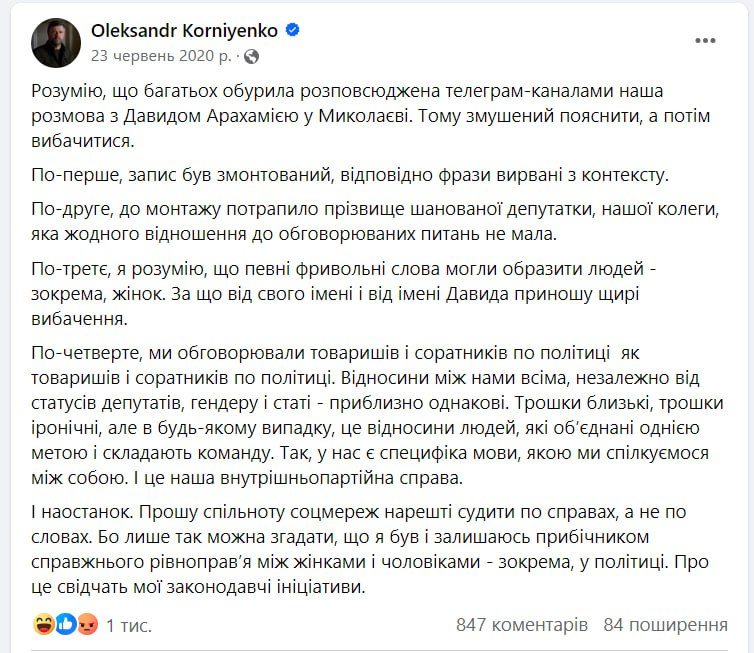
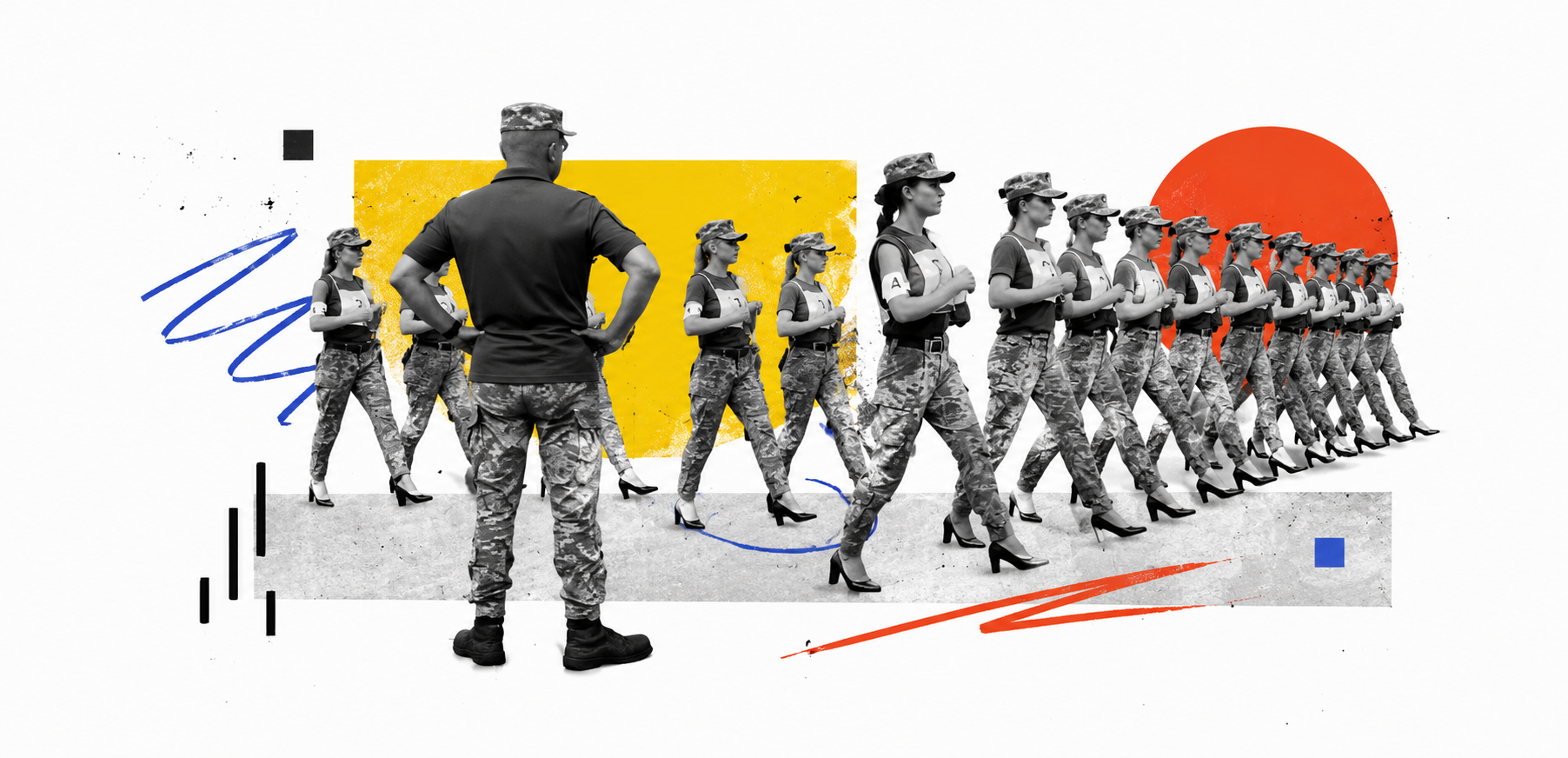
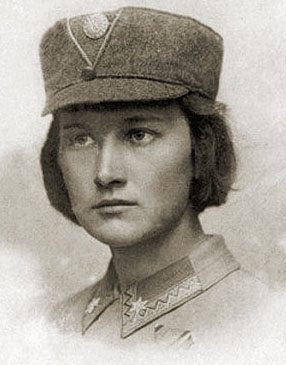
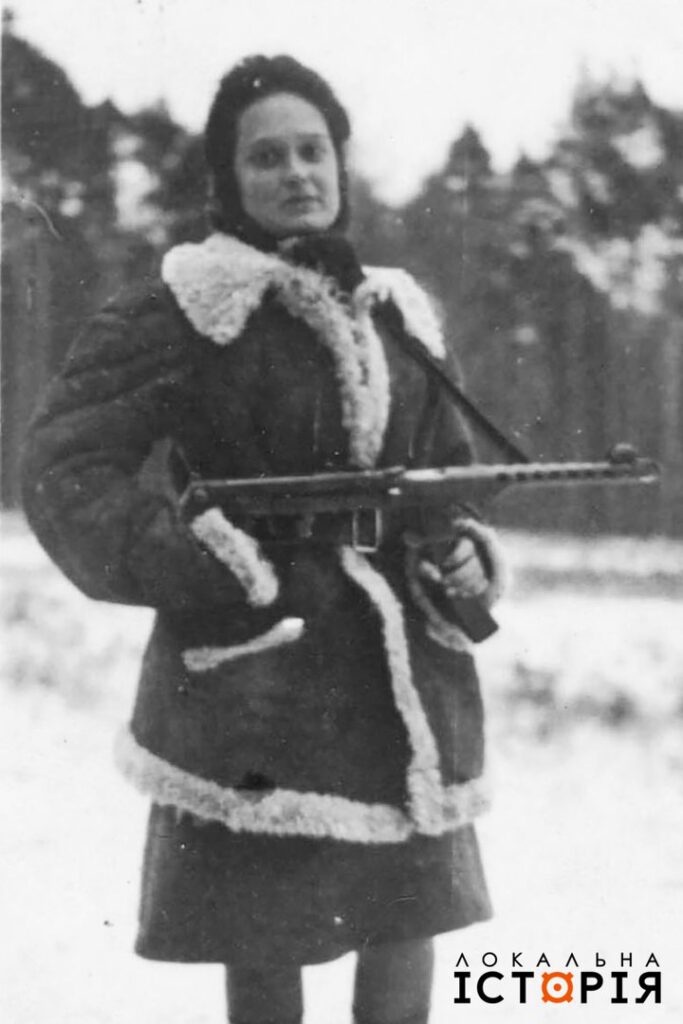
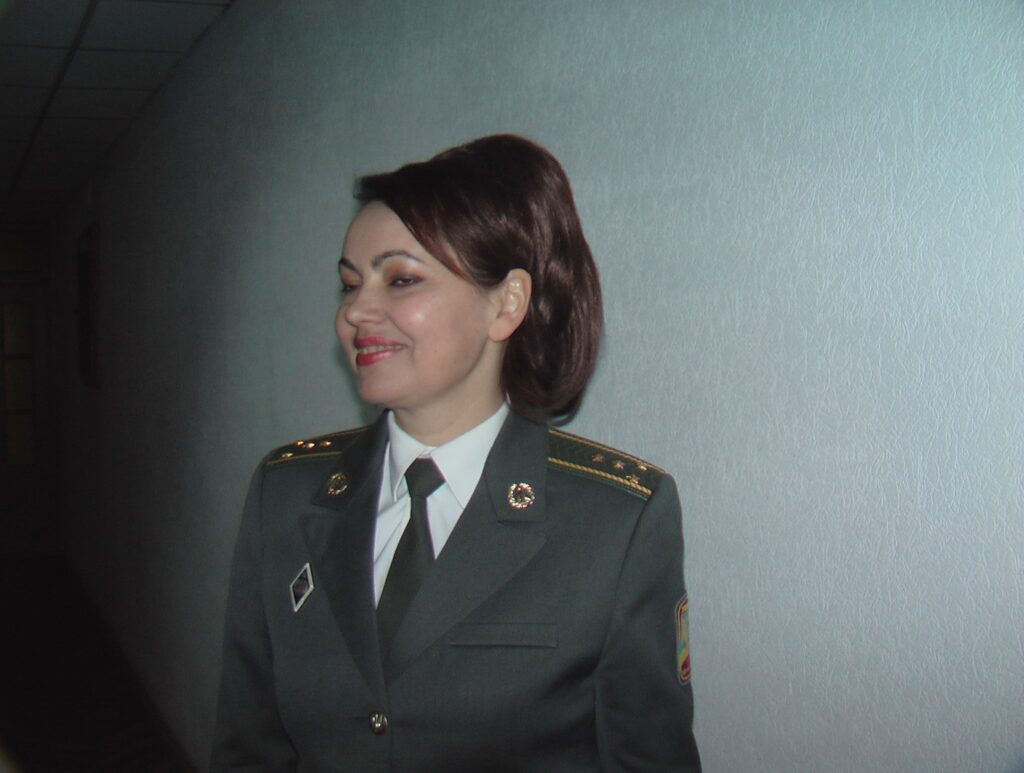
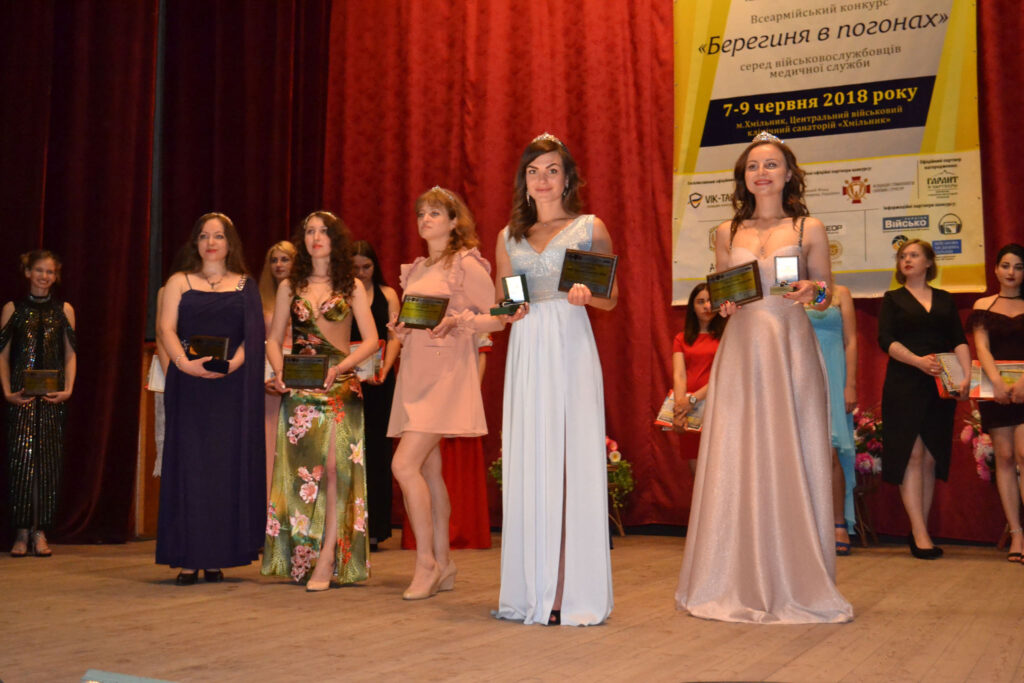
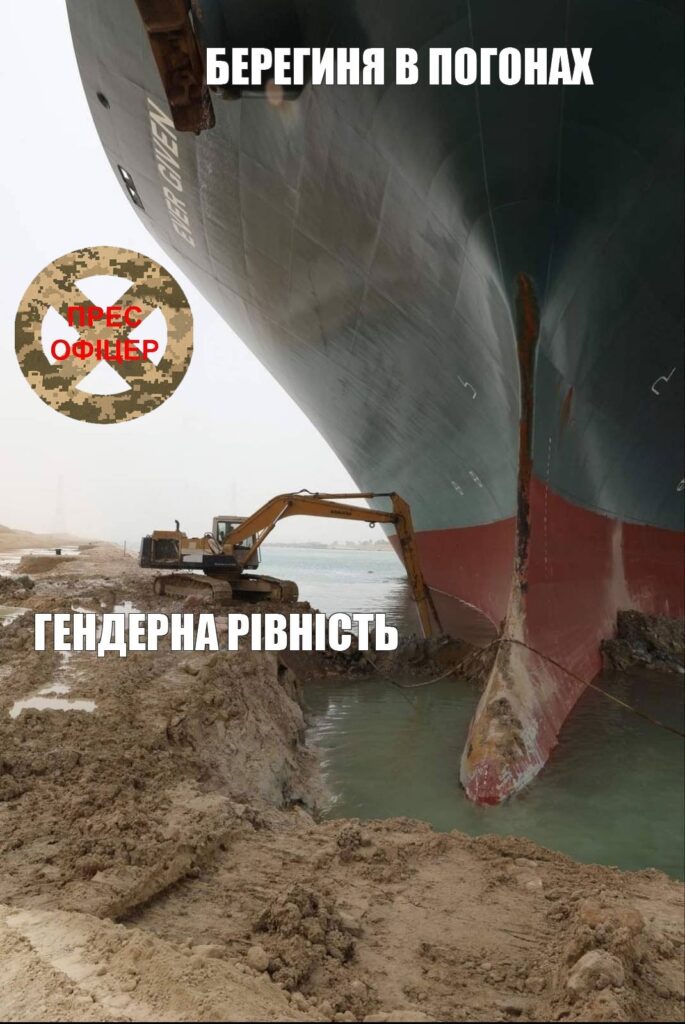
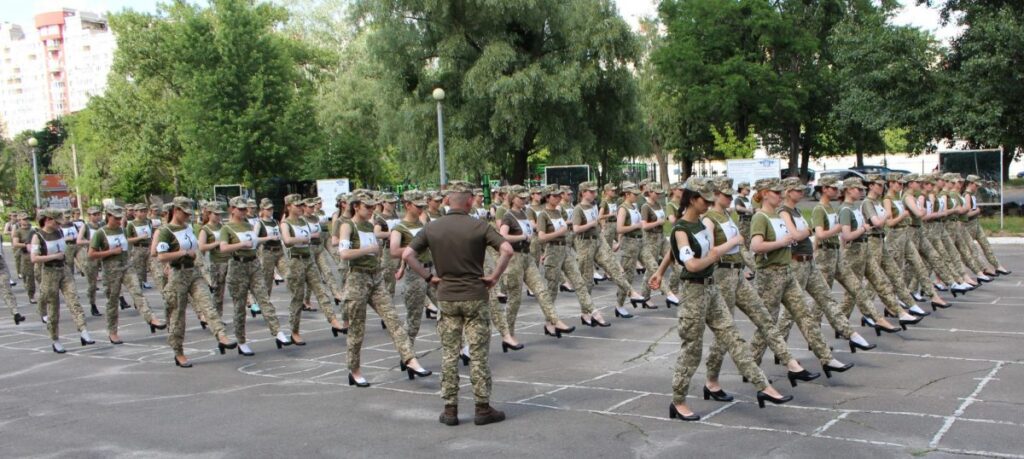

 562
562